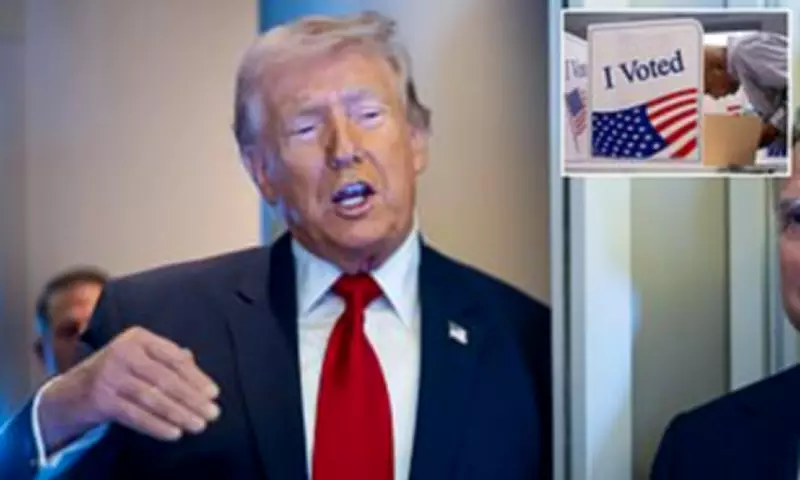
Former President Donald Trump issued a definitive ultimatum on Sunday, announcing via a social media post that he will refuse to sign any bills into law until the United States Senate passes the SAVE Act, also referred to as the Save America Act. In a statement on Truth Social, Trump emphasised the urgency of the situation, declaring, 'I, as President, will not sign other Bills until this is passed,' and asserting that 'It must be done immediately. It supersedes everything else.'
Trump's Demands for Stricter Legislation
Trump elaborated on his requirements, specifying that he expects the Senate to produce a version of the legislation that incorporates several key provisions. These include mandatory voter identification and proof of citizenship for registration, restrictions on mail-in ballots limited to military personnel and those with illness, disability, or travel needs, a ban on biological males participating in women's sports, and prohibitions against transgender surgeries for minors. He criticised the House of Representatives' earlier version as a 'watered down version,' noting it lacks these bans on sports participation and medical procedures for transgender youth.
Influence of Conservative Activism
The president's post was directly influenced by an appearance on Fox & Friends Sunday by conservative activist Scott Presler, who advocated for senators to utilise the filibuster to bring the bill to the floor for debate. Presler expressed his astonishment in an interview with the Daily Mail, stating he never anticipated that 'the President of the United States would be watching our segment.' He described himself as 'beyond humbled and grateful for the work that President Trump is doing in order to secure our elections,' and urged public support for the bill, calling it 'country-saving legislation.'

Political Support and Opposition
Congressman Mark Harris, a Republican from North Carolina and a leading supporter of the bill in the House, echoed Trump's sentiments in a statement to the Daily Mail. Harris affirmed, 'President Trump is right — we have to get the SAVE America Act to his desk,' and called on the Senate to 'get their act together and bring the bill to the floor for debate now.' He highlighted that over 80% of Americans support the base bill, yet the Senate struggles to advance it, suggesting that no other legislative projects should proceed until the SAVE Act is passed.
The legislative process faces significant hurdles, as a filibuster requires 60 votes on a cloture motion to end debate and move to a final vote. With 53 Republicans in the Senate, at least seven additional votes from Democrats or independents would be necessary to overcome this obstacle. Notably, Pennsylvania Democrat John Fetterman has broken ranks with his party, expressing support for voter ID requirements in a Fox News appearance, stating it is 'not a radical idea for regular Americans to show your ID to vote.'
Unusual Political Offers and Legal Context
In a surprising development, Texas Attorney General Ken Paxton, who is in a primary runoff against incumbent Senator John Cornyn, proposed dropping out of his race if Senate leadership agrees to lift the filibuster and pass the SAVE Act. Paxton made this offer in a post on X last week, adding a layer of political intrigue to the debate.
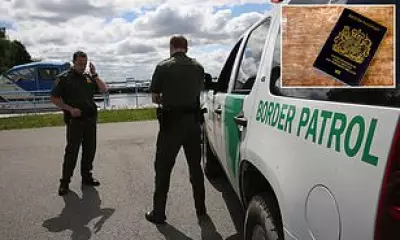
Under the US Constitution, any bills passed by Congress without the president's signature and without a veto become law after ten days. The House of Representatives passed its version of the SAVE Act on February 11, 2026, by a narrow vote of 218-213. This legislation mandates documentary proof of US citizenship, such as a passport or birth certificate, for voter registration in federal elections, and requires strict photo identification for in-person voting.
Criticism and Concerns
Liberal groups have voiced strong opposition to the measures, arguing that they could disenfranchise voters. Organisations like VoteRiders point out that approximately one in ten Americans lack easy access to the documents required by the SAVE Act for registration and maintaining voter status, raising concerns about potential barriers to electoral participation.