Swinney's Thunderous Defence of Lord Advocate Ignites Holyrood Controversy
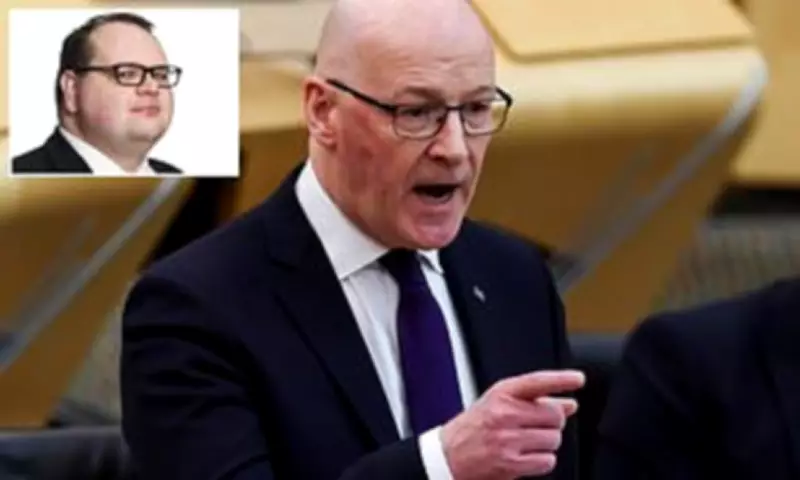
It was the unmistakable tone of indignation that revealed the depth of his frustration. As First Minister John Swinney batted aside probing questions regarding the secret legal briefing he received from Lord Advocate Dorothy Bain, his voice thundered with breathless outrage at the insinuations levelled by opposition figures Russell Findlay and Anas Sarwar.
A Courtly Defence Met with Political Scrutiny
Did they not comprehend that Dorothy Bain, KC, had been practising law for four decades? That she was, in his words, an 'outstanding lawyer'? Swinney declared himself 'disgusted' by Findlay's 'utterly contemptible' remarks about the senior law officer. The defence mounted on behalf of the Lord Advocate carried an almost courtly air—silence, peasants!—and no one has been more vigorously defensive than the First Minister himself.
He informed Findlay—or more accurately, he growled at the Conservative MSP—that Bain retained his 'absolute confidence'. While the Conservatives and Labour have intensified their criticisms of the Lord Advocate, many observers believe the genuine scandal lies elsewhere: in Swinney's decision to relay trial information to his chief spin doctor within a mere 31 minutes of receiving it himself.

The Political Undertones of Legal Protocol
Bain may have believed, correctly or otherwise, that a precautionary heads-up was necessary to prevent potential contempt of court. However, Swinney's inclusion of his public relations advisor in the loop so swiftly reeks of political manoeuvring. The First Minister argued that his advisers required the information because 'those individuals act on my behalf and have to know the information I am privy to so they also do not jeopardise live proceedings'.
This justification prompted scepticism. If officials need explicit instructions not to endanger criminal trials, perhaps better officials should be sought. Russell Findlay, with the cynicism of an unreformed journalist, suggested the First Minister 'knew it gave him political advantage in an election year'. This seems particularly unfair given Swinney already benefits from the disarray among opposition parties.
Factual Errors and Parliamentary Theatre
In his defence, Swinney cited 'a prominent KC Mr Thomas Kerr' who had vigorously defended the Lord Advocate in a radio interview that morning. Unfortunately, while Mr Thomas Ross, KC, had indeed supported Bain, Mr Thomas Kerr is actually a Reform councillor in Glasgow—not a lawyer—and unlikely to be speaking in the Lord Advocate's favour anytime soon.
The First Minister condemned 'an appalling level of behaviour' when MSPs questioned the Lord Advocate on Wednesday, eliciting snorts and chuckles from Tory benches when he exclaimed: 'We've got a code of conduct and standards to uphold in this parliament!' One day, perhaps, they will get around to it.
Constitutional Quirks and Political Absurdity
Swinney, a figure whose temperament and abilities seem almost accidentally suited to his role, provides considerable entertainment through his absurdity. Floundering under Findlay's interrogation, he reminded parliament that the Lord Advocate's dual role—as chief prosecutor and government minister—was established by the Scotland Act 1998. He suggested that if the Tory leader wished to change this, he should support independence.
This ranks among the most niche arguments for independence ever heard. A more sensible remedy might be to amend the Scotland Act to revise the Lord Advocate's role, perhaps while deleting references to a 'Scottish parliament' or 'devolution' for good measure.
Accusations and Counter-Accusations
Anas Sarwar accused the Lord Advocate of presenting contradictory evidence to Holyrood. In response, Swinney charged the Labour leader with 'putting factual errors into the public domain' and 'undermining the rule of law'. Who does Sarwar think he is, an SNP minister? Swinney barked that his opponent was 'unfit to lead the Labour Party', suggesting he has missed considerable news about Labour's recent travails. Sarwar appears almost saintly compared to some of his colleagues.

The First Minister was heavy on sputtering outrage but light on credible explanations. Regardless of the merits of the Lord Advocate's conduct, she deserves a more coherent defence than this spectacle of political theatre.