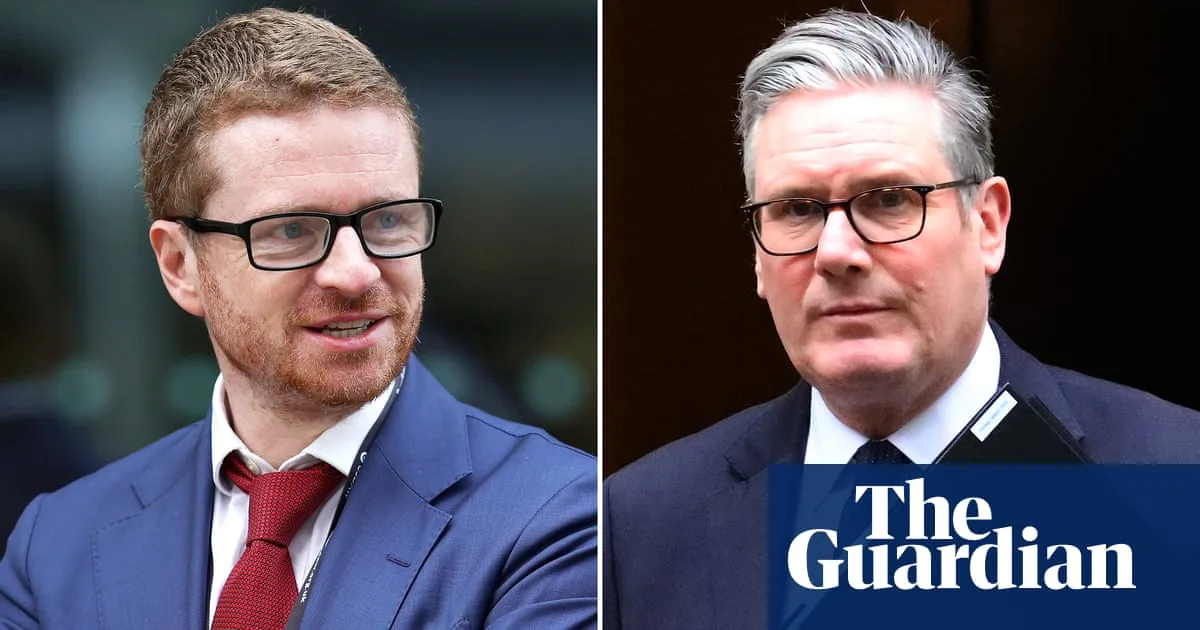
The Stolen iPhone That Shook Westminster
At precisely 10:30pm on Monday, October 20, a Metropolitan Police 999 call centre received an urgent emergency call. The caller, a 48-year-old man with a soft Irish accent, reported a street crime in progress. "Oh, hello," he began calmly. "Someone just robbed my phone." The victim described his assailant as a "black guy" in his "late teens" of slim build and average height who had brazenly "come on to the pavement to grab my phone and cycled off on a bike." Despite giving chase, the criminal traveled "a few blocks" north before turning left into a park and disappearing from view.
A Common Crime with Extraordinary Consequences
What followed was a depressingly familiar exchange in Sadiq Khan's London, where approximately 117,000 phones are stolen annually, with around 80,000 taken via robberies. Many thefts, including this one, involve phones snatched from unwitting pedestrians texting while walking along pavements after dark. The phone operator apologized that no officers could be deployed to the crime scene due to "extreme demand on police officers," instead offering to take a crime report over the telephone. Details were shared, and minutes later, the victim received a crime reference number before the call concluded.
However, this was no ordinary pedestrian victim. The 48-year-old man was Morgan McSweeney, Prime Minister Keir Starmer's then chief-of-staff and one of Britain's most powerful political figures. His stolen iPhone was a government work device he had been using for nearly eighteen months to help run the country since Starmer moved into Downing Street. Five months after the theft, the phone's contents now lie at the epicenter of an explosive political scandal.
The Mandelson Connection
At the time of the 999 call, McSweeney was heavily embroiled in the fallout from his close friend and mentor Peter Mandelson's controversial sacking as UK Ambassador to the United States. McSweeney had not only recommended the Labour Peer's appointment but played an extraordinarily active role in the vetting process that saw Mandelson parachuted into the £161,000-a-year role, leapfrogging several highly-qualified career diplomats.
Rather than a member of Number Ten's propriety and ethics team, it was McSweeney who was instructed to interrogate his old friend about various links to Jeffrey Epstein that had been "red-flagged" during civil service vetting. Unsurprisingly, he gave the associate of the convicted paedophile a clean bill of health, prompting Keir Starmer to rubber-stamp Mandelson's move to Washington in December 2024.
This appointment ended disastrously, with Mandelson's chaotic departure from Washington costing taxpayers £75,000 in compensation and damaging the UK's international reputation. McSweeney's role was coming under severe scrutiny by October, when Labour whips discussed how to respond to an expected Tory "humble address motion" seeking disclosure of every email and WhatsApp exchange related to Mandelson's appointment and resignation. As the Spectator reported, those involved told colleagues: "If the Tories pass a humble address motion, Morgan is f***ed."
The Missing Messages
Following disclosures from the Epstein Files, the government has released one tranche of official documents showing how McSweeney dismissed concerns about Mandelson via a memo claiming they had "all been dispelled." A second tranche expected after Easter should contain both formal and informal communications between Mandelson and Downing Street.
Particularly significant would be the numerous WhatsApp messages believed exchanged between Mandelson and McSweeney, where the "Prince of Darkness" would likely have shared insider gossip about policy, reshuffles, and the competence of the Prime Minister and cabinet ministers. These messages could be political dynamite but for one crucial fact: thanks to the conveniently timed mobile phone theft on October 20, they appear to no longer exist.
Questions and Contradictions
The Metropolitan Police's transcript of the 999 call raises significant questions. McSweeney didn't identify himself as the Prime Minister's chief-of-staff, which would have prompted substantial police resources to recover the device, instead vaguely stating: "It's a government phone." Strangely, he told the call-handler the incident occurred in "Belgrave Street" in Tower Hamlets, when it actually happened in Belgrave Road connecting Pimlico with Belgravia. When asked if he'd followed the assailant to Stepney Green Park (also in Tower Hamlets), McSweeney incorrectly replied: "Yeah. He turned left there."
As Andrew Neil observed, this "couldn't have been true... It's almost as if McSweeney was deliberately misleading the police call handler to sow confusion." Further questions surround the iPhone's automatic tracking function, which should have allowed police or Downing Street security to locate the device. McSweeney told the operator he'd "rung my office to get the phone tracked" two minutes before calling 999, yet Number Ten's staff apparently couldn't find it.
Instead, they appear to have shut off and remotely wiped the stolen device. Starmer's office refused to answer whether they contacted the Met about the incident, while confusion persists about police follow-up. Labour sources initially claimed police were "too busy" to investigate further, but the Met stated they made two calls to McSweeney's personal phone the next day without response.
Security Protocol Failures
Conveniently, there appears to have been no way to access the WhatsApp messages on that phone. While most devices back up to Apple's cloud services, security concerns prohibit senior government officials from using that service. They're also not meant to run WhatsApp on laptops or tablets, which might create alternative records. Government guidance states officials must forward or screenshot messages to official systems and protect personal data from "accidental loss."
McSweeney's failure to follow these protocols seems, at minimum, careless. Some have compared his situation to Rebekah Vardy's agent, who lost a phone containing key messages by dropping it into the North Sea before the "Wagatha Christie" trial. McSweeney resigned from Downing Street last month, stating: "The decision to appoint Peter Mandelson was wrong. He has damaged our party, our country and trust in politics itself... I advised the Prime Minister to make that appointment and I take full responsibility for that advice."
Political Fallout and Hypocrisy Claims
Former Labour colleagues have struggled to explain the situation. Communities Secretary Steve Reed falsely claimed the phone was stolen "well in advance of anything happening about Mandelson... Maybe even a year before," prompting SNP leader Stephen Flynn to ask why he lied and refer him to the PM's ethics adviser. Health Secretary Wes Streeting handled yesterday's media round, conceding "I can totally understand the cynicism in these sorts of cases" while insisting the loss was "a cock-up rather than a conspiracy."
Labour hasn't always been so forgiving when ministers mislay WhatsApp communications. In 2023, when Boris Johnson couldn't access an old phone containing messages requested by the Covid Inquiry, Keir Starmer's then deputy Angela Rayner accused the Conservatives of "a desperate attempt to withhold evidence," adding: "The public deserve answers, not another cover-up." Some argue Rayner's silence over the McSweeney affair reeks of hypocrisy, while others call it sensible politics. But she was right about one thing: unless the public gets proper answers, the mystery of the missing iPhone will continue to rumble on.






