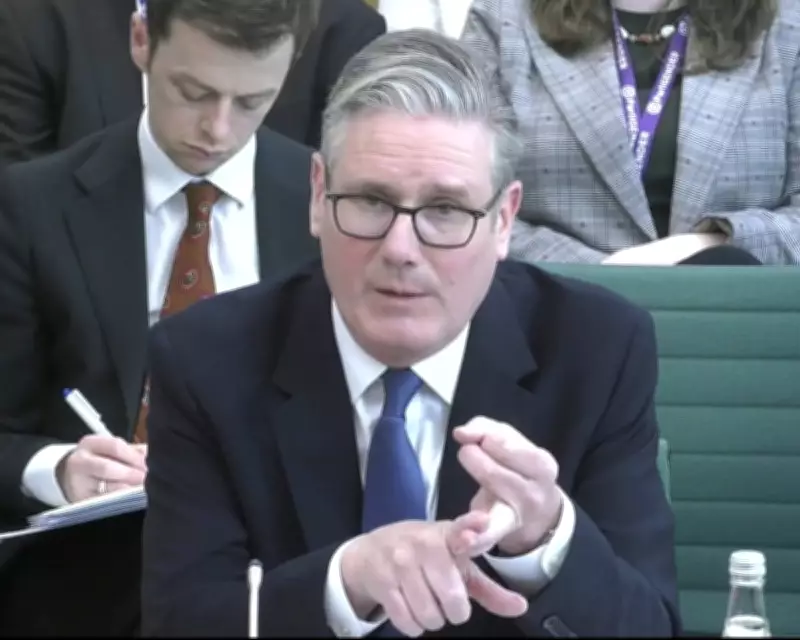
Keir Starmer stated he was laser-focused – a term he frequently employs these days – on doing everything possible to de-escalate the situation. His appearance before the liaison committee, a supergroup of select committee chairs, proved largely soporific, exactly as he had intended. Every prime minister aims to emerge from such sessions without making headlines, and with Iran dominating global affairs, Starmer played a blinder.
A Week of Contrasts in Westminster
What a difference a week makes. At last week's Prime Minister's Questions, Keir Starmer attempted to persuade the public he knew less than he did, claiming a poor memory that barely recalled Peter Mandelson or his appointment as ambassador to the US. Fast forward to Monday's liaison committee, and Starmer was desperate to convince everyone he knew more than he did, particularly regarding Iran. He portrayed himself as having the inside track and being in control, though his assertions were not entirely convincing.
The Challenge of State Secrets and Volatile Diplomacy
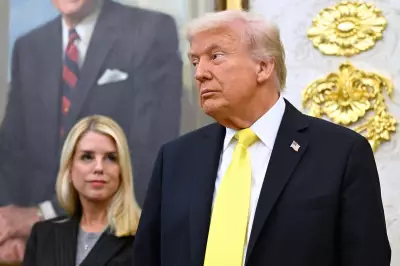
It is hard not to feel some sympathy for Starmer. The essence of being prime minister is the expectation to know more than others, and typically, they do, with state secrets forming their lifeblood. However, occasionally, the veil slips. Days after threatening to obliterate Tehran's power plants, Donald Trump announced on Truth Social – accompanied by a strange witch reference – that he would delay bombardment for five days due to constructive talks with Iran. No one, not even Starmer, knows what to think. Is this another example of Trump backing down after Iran called his bluff, or is he seeking an exit from an unplanned conflict? Both scenarios are equally plausible, as Trump, an amoral narcissist, acts on impulse, with even himself unsure of his next move.

Early in the committee session, Starmer tried to reassure MPs that he had the bases covered, insisting he had prior knowledge of recent US-Iran discussions. But did he? Ordinarily, such an admission would confirm talks occurred, but in this war, lead countries have acted in bad faith. Trump might have informed Starmer, but that does not guarantee the talks happened, just as Iranian denials do not prove they did not.
Reality Checks and Defence Queries
A touch of reality emerged when Starmer admitted he had no idea how long the conflict could last. Without explicitly criticising Trump, he implied the war's duration rests in the US president's hands, potentially ending by week's end or dragging on for months. Starmer emphasised his laser-focused efforts to de-escalate, a refrain he often uses.
Starmer likely could not say much more, and the committee, composed almost entirely of Labour MPs, chose not to press him on uncontrollable matters. Instead, they focused on Britain's response, resulting in a largely soporific 90 minutes. Every prime minister aims to leave such meetings having said nothing newsworthy and boring most attendees, an effect Starmer achieved.
The defence committee chair, Tan Singh Dhesi, briefly enlivened proceedings by suggesting it was embarrassing the UK had no warship in the area when the war started. Starmer countered that the UK had pre-deployed military hardware to the Gulf, just not naval vessels, and highlighted that HMS Dragon was ready in six days versus the usual six weeks, arguing being six days late for a war is not so bad since little happens in the first week.
Dhesi then pressed Starmer on Israeli reports that Iran now has missiles capable of reaching London, with no defence shield to prevent them. Starmer adamantly stated the UK is more than able to defend itself, though he did not address whether Iranian missile capacity is exaggerated. He advised people not to worry, noting that if a missile hit London, those affected would be dead and unaware, so it is best not to dwell on such possibilities.

Spiky Exchanges and Political Jabs
The spikiest exchanges came with the lone Tory, Bernard Jenkin, who inquired about the defence investment plan. Starmer snapped back that such plans take time due to 12 years of Conservative underfunding that hollowed out the armed forces. Jenkin, in no mood for discussion, evoked Churchill, arguing for aggressive action, including building frigates and illegally reopening oilfields, declaring an emergency. He lamented not raising these points when his party was in power.
Perhaps due to a stifling hot room with radiators on full, much of the rest of the proceedings passed without incident. Repeatedly, reports were promised in the fullness of time, with no questions about Mandelson or the king's state visit to the US.
Instead, Starmer noted contingency plans for energy shortages and price hikes are under review, and while he deems the war unlawful for Britain, the US must decide its legality. The UK has adopted a policy of collective self-defence and will not partake in offensive operations, nor will it be a haven for those guilty of crimes against humanity.
Sympathy and Resolve in Closing Remarks
The session concluded with committee chair Meg Hillier extending sympathies to Starmer, acknowledging the difficulty of dealing with a volatile US president – code for mad. She did not mention a recent Saturday Night Live sketch Trump reposted, which was not particularly funny initially. Starmer puffed up his chest, asserting he knows people try to undermine him, but he will always protect UK interests and never surrender. At that moment, a tear seemed to well up in Bernie Jenkin's eye, underscoring the tense yet subdued nature of the hearing.