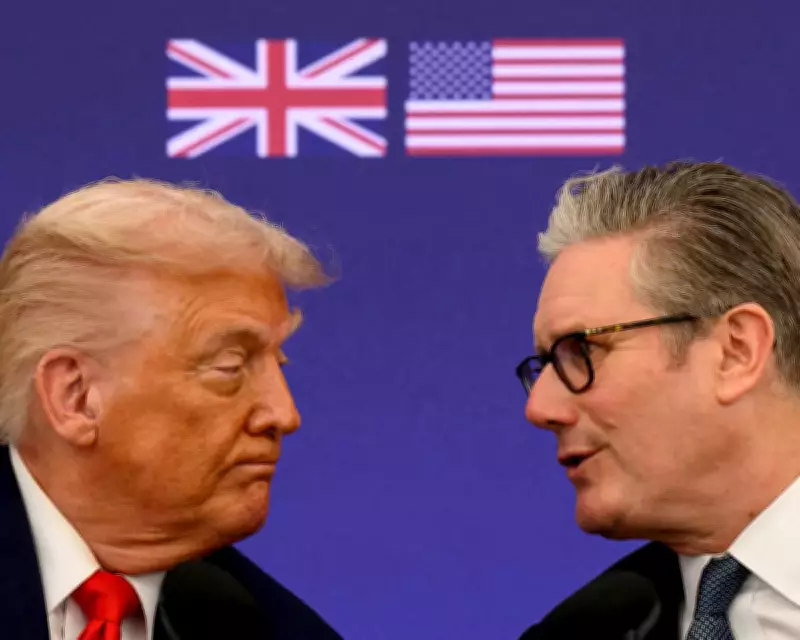
Keir Starmer's decision to resist pressure from Donald Trump over military action against Iran is being hailed by allies as a potential defining moment for his leadership, while leaving political opponents like Kemi Badenoch and Nigel Farage playing catch-up with shifting public opinion.
A Historic Stand Against US Pressure
Emily Thornberry, Labour chair of the foreign affairs committee, described Starmer's stance as potentially "the making of him," noting that "you've not had a British prime minister say no to an American president since Vietnam. This is a big deal." The refusal came after Trump requested permission to use British military bases for strikes against Iran, a request Starmer initially denied before later allowing defensive use against Iranian missiles.
Public Opinion Turns Against Military Action
Recent polling reveals significant public opposition to the conflict, with a YouGov survey finding six in ten Britons opposed to the military action and only a quarter in favour. This anti-war sentiment has intensified as petrol prices have risen in response to Middle East tensions, directly impacting household budgets already strained by the cost of living crisis.

One Labour MP suggested Starmer's increasingly critical position on US strikes has revealed "the real Starmer – closer to Robin Cook than Tony Blair" on foreign policy matters. This contrasts sharply with initial responses from Reform UK and Conservative figures who quickly criticized Starmer for insufficient support of US-Israel operations.
Political Rivals Adjust Their Positions
Nigel Farage initially declared "we should do all we can to support the operation" when conflict began, but later staged a petrol station stunt promising fuel discounts while questioning UK involvement in "another foreign war." Similarly, Kemi Badenoch has shifted from apparent support for military action to denying she wanted UK participation in offensive operations.
Andrew Mitchell, veteran Conservative and former deputy foreign secretary, criticized Starmer's decision as a "very big mistake," arguing that "the US is our closest ally and friend" and that refusing the request for base access demonstrated Starmer was "a lawyer, not a political leader."
Internal Divisions and Strategic Calculations
Within political parties, positions remain complex. Conservative voters appear almost evenly split on the conflict, while Reform UK supporters show stronger pro-war tendencies but include isolationist elements. Alan Mendoza, Reform's chief adviser on global affairs, maintains that Farage has been consistent and would have granted US requests from the beginning.
Downing Street sources express confidence in their strategy, citing internal polling showing support for Starmer's approach. One senior figure noted the political advantage in being able to attribute economic impacts to Middle East involvement, stating: "We can turn around and say, this is exactly why we don't think we should be involved in the Middle East."
Long-Term Implications for UK-US Relations
While some within government worry about lasting damage to transatlantic relations, Thornberry remains confident: "We will always be close to America. They are our closest ally. But there are times when you can disagree. We survived Vietnam, we will survive this."
Ben Judah, former adviser to David Lammy, suggested right-wing parties miscalculated by treating the conflict as a brief political opportunity: "They were sort of anticipating that this would be a Venezuela-style one-night story. And it's turned out, actually, this is kind of a weeks-long, deeply disruptive event in the world economy."
The episode reveals broader political dynamics, with Judah noting that Reform UK's attempt to professionalize has moved it "from the old sort of Ukip isolationists to a more kind of neocon, pro-American stance" that faces challenges when US actions prove unpopular domestically.