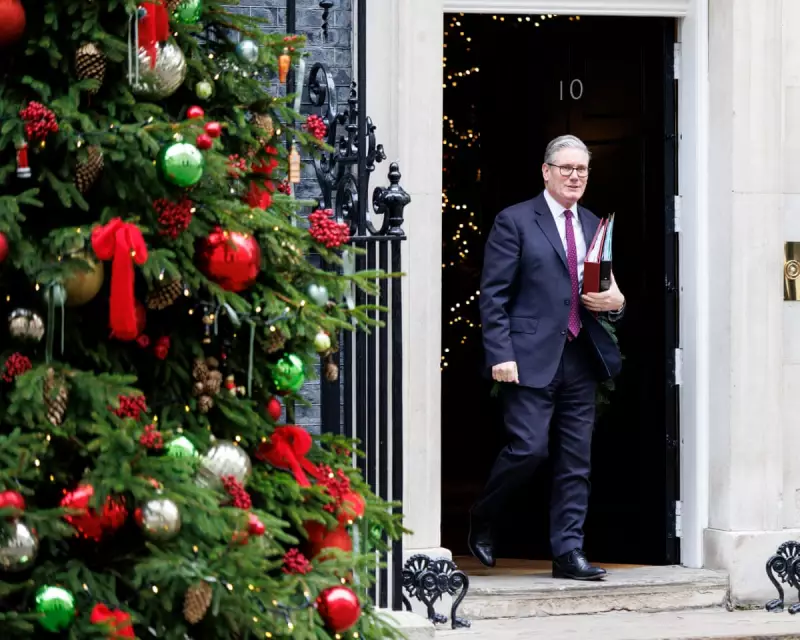
Prime Minister Keir Starmer has used his first Christmas message from Downing Street to call for national unity and collective effort, a plea immediately met with pointed criticism from political rivals.
A Message of Shared Endeavour
In the pre-recorded address, broadcast on Christmas Eve, Sir Keir struck a reflective tone. He emphasised that progress is rarely the work of a single individual, framing it instead as a collaborative national project. The Labour leader, who entered Number 10 after the July general election, spoke of the need for people to "pull together" to confront the significant challenges facing the country.
His message consciously avoided overt party politics, focusing on broader themes of community and shared responsibility during the festive season. He acknowledged the difficulties many families continue to face, particularly with the ongoing cost of living pressures, while urging a spirit of togetherness.

Opposition Leaders Voice Discontent
The Prime Minister's conciliatory words did not go unchallenged. Conservative figure Kemi Badenoch and Liberal Democrat leader Sir Ed Davey were quick to offer contrasting perspectives, highlighting the political fissures that remain despite the seasonal call for unity.
Kemi Badenoch, seen by many as a leading contender for the future Conservative leadership, issued a starkly different assessment. Her statement underscored a belief in individual aspiration and enterprise as the primary drivers of success, implicitly pushing back against the Labour government's focus on collective action and state intervention. Her remarks signal the ideological battle lines being drawn for the opposition's recovery.
Meanwhile, Liberal Democrat leader Sir Ed Davey adopted a more pointedly critical tone. He directly questioned the substance behind the government's rhetoric, arguing that warm words must be matched by concrete policy actions. Davey's intervention focused on pressing issues like the state of the National Health Service and social care, suggesting the government's actions have yet to live up to its promises of change.
Political Unity Proves Elusive
The swift responses from Badenoch and Davey demonstrate that the traditional Christmas political truce is fragile. While the Prime Minister's message aimed to transcend day-to-day partisan conflict, the reactions underscore the deeply entrenched political divisions that persist in Westminster.
Analysts suggest Starmer's unity pitch is a strategic attempt to solidify his government's image as a responsible, national administration during a period of heightened economic anxiety. However, the criticism from both the right and the centre-left indicates that his opponents are prepared to contest this narrative vigorously, even during the holiday period.
The exchange sets the stage for a contentious political year ahead in 2025, with the government likely to face sustained pressure from a Conservative party redefining itself and smaller parties like the Liberal Democrats seeking to assert their relevance. The festive season, it seems, offers only a brief pause in the ongoing battle for Britain's political direction.