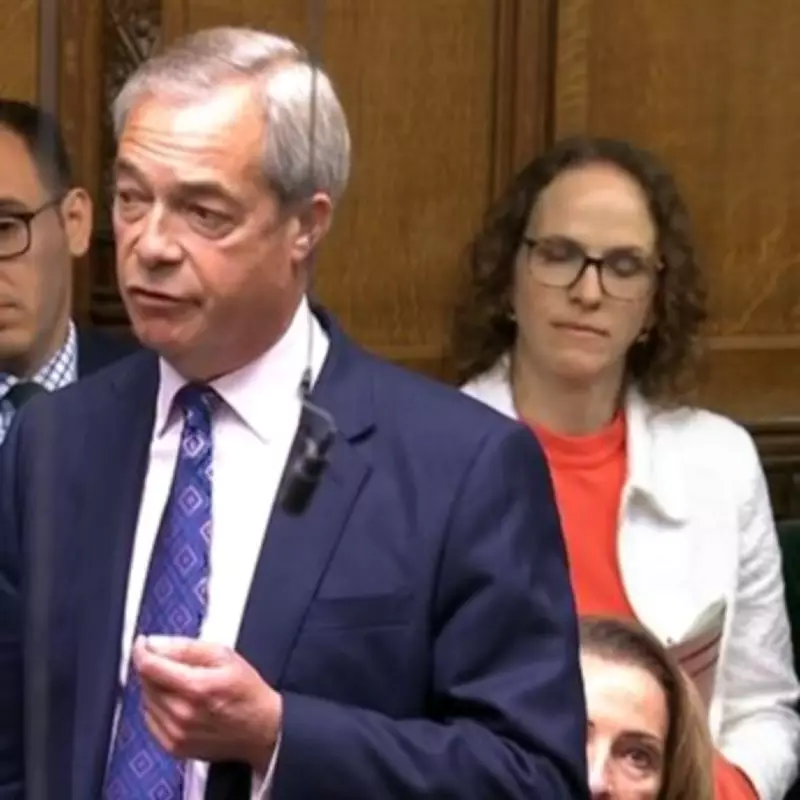
During a heated session of Prime Minister's Questions, Keir Starmer delivered a scathing rebuke to Nigel Farage, accusing the Reform UK leader of executing a "desperate U-turn" on his position concerning the Iran war. The Prime Minister asserted that Farage demonstrated "absolutely no judgement" and was "not fit to be Prime Minister" following his flip-flopping on the Middle East conflict.
Starmer's Fiery Condemnation in Parliament
The confrontation unfolded after Labour MP Steve Witherden questioned Starmer about Reform UK's pledge to dismantle Labour's workers' rights legislation. In his response, Starmer vigorously defended the Employment Rights Act, highlighting its role in providing robust protections, particularly for school staff.
"I'm very proud of our Employment Rights Act," Starmer declared. "It delivers strong rights and protections, including for all our brilliant school staff. Reform would rip up those protections. They have nothing to offer but grievance and division."
Farage's Inconsistent Stance on Iran
Starmer then shifted focus to Farage's contradictory statements on the Iran war, emphasizing the Reform leader's initial support for US strikes. "And, they have no judgement because just like the Leader of the Opposition, the Member for Clacton, said we should do all we can to support the US strikes," Starmer stated.
"And he said, I make that 'perfectly, perfectly clear'. It was perfectly, perfectly clear he got it completely wrong and perfectly, perfectly clear that he's now desperately trying to U-turn absolutely no judgement, not fit to be Prime Minister," the Prime Minister added, underscoring Farage's perceived lack of consistency and reliability.
Political Repercussions and Public Scrutiny
This exchange highlights the intense political friction between Labour and Reform UK, with Starmer leveraging Farage's shifting stance to question his leadership credentials. The Prime Minister's remarks not only targeted Farage's foreign policy judgement but also linked it to broader criticisms of Reform UK's domestic agenda, particularly their plans to revoke workers' rights.
The incident has sparked significant debate within political circles, raising questions about:
- The coherence of Reform UK's policies on international conflicts.
- Farage's ability to maintain a consistent political position under pressure.
- The potential impact of such public disagreements on voter confidence ahead of future elections.
As the story develops, observers are closely monitoring how Farage and Reform UK respond to these accusations, with many anticipating further clashes in Parliament over both foreign and domestic policy matters.