Prime Minister Expresses Regret Over Diplomatic Appointment Decision
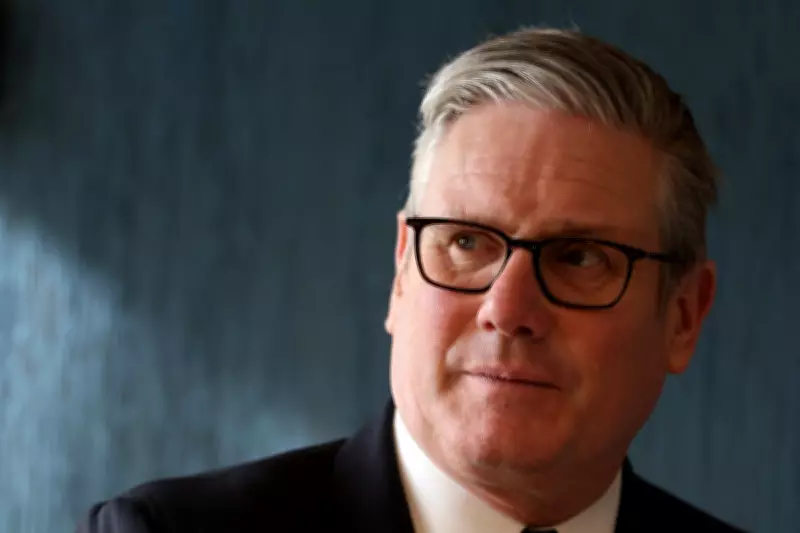
Prime Minister Sir Keir Starmer has openly admitted to being his own harshest critic regarding his controversial decision to appoint Lord Mandelson as Britain's ambassador to the United States. Speaking candidly on Sky News' Electoral Dysfunction podcast, Starmer revealed he continually "beats himself up" over the appointment, which has drawn significant scrutiny due to Lord Mandelson's association with convicted paedophile financier Jeffrey Epstein.
Self-Reflection on Judgment and Past Advocacy
"Nobody has been harder on me in relation to the mistake I made there than me," Starmer stated emphatically during the interview. The Prime Minister connected his regret to his long-standing advocacy work, explaining: "I've spent years trying to deal with violence against women and girls. And as I look back at it now and the mistake I made, I've been really hard on myself."
Starmer acknowledged that while others have criticised the decision, his own self-criticism has been more severe. "In the immediate days after this all came out, I was particularly hard on myself," he confessed. "But nobody was criticising me more than myself. I'm not trying to make that a mitigation or an excuse, but I know I made a mistake."

Document Release and Transparency Demands
The Prime Minister's comments come following the release of Government documents that revealed he had been warned about "general reputational risk" before approving Lord Mandelson for the prestigious diplomatic posting. MPs demanded transparency through a parliamentary motion in February, compelling the publication of tens of thousands of documents related to the appointment.
Lord Mandelson, a political appointee rather than career diplomat, was dismissed from his Washington role in September last year specifically due to his connections with Epstein, who died in 2019 while awaiting trial on sex trafficking charges.
Mobile Phone Theft Complicates Investigation
Further complicating matters, concerns have emerged that crucial exchanges regarding the appointment might be lost following the theft of former No 10 chief of staff Morgan McSweeney's mobile phone in London during October 2025. Police have taken the unusual step of releasing a transcript of McSweeney's 999 call reporting the crime, in which he identifies the device as a "Government" phone and provides personal contact details.
The Metropolitan Police initially mishandled the investigation after McSweeney incorrectly gave his location as Belgrave Street rather than Belgrave Road in Westminster, leading officers to check incorrect CCTV footage. This error meant police concluded there were no realistic lines of inquiry, though the case is now being reviewed.
Political Reactions and Security Questions
Opposition critics have questioned why the theft report wasn't escalated to security services, with Tory leader Kemi Badenoch calling the timing "very suspicious" given its proximity to document releases. Labour backbencher Karl Turner expressed skepticism about the official narrative, referring to McSweeney as "McSwindle" in parliamentary discussions.
Leeds East MP Richard Burgon has submitted a formal parliamentary written question seeking clarification on whether McSweeney followed proper reporting procedures and what national security implications might exist. "Given the serious impact this could have on getting the truth about the Mandelson scandal... we need answers," Burgon stated.
Government Response and Damage Control
During a visit to Helsinki, Starmer dismissed connections between the phone theft and document releases as "a little bit far-fetched," stating: "Unfortunately, there are thefts like this. It was stolen. It was reported at the time, the police have acknowledged and confirmed that. That is what happened."
Health Secretary Wes Streeting characterized the incident as a "cock-up rather than conspiracy," while Downing Street has emphasized that the theft occurred "months before" the Commons motion compelled document publication. The Cabinet Office reportedly retains some messages between McSweeney and Mandelson, though the full correspondence remains uncertain.

Starmer concluded his reflections by asserting: "It's certainly not a mistake I'd ever repeat. But there's no criticism anybody else can level at me that will be as harsh as the criticism I dished out for myself." The Prime Minister's unusually personal admission highlights the ongoing political fallout from an appointment that continues to raise questions about judgment and transparency at the highest levels of government.