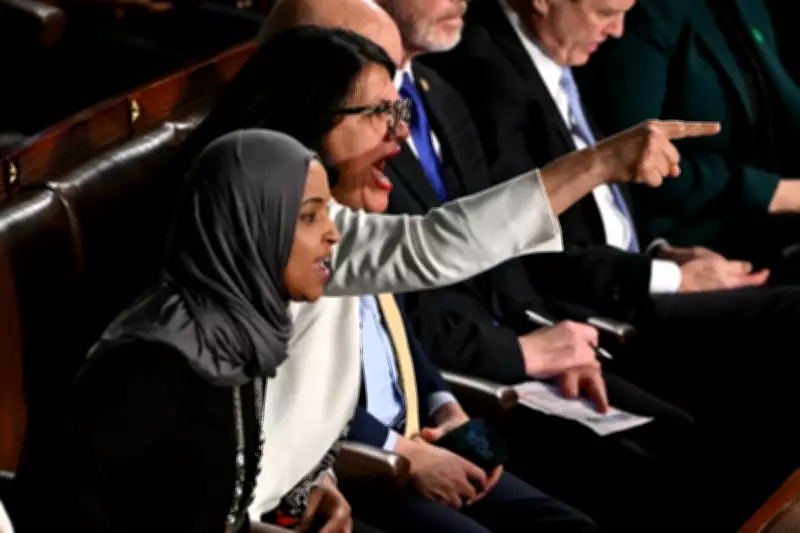
President Donald Trump's annual State of the Union address was dramatically interrupted by vocal protests from two prominent Democratic congresswomen, creating a highly charged atmosphere in the House chamber. The incident occurred as the president detailed his administration's stringent immigration enforcement measures, a cornerstone of his political agenda.
Heckling Erupts Over Immigration Remarks
Representatives Ilhan Omar of Minnesota and Rashida Tlaib of Michigan, both members of the progressive group known as "the Squad," began shouting during Trump's speech. Omar was heard repeatedly yelling, "You have killed Americans!" from her seat, directly challenging the president's claims about the success and necessity of his border policies.
Context of the Confrontation
The heckling specifically targeted Trump's discussion of his immigration crackdown, which has been a deeply divisive issue throughout his presidency. Omar and Tlaib, who are outspoken critics of the administration's approach, seized the moment to voice their opposition during one of the most watched political events of the year.

This confrontation underscores the ongoing and intense partisan divide in Washington, particularly on matters of national security and human rights. The State of the Union, traditionally a ceremonial occasion, instead highlighted the raw tensions between the executive branch and progressive lawmakers.
Immediate Reactions and Broader Implications
The outburst drew immediate attention from media and political observers, with many noting it as a significant breach of decorum during a presidential address. It reflects the deepening polarization in American politics, where such public displays of dissent have become more frequent.
Trump continued with his speech despite the interruptions, but the incident is likely to fuel further debates about immigration policy and the tone of political discourse. For Omar and Tlaib, this act of protest aligns with their consistent advocacy for immigrant rights and their criticism of policies they view as harmful.
As this story develops, it raises questions about the future of bipartisan cooperation and the role of protest in legislative settings. The event marks a notable moment in the ongoing clash between the Trump administration and its progressive opponents.