Shabana Mahmood's Controversial March Ban and the Political Crossroads
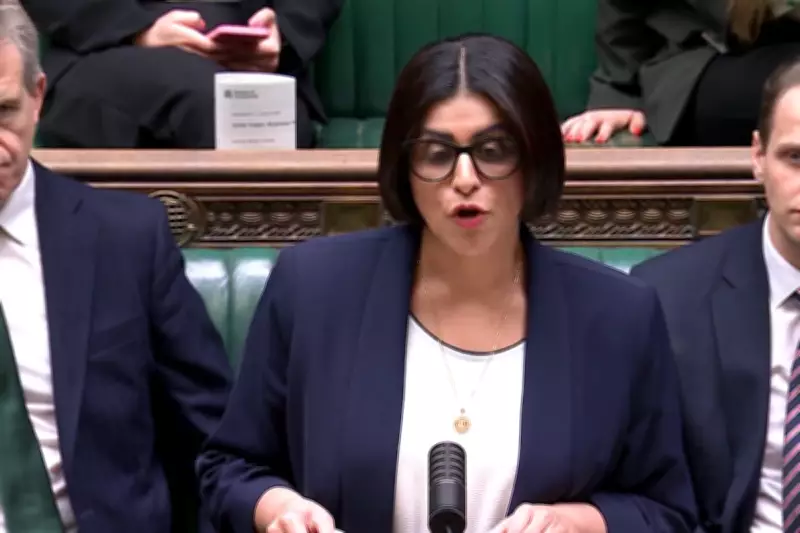
Home Secretary Shabana Mahmood remains the most intriguing figure in Keir Starmer's cabinet, standing apart in a government often characterised by its soft-left tendencies. Her recent decision to ban this Sunday's al-Quds march in London has ignited a complex debate that transcends traditional left-right divides, touching on fundamental issues of free speech, public order, and political identity.
The Free Speech Versus Public Order Dilemma
The al-Quds march, deriving its name from the Arabic word for Jerusalem, originated in 1979 under Ayatollah Khomeini as an international event supporting Palestinians and opposing Israel. While Mahmood acknowledges the right to express support for either the Iranian regime or the Palestinian cause, she has prioritised public order concerns in this instance. This positioning has unexpectedly aligned her with Conservative perspectives, prompting veteran Tory MP Edward Leigh to hail her as "one of the best Conservative home secretaries we've ever had."
Despite her swift rebuttal—"I am Labour all day long"—Mahmood demonstrates no fear of Conservative approval, nor even endorsement from traditionally right-leaning publications like the Daily Mail, whose front page demanded "Ban Pro-Iran Hate March." Her decision, implemented by midnight following police advice, reflects a calculated understanding of public sentiment rather than partisan allegiance.

Broad Parliamentary Support and Limited Opposition
The response to Mahmood's Commons statement revealed remarkable cross-party consensus. Conservative shadow Chris Philp expressed full support, while Labour and Liberal Democrat MPs unanimously backed her decision. Lib Dem MP Paul Kohler noted, "Notwithstanding my liberal instincts, I too agree with the home secretary's decision."
Opposition emerged only from independents Jeremy Corbyn and Shockat Adam, both offering tentative critiques. Corbyn acknowledged the march's unpopularity but warned of a slippery slope, while Adam questioned why hostile demonstrations outside asylum hotels weren't similarly banned. This limited dissent suggests most Labour members won't perceive Mahmood's decision as anti-Palestinian, despite the party's general pro-Palestinian stance.
Public Opinion and Legal Distinctions
British public sentiment strongly favours restrictive measures, as evidenced during the coronavirus pandemic when majorities supported widespread closures. With police citing risks of violence from one march and four counter-marches, most Labour supporters likely accept the ban. Some may question why a "static protest" marking Quds Day proceeds, which Mahmood explains stems from the 1986 Public Order Act distinction between bannable "processions" and non-bannable "public assemblies" deemed easier to police.
Leadership Ambitions and Political Courage
A Corbynite fringe within Labour will undoubtedly condemn the ban as authoritarian or Zionist, but Mahmood stands firm on her "solemn duty to keep people safe." For an avowed leadership aspirant, this clarity appears both admirable and strategically bold, potentially reckoning with internal party dynamics while appealing to broader electoral concerns. Her willingness to risk Tory embrace demonstrates a confidence that could redefine Labour's approach to security and civil liberties.