Senate Deadlock Continues as DHS Funding Bill Fails Seventh Vote
The United States Senate has once again failed to advance legislation to provide partial funding for the Department of Homeland Security, marking the seventh unsuccessful attempt as the agency's shutdown approaches its sixth week. The vote, which fell mostly along party lines at 53-47, did not reach the required 60-vote threshold to move forward. Only Democratic Senator John Fetterman broke ranks with his party to support the bill.
Trump's Executive Order Offers Temporary Relief
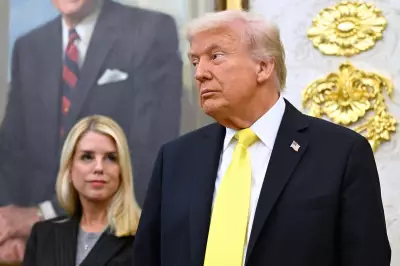
The latest Senate vote came just hours after President Donald Trump announced he would sign an executive order directing DHS Secretary Markwayne Mullin to immediately pay Transportation Security Administration agents during the ongoing shutdown. While this move could alleviate immediate pressure on Congress as they head into a scheduled two-week recess, Senate Majority Leader John Thune acknowledged it represents merely "a short-term solution" that takes "the immediate pressure off."
On his Truth Social platform, Trump declared he would sign the order to "quickly stop the Democrat Chaos at the Airports," while conceding that "it is not an easy thing to do, but I am going to do it!" The president invoked a national emergency to authorize payments for approximately 50,000 airport security officers affected by the funding lapse.

Partisan Divide Deepens Over Immigration Provisions
Lawmakers remain fundamentally deadlocked as they attempt to reach an agreement to fund critical DHS components including the TSA, Cybersecurity and Infrastructure Security Agency, Coast Guard, and Federal Emergency Management Agency. Thune characterized the latest Republican proposal as the party's "last and final" offer, but Democrats rejected it, demanding stronger guardrails on federal immigration enforcement.
Democratic opposition stems partly from the fatal shooting of Renee Nicole Good and Alex Pretti by officers during the Trump administration's immigration crackdown in Minneapolis last January. Democrats have countered with a measure that couples DHS funding with substantial immigration enforcement reforms, which Republican lawmakers have quickly dismissed.
Republican Strategy and Democratic Resistance
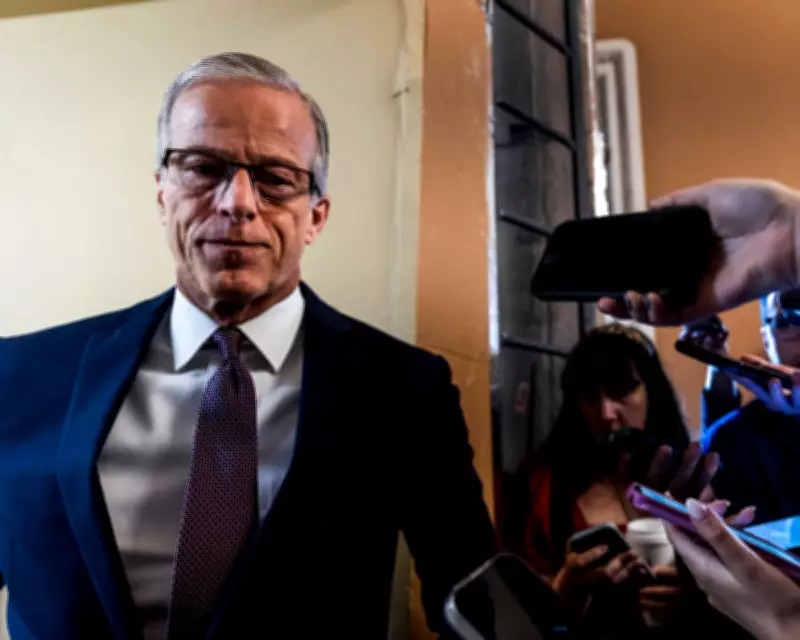
According to multiple reports, Republican Senate leadership plans to draft text to fund as much of the DHS as possible, hoping to "hot line" the resolution and clear it by unanimous consent. "This is not the outcome that we wanted, but unfortunately, Democrats have shown themselves unwilling to support law enforcement," Thune stated in an email reported by Axios.
This week, Senate Republicans presented a proposal that would fund shuttered DHS subagencies like the TSA while withholding money for Immigration and Customs Enforcement's enforcement and removal operations. Their strategy involves passing ICE funding separately through reconciliation, a process requiring only a simple majority, along with funding for military operations against Iran and portions of the Save America Act.
Human Toll of the Extended Shutdown
The prolonged shutdown has created severe hardships for federal employees. At a House Homeland Security hearing, Acting TSA Administrator Ha Nguyen McNeill revealed that airports nationwide are experiencing historic wait times, with TSA employees projected to miss a cumulative $1 billion in paychecks this fiscal year due to repeated DHS shutdowns.
"Some are sleeping in their cars, selling their blood and plasma, and taking on second jobs to make ends meet," McNeill testified, adding that at least 40% of TSA staff are not reporting to work because they cannot afford to do so without pay. White House Press Secretary Karoline Leavitt noted that nearly 500 TSA officers have resigned since the shutdown began last month.
House Action and Voter ID Amendment Failure
Earlier, the House of Representatives passed a Republican-drafted bill to reopen the DHS for a third time, with a 218-206 vote that saw four Democrats cross party lines in support. Meanwhile, ICE has remained largely insulated from the funding lapse since receiving $75 billion through Trump's sweeping policy bill last year.

In separate legislative action, senators failed to advance an amendment to the president's prized bill that would require voters to present photo identification at polling stations. Sponsored by Republican John Husted, the amendment failed to overcome a filibuster and received no Democratic support. Senate Minority Leader Chuck Schumer criticized the measure as one that would "impose the single strictest voter ID law in America."
As the impasse continues, Senate Majority Leader Thune has filed a motion to reconsider, allowing the DHS funding bill to be brought up again, though prospects for a breakthrough remain uncertain as partisan divisions deepen over immigration policy and enforcement priorities.