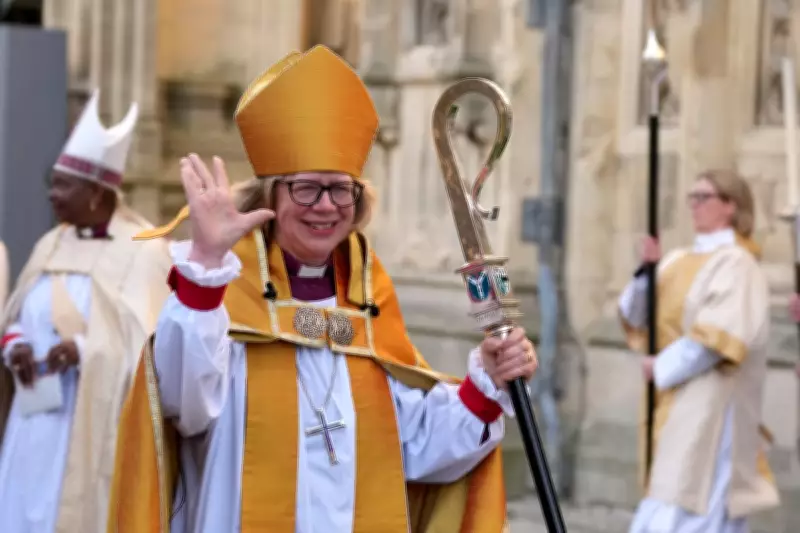
Sarah Mullally Installed as First Female Archbishop of Canterbury
In a historic moment for the Church of England, Sarah Mullally has been officially installed as the 106th Archbishop of Canterbury, marking the first time a woman has held this prestigious role. Her appointment, announced in October, represents a significant breakthrough in a global Anglican communion where many still oppose female clergy. Mullally's installation service took place on Wednesday, symbolising a shattering of the church's stained glass ceiling.
A Calm and Competent Leader
Mullally brings an unshowy, steady approach to her new position, which is seen as crucial for stabilising the Church of England during a period of turmoil. Following years of abuse scandals, declining attendance, and bitter disputes over sexuality and identity, she is viewed as a safe pair of hands. In her first presidential address to the General Synod last month, Mullally acknowledged the "huge weight of responsibility" and pledged to be "calm, consistent and compassionate to all." She emphasised that her life's theme revolves around "washing feet, serving and caring for others."
Nick Baines, the former bishop of Leeds who appointed Mullally to her first parish priest role, described her as "solid, stable" in a recent interview. He noted that she has no pretensions to be a "saviour of the world" but will focus on addressing contentious unresolved issues left by her predecessor, Justin Welby. Baines added, "Sarah never comes across as someone who is ambitious. She's not an ego merchant. She comes across as someone who's measured, accomplished, and she's clearly weighed up what she's taking on."

From Nursing to the Clergy
Mullally's background contrasts sharply with that of Welby, who was educated at Eton and Cambridge. She attended her local comprehensive school and studied nursing at South Bank Polytechnic, later working as a staff nurse at St Thomas' Hospital in London, where former colleagues remember her as "kind and pragmatic." At age 37, she was appointed chief nursing officer for the NHS, a rapid rise that included a six-figure Whitehall salary and meetings with the prime minister. However, five years later, she left this high-profile role to become a junior priest earning £17,500, demonstrating her commitment to service.
Tim Wyatt, author of a newsletter about the Church of England, describes Mullally in a biographical introduction as "reserved and private," "strikingly ordinary," and "quietly competent and reliable." Others characterise her as a team player who is fair, generous, and prefers consensus over conflict.
Pressing Challenges Ahead
One of the most urgent issues facing Mullally is safeguarding, particularly in light of criticism over Welby's handling of allegations involving serial abuser John Smyth, which led to his resignation in November 2024. A Church of England-commissioned report on Smyth caused a near-existential crisis, and Mullally has faced criticism from an abuse survivor regarding her own alleged failures. However, a review deemed this a vexatious complaint, and Mullally has vowed to rebuild confidence and trust in the church's safeguarding processes.
Additional challenges include the sense of betrayal among equality campaigners due to halted moves towards blessing services for gay couples, ongoing disagreements over funds for racial justice and addressing slavery's legacy, responding to the rise of Christian nationalism, and managing divisions within the global Anglican communion. Some progressive figures within the Church of England worry that Mullally's natural caution and consensus-driven approach may result in a lack of strong leadership on these difficult issues.
A Limited Tenure and Future Speculation
Mullally celebrates her 64th birthday this week, just after her installation, and with the Church of England imposing a compulsory retirement age of 70 for bishops, she has only six years in office—half the time served by Welby. For now, the fractious church appears soothed by her calm and competence, but speculation about her successor and the future direction of the institution is likely to emerge soon. As the first female Archbishop of Canterbury, Mullally's leadership will be closely watched as she navigates these complex challenges.