Sally Donald's Political Saga Exposes Holyrood's Crisis of Competence
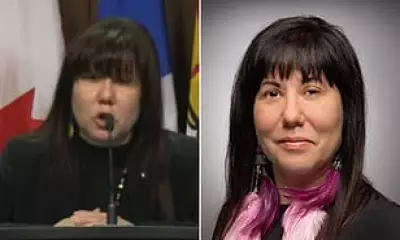
In the turbulent world of politics, a week can feel like an eternity. For Sally Donald, the past seven days have delivered exactly that experience. The 32-year-old aspiring politician has endured a relentless barrage of damaging headlines that have culminated in her abrupt resignation as the SNP candidate for Edinburgh Southern.
A Cascade of Controversy
The controversy began with revelations that Donald was under investigation regarding her receipt of Adult Disability Benefit, an in-work payment designed to assist disabled individuals with daily living costs. The story quickly escalated when Scottish Conservative leader Russell Findlay raised the matter at First Minister's Questions, applying significant pressure on her political superior, John Swinney.
Donald's troubles deepened further with reports that she has been instructed to repay nearly £20,000 to Social Security Scotland. Throughout this ordeal, Donald has maintained her innocence, emphasizing that she has not been arrested or charged with any criminal offence.

Perfect Political Storm
The timing of this scandal proved particularly damaging for the SNP, arriving as their benefits agency faces scrutiny over allegedly inadequate fraud detection systems. Critics argue that Social Security Scotland lacks sufficient robustness given the substantial taxpayer funds it administers.
Beyond the immediate controversy, the situation resonated with voters frustrated by perceived double standards in political conduct. The case gained traction despite competing international news, presenting what appeared to be a classic political morality tale: an aspiring SNP politician, who once famously described the party's election vehicle as 'the gravy bus,' now accused of improperly claiming benefits.
Beyond the Benefits Claim
This controversy extends far beyond the legitimacy of a single welfare claim or the operational effectiveness of Social Security Scotland. It represents a broader backlash against a particular style of politician and political culture that has become increasingly prevalent.
Sally Donald exemplifies a growing cohort of politicians who appear disconnected from the median voter. Her public persona, as showcased in a 2025 Instagram video produced for the Girls Who Talk Politics campaign, reveals a candidate whose daily routine includes morning makeup sessions, visits to fashionable New Town coffee shops, lunchtime shopping excursions, and workouts at trendy fitness studios.
What this carefully curated presentation notably lacks is any meaningful engagement with the realities of Edinburgh Southern, a constituency containing pockets of significant poverty, poor health outcomes, and below-average educational attainment.
The Holyrood Problem
Donald's case illuminates a deeper crisis within the Scottish Parliament. Holyrood has increasingly become populated by politicians with limited real-world experience beyond political corridors. The institution now predominantly comprises arts and social science graduates, public sector veterans, trade unionists, and former parliamentary staffers.
This career path typically involves serving as an assistant to an MSP or MP before securing a candidacy, provided one remains sufficiently on-message and inoffensive. The result is a parliament largely devoid of individuals with practical experience in business management, job creation, financial accountability, or competitive enterprise.
Consequences of Political Homogeneity
The dominance of this political class has produced measurable consequences. Parliamentary debates have deteriorated in quality, legislative scrutiny has become increasingly inadequate, and policy priorities have drifted away from public concerns. The unofficial motto of the Scottish Parliament appears to have become 'unity in mediocrity.'
Nearly three decades into devolution, Scotland struggles to attract political candidates of genuine substance and capability. While Holyrood contains a handful of competent MSPs who might succeed at Westminster, and a few more who are well-intentioned if not particularly effective, these remain exceptions rather than the rule.

Systemic Failure
The Sally Donald controversy raises fundamental questions about the devolution experiment itself. If, after all this time, the Scottish Parliament cannot attract members of sufficient calibre, perhaps it is time to reconsider whether the entire project has failed.
Donald's misfortune has placed her under intense scrutiny, but she represents merely one example of a broader problem. The parliamentary complex at the foot of Edinburgh's Royal Mile contains numerous individuals who entered politics primarily to be in politics, despite demonstrating limited aptitude for the role.
The Permanent Governing Class
The true challenge lies in what might be termed the permanent governing class—a technocratic elite that maintains control regardless of electoral outcomes. This group shows little inclination to relinquish power voluntarily, suggesting that meaningful change would require a democratic realignment comparable to Labour's displacement of the Liberal Party in the early twentieth century.
Ultimately, the responsibility extends beyond politicians themselves. The current political malaise persists because the public has grown accustomed to accepting mediocrity. Improvement will only arrive when citizens demand better representation and refuse to settle for anything less.
Sally Donald's political saga, while personally devastating for the candidate, has illuminated systemic weaknesses within Scottish politics. Her experience serves as a case study in how personal controversy can expose institutional failings, raising uncomfortable questions about political recruitment, representation, and the future of devolved governance in Scotland.