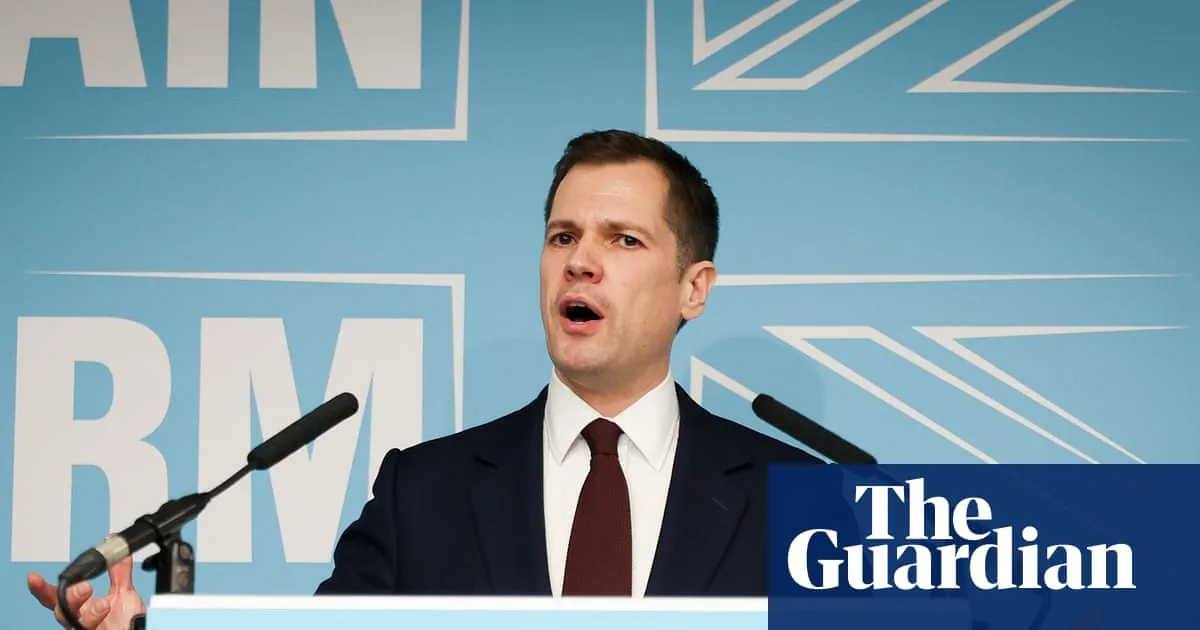
In a dramatic political move, former Conservative cabinet minister Robert Jenrick has crossed the floor to join Nigel Farage's Reform UK. The defection was announced at a press conference in London on 15 January 2026, with Farage himself looking on.
A Cabinet of Political Corpses?
The event marks another high-profile capture for Reform, which has been systematically recruiting disaffected figures from the Conservative right. Jenrick, once a key ally of Boris Johnson, becomes the latest in a line of defectors that Farage has welcomed into his fold. Critics argue this strategy sees Reform assembling what amounts to a "cabinet of taxidermied Tories" – former ministers stripped of their original power but given a new, silent role in a different political project.
The irony of the moment was not lost on observers. Farage, who has built his career on anti-establishment rhetoric, is now embracing figures from the very political class he claims to despise. Just days before the defection, he had described Jenrick as "a fraud". Similarly, earlier in the week, he cosied up to another politician who had once accused him of racism. This rapid shift from enemy to ally underscores the pragmatic, and some say chaotic, nature of Reform's expansion.
Shadow Cabinet Mole and Tory Fury
The Conservative reaction has been one of fury and attempts at damage control. Senior figures, including Kemi Badenoch, have sought to frame Jenrick's departure as a potential double-agent operation, dubbing him the "Ozempic Guy Burgess". According to reports, Badenoch was informed by a mole within Reform about Jenrick's imminent defection and was incensed that he attended a shadow cabinet meeting "behaving as if nothing was going on".
This episode has thrown a harsh light on the internal state of the Conservative Party. The revelation that Jenrick had recently "sat through a shadow cabinet awayday taking copious notes" on party strategy raises questions about confidentiality and loyalty within the crumbling Tory hierarchy. Farage, seizing on this disarray, repeatedly references the impending "May 7th catastrophe" for the Conservatives, speaking of a future defeat as if it is already a foregone conclusion.
Uniparty or Unichaos?
Reform's core message attacks the "uniparty" – a perceived consensus between the failing Conservative and Labour parties. However, Jenrick's defection risks morphing that narrative into one of "unichaos", as Reform itself becomes a broader tent housing figures from the political establishment it vowed to overthrow. The public's patience with this revolving door of politicians is wearing thin, fuelled by a profound sense that it's the same faces creating different crises.
This disillusionment is rooted in tangible failures of governance. The article highlights the stunning case of South East Water, where thousands of customers have been without water for a week following repeated outages since November. A government review of the company's licence could, absurdly, require 25 years' notice to terminate it. It is this breed of systemic failure that drives voters towards alternatives like Reform, even if they are uncertain he holds the solutions.
While Nigel Farage undoubtedly possesses the momentum and will to tear down dysfunctional institutions, his ability to fix them or build sustainable alternatives remains untested. The defection of Robert Jenrick is a significant moment in the reshaping of the UK's right-wing politics, but it also symbolises a deeper political fragmentation where old loyalties are dissolving, and new alliances are built on shifting sands. The ultimate beneficiary of this chaos is yet to be determined.




