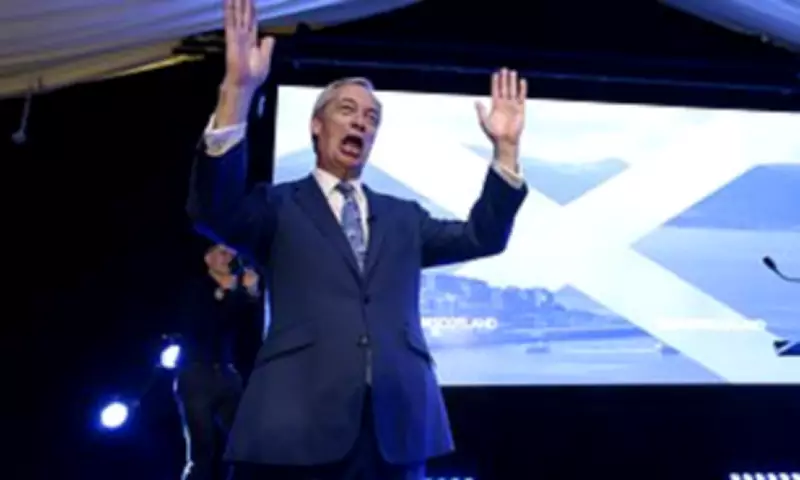
Families in Scotland could be confronted with a significant new financial burden under radical tax proposals recently unveiled as part of Reform UK's manifesto for the Holyrood parliament. The party, led by Nigel Farage, has outlined plans to completely phase out the existing business rates system and the Land and Buildings Transaction Tax (LBTT), which is currently levied on property purchases.
A Single Annual Property Tax
In their place, Reform UK advocates for the introduction of a single, annual property tax. The party describes this proposed tax as being fairer and more predictable for both households and businesses. Crucially, the party has confirmed that this transition would be executed in a 'revenue-neutral' manner. This means the new annual property tax is designed to raise exactly the same total revenue for the government as the combined income currently generated by the LBTT and the business rates it seeks to replace.
Financial Impact on Households
However, this structural shift would fundamentally change how property taxation is experienced. Instead of paying the LBTT as a one-off charge during a home purchase, families would be required to pay this new tax every single year. Analysis conducted by the Scottish Conservatives has estimated the potential cost, suggesting that the average annual charge for households and businesses under this new system could reach approximately £1,608.

Scottish Conservative finance spokesman Craig Hoy strongly criticised the proposal, stating, 'Handing every homeowner a £1,600 bill, on top of their existing council tax obligations, would be an act of sheer madness and place an intolerable strain on family budgets.'
Broader Manifesto Pledges and Scrutiny
The property tax plan is part of a wider set of fiscal policies within Reform UK's Scottish manifesto. One of the most prominent pledges is a commitment to revert Scotland's income tax system to align with the three-band structure used in the rest of the United Kingdom. Furthermore, the party proposes setting each of these bands initially 1p below the corresponding UK rate, with an ambition to increase this differential to 3p below within the first five years of implementation.
Institute for Fiscal Studies Critique
This entire fiscal approach came under intense scrutiny yesterday from the highly respected Institute for Fiscal Studies (IFS). The IFS issued a damning assessment, declaring that Reform UK's Scottish manifesto is 'not fiscally credible'. Their analysis indicates that the proposed 1p cut to income tax rates would carry an enormous annual cost of around £2.3 billion by the year 2030. The cost would escalate dramatically to approximately £4 billion per year if the 3p cut were enacted.
The IFS also directly challenged the economic rationale behind the proposals, stating that the party's assertion that these substantial tax cuts would somehow pay for themselves through stimulated economic growth is simply 'not credible' based on available evidence and economic modelling.
Political Opposition and Reactions
The criticism has been echoed across the political spectrum. Scottish Labour's finance spokesman, Michael Marra, dismissed the manifesto outright, commenting, 'Reform's manifesto is nothing more than a flimsy document that provides no credible, costed solutions to the serious and complex problems facing Scotland today. It offers empty promises without a realistic plan for funding them.'
The proposal to replace transaction-based taxes with an annual levy represents a major shift in Scottish fiscal policy and has ignited a fierce debate about taxation, economic credibility, and the financial pressures on ordinary families. The plan's reception suggests a challenging path ahead for these proposals as they face continued examination from experts, political opponents, and the public.