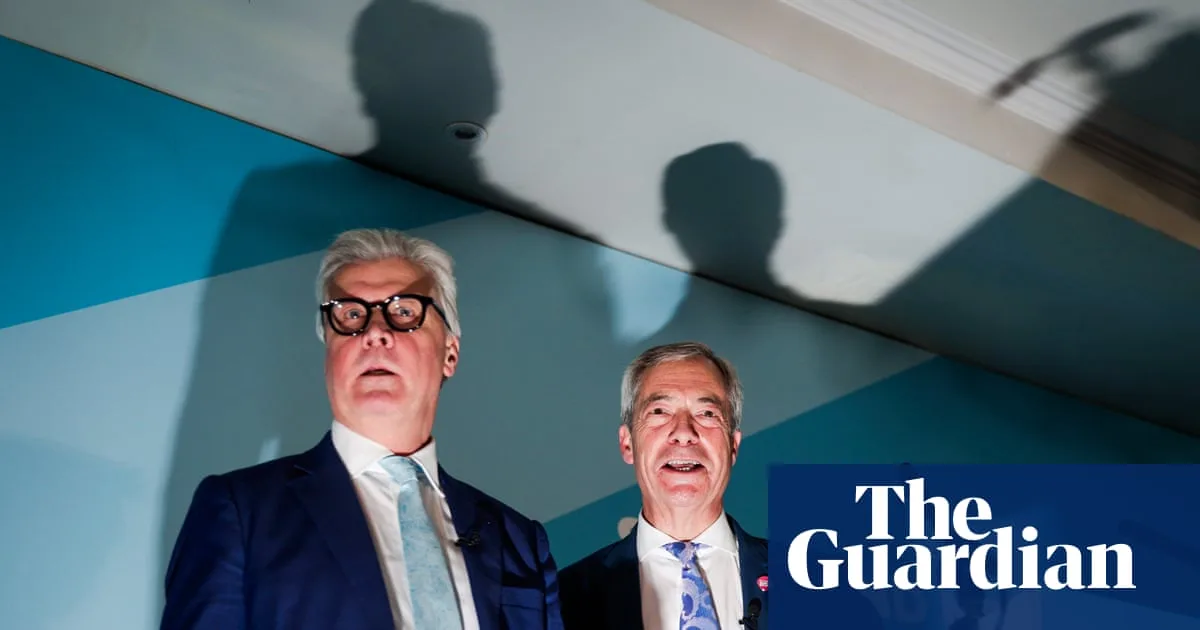
Reform UK Gains First Peer as Lord Offord Defects from Conservatives
Reform UK secures first peer with Tory defection

In a significant blow to Rishi Sunak's Conservative Party, one of its own peers has crossed the floor to join the rival Reform UK party. Lord Malcolm Offord, a minister in the Scotland Office, has announced his defection, marking a historic moment for Nigel Farage's party as it secures its first-ever representative in the House of Lords.

A Defection Shakes Westminster

The political landscape shifted on Friday when Lord Malcolm Offord confirmed he was leaving the Conservative benches to sit as a Reform UK peer. The move, confirmed by both Reform UK and government sources, represents a tangible breakthrough for the party in the corridors of Westminster power. Offord, who was appointed a life peer by Boris Johnson in 2021 and later served as a parliamentary under-secretary of state, cited a fundamental disagreement with the direction of the current Conservative leadership under Prime Minister Rishi Sunak.

In a statement, Lord Offord was forthright in his criticism, declaring that the Conservative Party had "lost its way" and abandoned the core principles that once defined it. He argued that the party was no longer effectively addressing the critical concerns of the British public, particularly on issues like controlling immigration and managing the nation's finances. His alignment with Reform UK's platform, which he described as offering a clear, common-sense alternative, prompted the dramatic switch.

Reform's Landmark Entry into the Lords

For Reform UK, formerly known as the Brexit Party, Offord's defection is a milestone. While the party has made considerable waves in opinion polls and in recent by-elections, it has until now lacked any presence in the unelected upper chamber of Parliament. The acquisition of a sitting peer provides Nigel Farage's project with an official voice within the legislature, granting it a platform for scrutiny and debate that was previously absent.

Richard Tice, the leader of Reform UK, hailed the move as a "historic moment" for the party. He emphasised that Offord's decision underscored the growing appeal of Reform's message and sent a clear signal of the party's intent to become a permanent and influential force in British politics. The defection is seen as a major coup that will bolster Reform's credibility as it prepares for the next general election.

Political Fallout and Conservative Response

The reaction from the Conservative Party was one of swift dismissal and criticism. A spokesperson for the party downplayed the significance of the defection, characterising Lord Offord as a "little-known, low-profile peer" whose departure would have minimal impact. They sought to frame the move as an isolated incident rather than a symptom of wider discontent within Tory ranks.

However, political analysts suggest the defection is symbolically potent. It exposes the ongoing fractures within the centre-right electorate and highlights the persistent challenge Reform UK poses to the Conservatives, particularly in siphoning off voters dissatisfied with the government's record. The loss of a serving minister, even from the Lords, is an undeniable embarrassment for Prime Minister Sunak, occurring at a time when he seeks to present a united front.

Looking ahead, Lord Offord's role will be closely watched. As Reform UK's sole peer, he is expected to be a vocal critic of government policy, especially on his stated priorities of fiscal responsibility and immigration. His presence ensures that Reform's arguments will now be heard directly within parliamentary debates, potentially influencing the tone and content of political discourse in the run-up to the next national vote. This defection may well be remembered as the moment Reform UK truly arrived as a player within the Westminster establishment.




