Nepal's Political Landscape Transformed as Rap Star Takes Office
In a historic shift for the Himalayan nation, Balendra Shah, a 35-year-old hip-hop artist and former mayor, was sworn in as Nepal's youngest prime minister on Friday, 27 March 2026. The ceremony at the President's House in Kathmandu marked the culmination of a remarkable political ascent that has upended the country's traditional power structures.
From Rap Battles to the Premiership
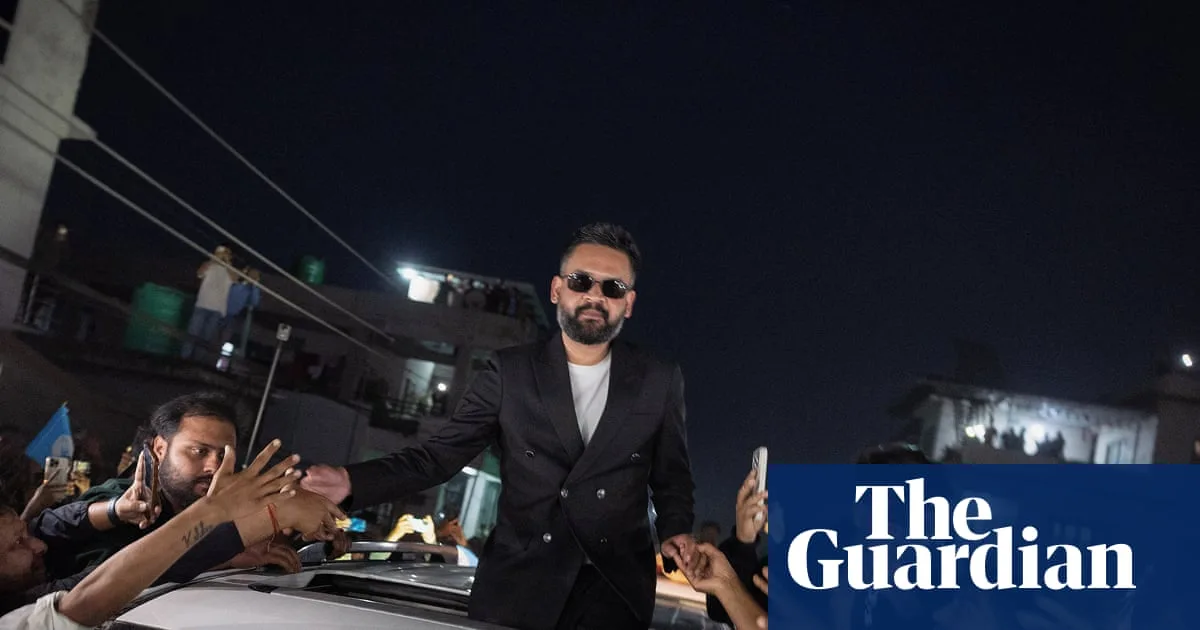
Mr Shah, popularly known as "Balen," took the oath of office clad in his signature style: skin-tight trousers, a matching jacket, the traditional black Nepali cloth cap, and dark sunglasses. His election as leader of the centrist Rastriya Swatantra Party (RSP) came after securing a substantial mandate in parliamentary elections earlier this month, defeating veteran four-time prime minister Khadga Prasad Sharma Oli in his own constituency.
The 74-year-old Oli congratulated his successor on social media, wishing him a "smooth and successful" term despite their political rivalry. This outcome represents a dramatic generational shift in a country where power has largely rotated between established parties like the Nepali Congress and communist groups since the 1990s.
Youth-Driven Movement Gains Momentum
Shah emerged as a leading figure during last year's Gen Z-led civil unrest that shook Nepal, with protests initially erupting after the Oli government imposed a social media ban. The demonstrations quickly expanded to address broader concerns about corruption, inequality, and youth unemployment, resulting in at least 77 fatalities according to Al Jazeera reports.
"It was so overwhelming because earlier whenever there used to be elections we hardly used to know, we hardly used to get that kind of a vibe," said Sakina Batt, a 35-year-old Kathmandu resident. "But this time it felt like there were so many people participating, and taking interest in politics."
Musical Background Informs Political Message
Before entering politics, Shah was a prominent figure in Nepal's hip-hop scene, first gaining national attention through a 2013 rap battle appearance on Raw Barz. His music frequently criticized political corruption and social inequality, with tracks like "Nepal Haseko" (Nepal Smiling) and "Balidan" (Sacrifice) becoming anthems for the protest movement and accumulating millions of YouTube views.
"Most of his raps are about the country being corrupted and youth leaving abroad for employment," explained Batt. "Rappers are observers. Whatever they rap, there is a fact involved in that. He kind of understands his country, kind of understands his people, and he kind of knows the feelings and the emotions of the youth."
Controversial Mayoral Tenure Paved the Way
Shah's political journey began in 2022 when he won Kathmandu's mayoral election as an independent candidate, defeating established party candidates with 61,767 votes. During his tenure, he pursued initiatives addressing waste disposal problems, demolished illegal structures, and implemented education reforms including a merit-based online scholarship system.
However, his approach drew criticism from rights groups who accused his administration of heavy-handed policies, particularly regarding the relocation of squatters and regulation of street vendors. His controversial social media post in November 2025, which used expletives against the US, India, China, and Nepal's political parties, also sparked diplomatic concerns and public condemnation.
Digital Strategy and Youth Appeal
The RSP's campaign combined large rallies with an extensive digital strategy targeting younger voters, with over 900,000 first-time voters joining Nepal's nearly 19 million electorate. Strategy teams organized road shows across multiple districts while supporters produced AI-generated campaign music played at rallies.
Shah himself generally avoided traditional media interviews, instead communicating through social media, podcasts, and televised appearances to his millions of followers online. His distinctive public image—defined by his beard, dark clothing, and trademark sunglasses—became so popular that shops in Kathmandu reportedly ran out of "Balen Shah glasses" at one point.
High Expectations and Future Challenges
The new prime minister faces enormous expectations in a country where youth unemployment stands at 20.6 percent. Shah has pledged to create 1.2 million jobs and curb labor migration, but analysts caution about the challenges ahead.
"The problem or challenge with this new party would be to deliver things, given the limited resources and the limited institutional support," independent analyst Keshab Prasad Poudel told the Associated Press. "Because people have high expectations, that doesn't necessarily mean that the new party can fulfil it."
Sudeep Bista, a Nepali pilot, expressed similar reservations: "So far we have seen Balen only on the domestic platform dealing with internal issues of Kathmandu alone... But how he will fare on the international stage is going to be a real challenge."
Despite these concerns, Shah's supporters remain optimistic. RSP party member Khagendra Chapagain emphasized that "the future prime minister has clearly spoken that there will be no compromise when it comes to developing the country." As Nepal enters this new political era, all eyes will be on whether this rap star-turned-politician can translate his anti-establishment rhetoric into tangible governance results for the nation's 30 million people.






