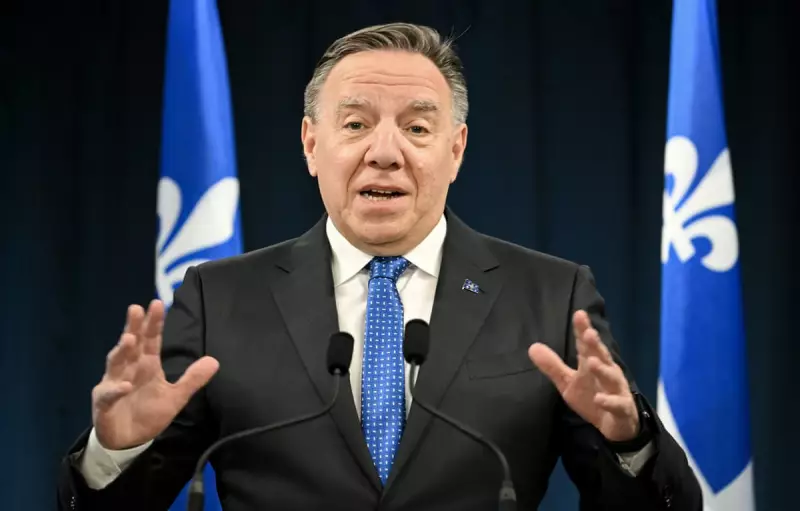
In a stunning political development, the Premier of Quebec, François Legault, has announced his immediate resignation as leader of the province. The polarising figure made the surprise announcement at a hastily arranged press conference in Quebec City, leaving his governing Coalition Avenir Québec (CAQ) party in a state of flux just months before a scheduled provincial election.
A Sudden Exit for a Founding Leader
Legault, a former businessman who founded the CAQ, stated that serving as premier had been "the greatest honour of my life." He expressed pride in establishing the party and leading it to consecutive majority governments in 2018 and 2022. However, he will now step aside once his party selects a new leader, a process expected to take several months. This leaves the CAQ with critically little time to regroup before voters go to the polls in November.
Mounting Scandals and Controversial Policies
Legault's abrupt departure follows months of escalating chaos that has severely damaged the CAQ's standing. The government has been rocked by a series of costly scandals and divisive policy decisions.

A controversial law altering how provincial doctors are paid led to such public uproar that it forced the resignation of Health Minister Christian Dubé. Simultaneously, a snowballing scandal over the botched modernisation of an online portal for licence renewals and vehicle registration, plagued by hundreds of millions of dollars in cost overruns, prompted a public inquiry. This debacle led to the resignation of Cybersecurity Minister Éric Caire in February 2025.
Secularism and Language at the Heart of the Conflict
Beyond specific scandals, the CAQ government has consistently courted national and international controversy by aggressively pursuing a secularist agenda. In August, it moved to ban public prayer, a decision civil rights groups labelled "alarming" and an infringement on the freedoms of religious minorities.
This followed the 2019 passage of Bill 21, which prohibits public sector workers like teachers, police officers, and judges from wearing religious symbols at work. The law conflicts with both Quebec's and Canada's charters of rights and freedoms.
The government also enacted sweeping French language protections to counter what it sees as the creep of anglophone culture. Legault frequently stated his pride in leading a "francophone nation in North America" and framed language protection as a core duty.
Additionally, Legault's government clashed sharply with federal authorities over immigration. Quebec's immigration minister, Jean-François Roberge, argued the province could not "welcome all the world’s misery," referencing an influx of asylum seekers, many from Haiti. Legault insisted the issue was one of volume, not origin.
Political Fallout and a Shifting Landscape
The resignation plunges the CAQ into a leadership crisis, compounded by the recent resignation of Quebec Liberal leader Pablo Rodriguez over separate vote-buying allegations. With both major parties leaderless, the nationalist Parti Québécois currently leads in provincial polls.
Its leader, Paul St-Pierre Plamondon, has pledged to call a third referendum on Quebec's separation from Canada if his party wins the November election. Legault's dramatic exit has therefore not only reshaped the imminent electoral battle but has also potentially altered the long-term constitutional future of Quebec within Canada.