Public Health Emerges as Pivotal Issue in US Midterm Campaigns
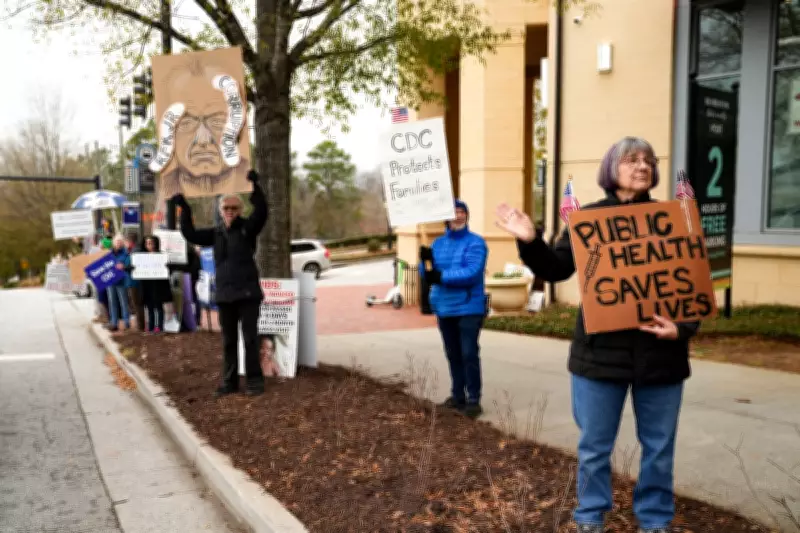
In a significant shift, public health is taking centre stage in the US midterm election campaigns, driven by growing concerns over its politicisation. Demonstrators gathered outside the Center for Disease Control (CDC) headquarters in Atlanta, Georgia, on 4 December 2025, highlighting the urgency of the issue. Amid a backdrop of chaotic policies under the Trump administration, candidates are now pushing back by integrating public health into their core platforms.
Grassroots Movement Launches Health Platform
Defend Public Health, a grassroots organisation, has introduced the People’s Health Platform, a set of guiding principles for campaigns. This platform emphasises ensuring healthcare for all, protecting sexual, reproductive, and gender-affirming care, preparing for climate crises and pandemics, and taxing billionaires. Richard Pan, a pediatrician running for California’s sixth congressional district, stated, "Public health needs to be a higher priority. It’s already been politicised, but it hasn’t been a focus until now."
Administration Actions Under Scrutiny
Under Robert F Kennedy Jr, the US Department of Health and Human Services (HHS) has implemented controversial measures, including slashing routine childhood immunisations, cutting public health funding, spreading misinformation during measles outbreaks, and proposing to end Medicaid and Medicare payments for gender-affirming care. Nina Schwalbe, a public health leader running for New York’s 12th congressional district, criticised these actions, saying, "The Trump administration has taken an axe to our health and our rights—this is malice, neglect, and ignorance."

Call for Equitable and Bold Reforms
Schwalbe hailed the new health platform as "non-negotiable for all candidates," advocating for equitable foundations and bolder actions to enhance community health. Elizabeth Jacobs, professor emerita at the University of Arizona and a founding member of Defend Public Health, added, "We want to make public health front and centre in these midterms. We must reimagine it, not just revert to pre-crisis levels, to serve everyone better."
Platform Details and Voter Engagement
The platform’s key tenets include:
- Guaranteeing universal access to healthcare
- Restoring funding for scientific research
- Ending attacks on contraception, abortion, and gender-affirming care
- Fighting health inequalities
- Rejoining international health bodies like the World Health Organization
Defend Public Health plans to approach candidates from all parties to endorse the platform, with names made public to inform voters. Jacobs noted, "Voters have the right to know which candidates will protect their health." Post-election, the group will release strategies for implementation.
Broader Healthcare Challenges and Solutions
Schwalbe highlighted an affordability crisis, with skyrocketing healthcare costs affecting families nationwide. She proposed lowering drug prices, providing basic health services, and expanding Medicare, Medicaid, and the Affordable Care Act, aiming for single-payer healthcare. "Where you live or what you earn shouldn’t determine your care," she asserted.
Need for Stable Funding and Political Insulation
Pan stressed the importance of stable public health funding, criticising the boom-and-bust cycle of panic and neglect. "Public health is part of public safety and a core government function," he said, calling for baseline support. He also advocated for insulating public health from political interference, questioning protections for civil servants and qualifications for appointees, such as the stalled nomination of Casey Means for US surgeon general.
Non-Partisan Appeal and Future Outlook
Jacobs emphasised the non-partisan nature of public health, stating, "We want to reach people on both sides of the aisle. Parents everywhere want their kids to be healthy, and we have more in common than differences." With issues like rural hospital closures and disease outbreaks, awareness is growing about policy impacts. Schwalbe concluded, "A healthy democracy requires healthy people, making public health central to our platforms."