Orbán's Global Right-Wing Alliance May Backfire in Hungary's Election
Viktor Orbán, the Hungarian Prime Minister, has become a central figurehead for the international authoritarian and nationalist right-wing movement. However, this prominent global role could now cost him dearly in Hungary's parliamentary elections scheduled for 12 April. Orbán and his Fidesz party are currently trailing in most opinion polls, with his main challenger, Péter Magyar of the Tisza party, leading by nearly ten percentage points. The public debate in Hungary has shifted dramatically, focusing not on whether the opposition can win, but on whether Orbán will accept a potential defeat.
International Support and Domestic Alienation
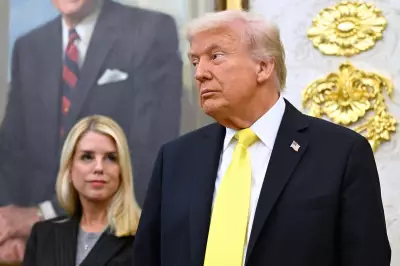
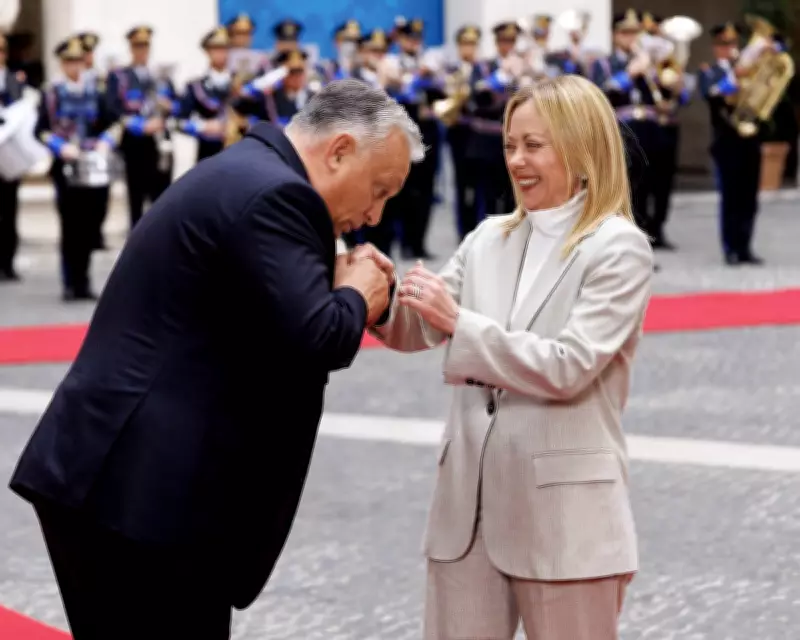
Orbán has garnered significant international backing from far-right leaders worldwide. Last month, US President Donald Trump publicly endorsed Orbán on Truth Social, calling him a "true friend, fighter, and WINNER" and a "fantastic guy." In mid-January, a joint video message featured a dozen prominent populist nationalist figures, including Israel's Prime Minister Benjamin Netanyahu, Argentina's President Javier Milei, Italy's Prime Minister Giorgia Meloni, and the Czech Prime Minister Andrej Babiš. Marine Le Pen, former leader of France's far-right National Rally, praised Orbán for strengthening the "camp of patriots," while Alice Weidel, co-leader of Germany's Alternative für Deutschland (AfD), highlighted his controversial pro-Putin stance, declaring, "Europe needs Viktor Orbán!"
This global support stems from Orbán's articulation of the "illiberal state" concept, which he outlined as early as 2014. He has systematically dismantled key pillars of liberal democracy, such as an independent judiciary and a free press, during his sixteen years in power. In 2022, the European Parliament declared Hungary an "electoral autocracy," no longer considered a full democracy. Orbán's success in implementing this model has made him a superstar within the international right-wing movement.

The Paradox of International Nationalism
However, this very attempt to construct an international nationalism—a global collaboration among authoritarian right-wing forces—may contribute to Orbán's potential downfall. The roots of this paradox lie deep in Hungary's history. After the First World War, the Treaty of Trianon stripped Hungary of about three-fifths of its territory and two-thirds of its Hungarian-speaking population, a trauma that has left lasting scars. In 2010, one of Orbán's first measures was to grant Hungarian-speaking minorities in neighbouring countries the right to vote in Hungarian parliamentary elections, securing overwhelming support from these communities.
Yet, this political alliance is now fraying due to Orbán's close collaboration with his nationalist allies. In last year's Romanian presidential election, Orbán backed the far-right, pro-Putin candidate George Simion, despite Simion's openly anti-Hungarian rhetoric. In response, an overwhelming majority of Romania's Hungarian minority defiantly voted for the liberal, pro-EU candidate Nicușor Dan, playing a decisive role in his narrow victory. This shift indicates that Orbán may have gambled away his most loyal voter base, reflecting a deeply ingrained ideological reflex where the struggle against the liberal state takes precedence over national community rights.
Ideological Contradictions and Electoral Consequences
The new nationalist international is united by a common worldview, described by Sweden Democrats' ideologue Mattias Karlsson as a life-and-death struggle between "value-conservative patriots and cosmopolitan cultural radicals." However, this movement is inherently contradictory, as political leaders who prioritise their nation's interests above all else will inevitably clash with others guided by the same principle. This tension was evident during the Greenland crisis, where even Trump's allies like Nigel Farage criticised his actions as "a very hostile act."

Orbán's support for far-right counterparts in other countries, such as Robert Fico in Slovakia—despite Fico's Hungary-bashing rhetoric—mirrors similar patterns seen in Sweden, where the Sweden Democrats support Finland's Finns Party despite attacks on Finland's Swedish-speaking minority. This authoritarian reflex, where preserving and strengthening authoritarian rule trumps concern for specific national communities, may ultimately cost Orbán the upcoming Hungarian elections. If defeated, he could lose his position as a leading figure in the global authoritarian, nationalist right-wing populist movement.
The significance of the Hungarian elections extends far beyond national borders, serving as a critical test for the viability of the illiberal state model. As Orbán faces this electoral challenge, the international right-wing movement watches closely, aware that his potential defeat could signal broader shifts in the global political landscape.