One Nation Sees Political Opportunity in Victoria's Bushfire Fallout
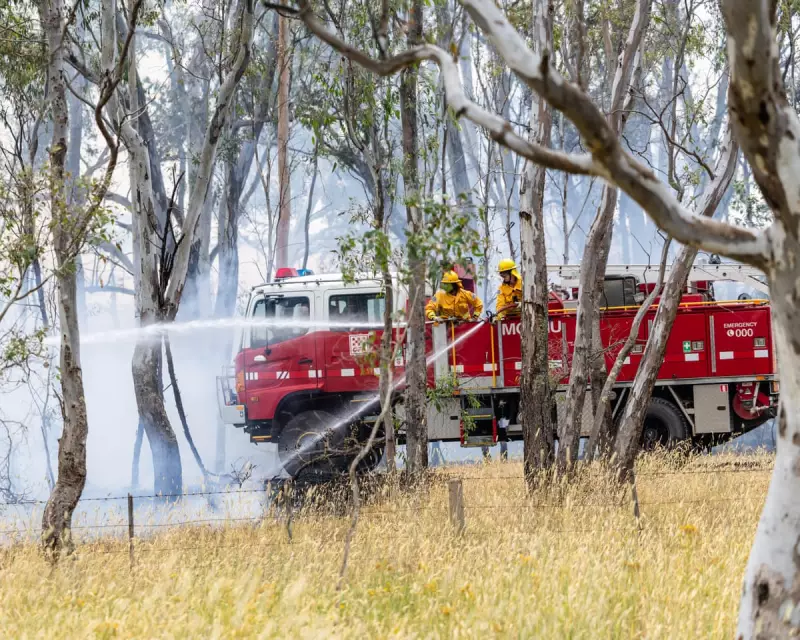
Firefighters across Victoria have received widespread commendation for their heroic efforts in containing devastating bushfires, yet persistent criticism continues to target the state government's response and its funding of the Country Fire Authority (CFA). This growing regional discontent has created a political opening that the minor party One Nation is actively seeking to exploit ahead of November's state election.
Regional Rage and Political Mobilisation
The political atmosphere in regional Victoria has become increasingly volatile. Last week in the fire-affected town of Alexandra, an angry group of locals gathered outside a hospital where Premier Jacinta Allan was holding a press conference. After demanding to speak with her, the protesters surrounded a car carrying Treasurer Jaclyn Symes – mistakenly believing Allan was inside – and blocked its departure. The premier was advised to exit through the rear of the hospital, an image that has reinforced perceptions among some regional residents that her government remains disconnected from their plight.
This sentiment has been enthusiastically embraced by One Nation as the party works to expand its Victorian presence. The minor party has been buoyed by recent Newspoll results showing it polling higher than the Coalition for the first time at a federal level, creating momentum for its state campaign.

Bushfire Devastation and Funding Controversies
On 9 January, firefighters confronted catastrophic conditions reminiscent of the 2019-20 Black Summer, with strong winds and extreme heat fuelling blazes that have consumed 418,000 hectares. The fires have destroyed 1,500 structures including 435 homes, while claiming the lives of 38,000 livestock. Although firefighters have successfully contained 200 blazes to just six as of Tuesday, criticism of the government's response has remained relentless.
The controversy extends to CFA funding, with the organisation's 2024-25 annual report revealing a $21.8 million funding increase that wasn't tabled in parliament until Tuesday – nearly three months overdue. This delay has fuelled accusations of government mismanagement during a critical emergency period.
Political Alliances and Policy Battles
One Nation has strategically positioned itself as a vehicle for regional discontent, aligning with various vocal critics of government policy. These include United Firefighters Union secretary Peter Marshall, Andrew Weidemann from the Across Victoria Alliance, and John Houston, president of CFA Volunteers Group Inc. Last week, this trio jointly called for an upper house inquiry into the bushfires – a proposal promptly rejected by the government.
The political landscape has been further complicated by the government's emergency services levy, which expands and increases the existing fire services levy to cover additional emergency services. Both Weidemann and Houston's groups were established in the months following the levy's announcement, indicating organised opposition to the policy.
One Nation Victorian secretary Bianca Colecchia has directly linked bushfire response issues to the levy controversy, stating: "It is not good enough. Victorians deserve better, and frontline workers deserve to have the proper equipment to safely perform their job and keep our communities safe. Where are these funds going?"
Election Strategy and Political Dynamics
One Nation currently holds a single upper house seat in Victoria but has ambitious plans for expansion in the upcoming election. Colecchia describes this as potentially the party's "biggest election yet" in the state, confirming candidates will be fielded in every lower and upper house seat.
"I really think that all seats are up for grabs this election," Colecchia asserts, noting that while Victoria tends to be perceived as progressive, this view primarily reflects inner-city Melbourne rather than regional perspectives. The party identifies regional areas as its strongest territory and plans to campaign on cost of living, crime, housing, energy policy, and Victoria's treaty with First Nations people.

Next month, former Nationals leader Barnaby Joyce – One Nation's newest recruit – will attend a conference in Horsham organised by the Across Victoria Alliance. Several alliance members are reportedly considering standing as One Nation candidates in November, though Colecchia denies any formal link between the organisations.
Scepticism and Political Pushback
Not all political observers believe One Nation's strategy will prove successful. Kos Samaras, former Labor strategist turned pollster with RedBridge, expresses doubt about the party's Victorian prospects. He suggests Joyce would be unpopular in Melbourne seats while noting the Victorian Nationals brand remains "the strongest in the country."
"It's going to give the National party the shits, it's going to suck up resources, but I don't think One Nation is going to have any luck against the National party," Samaras predicts.
This perspective finds support from Nationals leader Danny O'Brien, who told reporters last week: "Look, I hear a lot of talk about One Nation. But from One Nation, that's all I hear, is talk." O'Brien referenced Joyce's 2017 comments that Australia would "go down the toilet" if run by One Nation, suggesting this assessment "probably says it better than I could."
As Victoria approaches its November election, the political landscape remains deeply divided. With regional communities grappling with bushfire recovery and policy controversies, One Nation's attempt to convert discontent into electoral success will test whether protest sentiment can translate into tangible political gains against established party structures.