California Governor's Memoir Sparks Controversy Over Upbringing Narrative
California Governor Gavin Newsom has ignited a political firestorm with recent comments about his childhood while promoting his new memoir. During an event in Atlanta, Newsom told a predominantly black audience about his humble beginnings, describing himself as a "960 SAT guy" who struggled with undiagnosed dyslexia and worked menial jobs to help his mother make ends meet.
The governor's remarks drew immediate criticism from multiple quarters. Rapper Nikki Minaj accused him of trying to appeal to black voters by "telling them how stupid he is and that he can’t read." Republican Senator Tim Scott responded sharply, stating that "black Americans aren't your low bar" and accusing Newsom of patronizing the black community.
A Tale of Two Childhoods
In his memoir "Young Man in a Hurry: A Memoir of Discovery," Newsom attempts to counter what he calls a "one-dimensional portrait" of his privileged upbringing. He describes growing up in what he terms "the split personality of my life" - caught between the wealthy world of his father and the financial struggles of his mother.

Newsom writes about his mother Tessa working three jobs simultaneously as a bookkeeper, assistant retail buyer, waitress, and real estate agent after divorcing when Newsom was just two years old. The family moved five times in a decade searching for better housing, with his mother renting out rooms and taking in foster children to help pay expenses.
The governor recounts childhood experiences including being bullied at Redwood High School in Marin County, where classmates called him "Newscum." He describes overcoming this by modeling himself after Pierce Brosnan's character in the television series "Remington Steele," slicking back his hair with gel and occasionally wearing suits to school.
The Getty Connection
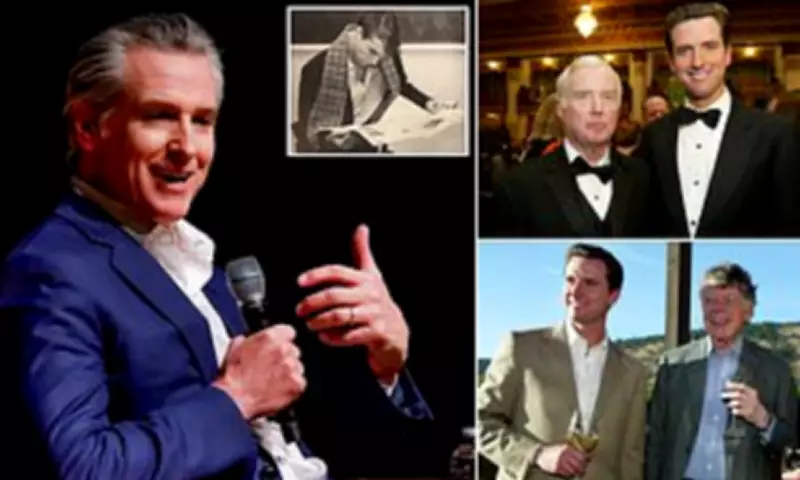
Critics have been quick to highlight the significant disconnect between Newsom's narrative of struggle and his documented connections to one of America's wealthiest families. Newsom's father, William Newsom III, was an appellate judge and close confidant to the Getty oil billionaire family, with Gordon Getty calling the elder Newsom his "best, best friend."
The governor's childhood included extraordinary privileges that contradict his "just like you" messaging. Gordon Getty once took the young Gavin to meet the King of Spain aboard the family's private jet, where Newsom wore a tailored Brioni suit. The Getty family also took him on African safaris where he flew over the Serengeti in a hot air balloon, helicopter trips to watch polar bears in Canada's Hudson Bay, and fishing expeditions in Oregon.
Newsom's business success further complicates his narrative. At age 24, he founded PlumpJack winery with financial backing from the Getty family. The business grew to include wineries, restaurants, and hotels, making Newsom a millionaire before he entered politics. The winery's name itself comes from an opera composed by Gordon Getty in the 1980s.
Political Implications for 2028
This controversy comes at a critical time for Newsom, who is widely considered a potential Democratic presidential candidate in 2028. The governor's attempt to reshape his public image faces significant challenges given the well-documented facts of his upbringing and early career.
Newsom acknowledges in his book that his mother warned him that "entry into the Getty world would rob me of my own hard-earned story." He writes about returning from Getty family trips to find his mother giving him "the silent treatment" before returning to their financially strained reality.
The governor does have genuine obstacles he overcame, particularly his dyslexia. He describes in his 2023 inaugural address how he would fake illnesses to avoid classes and bite down on thermometers to raise his temperature. However, critics note he doesn't mention in his book that he received a letter of recommendation to Santa Clara University from family friend and California Governor Jerry Brown.

Mixed Reactions and Political Fallout
Political analysts suggest Newsom faces an "uphill task" to shed his image of privilege. Steve Hilton, California Republican gubernatorial candidate, called Newsom's narrative "so gross" and "a pathetic attempt to pander to people" that he believes will "turn people off massively."
Newsom defended his portrayal in a recent interview with the Los Angeles Times, stating: "I’m not trying to be something I’m not. I’m not trying to talk about, you know, 'I was born in a town called Hope with no running water.' That’s not what this book is about, but it’s a very different portrayal than the one I think nine out of ten people believe."
As the 2028 presidential election cycle approaches, Newsom's ability to connect with ordinary voters through his personal story remains uncertain. The tension between his narrative of struggle and his documented privileged associations continues to fuel skepticism about his authenticity and political intentions.