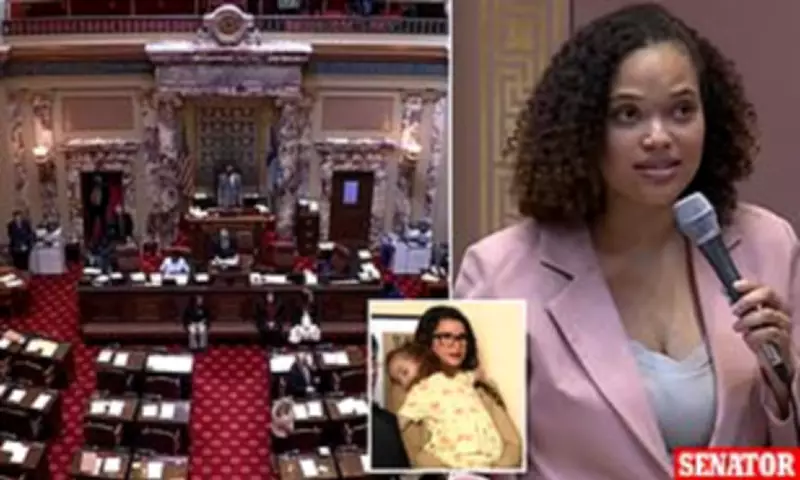
Minnesota Senate Ends 168-Year Ban, Allows Children on Chamber Floor
In a landmark decision to support working parents, the Minnesota Senate has voted to permit lawmakers' small children on the chamber floor, scrapping a rule that had stood for 168 years. The move, approved on Wednesday, follows pressure from women across the political spectrum to create a more family-friendly legislative environment.
A Historic Shift in Senate Tradition
While the Minnesota House has allowed children since 2013, the Senate had maintained rigid formalities, including only recently lifting a ban on drinking water at desks. The new rule enables legislators to care for and breastfeed their children while performing their duties, addressing long-standing barriers for parents in government.
Senator Clare Oumou Verbeten, who sparked the change after being removed from the floor two weeks ago for bringing her seven-month-old son, Leo, hailed the decision. 'It was long overdue to make sure that this is a more family-friendly institution, that we can be parents and we can be senators,' she stated.

Driving Change Through Personal Experience
Verbeten, alongside Senator Julia Coleman, led the effort to transform the narrative for parents in government. The resolution passed with a 41–25 vote, marking a significant victory for family inclusivity. Coleman described the measure as a game-changer, alleviating the 'unlimited burden' and sense of 'drowning' faced by women with young children in the chamber.
'There is no space or time given for mothers who are trying to breastfeed while serving in the Senate,' Coleman emphasized. She recounted leaving her three-year-old child in a hallway during a vote, highlighting the emotional toll of balancing parenting with legislative responsibilities.
Heartbreaking Testimonies Highlight Urgency
Senator Erin Maye Quade shared a poignant account of losing her ability to breastfeed her daughter due to the job's constraints. Unable to drink enough water during lengthy debates, her milk supply dried up, leading to a hospital visit where doctors insisted on breastfeeding for her daughter's health. 'I just started crying because I couldn't give her breast milk because I didn't produce anymore,' she told the chamber.
Coleman recalled a moment from her first term when a fellow senator was escorted out for bringing her children, turning to her and saying, 'Good luck being a mom and doing this job.' She warned that such stories deter young parents, especially women, from pursuing public office.
Opposition and Proposed Amendments
Despite strong support, the change faced opposition from some senators who raised concerns about distractions, limited space, and special benefits not available to most workers. Senator Karin Housley argued for more deliberation, noting the 'seriousness' of the job and the decade-long debate over water bottles.
Several amendments were proposed to limit the rule:
- Senator Carla Nelson suggested restricting it to children under one, aligning with the US Senate's approach.
- Others proposed age caps of five or ten, while Senate Minority Leader Mark Johnson sought an expiration at year's end.
- Senator Rich Draheim offered converting a conference room into a parenting space.
All amendments failed, with proponents like Senator Liz Bolden advocating for 'trusting parents to decide what is best, what is needed.'
Broader Implications and Final Approval
Senator Alice Mann criticized the old rule as a barrier preventing women from fully participating, noting that women comprise only 37 percent of the legislature. 'Just because the Senate moves an inch every 10 years is no excuse to continue to exclude women from doing their jobs fully,' she asserted.
The 90-minute debate concluded with the rule's passage, and Verbeten celebrated the historic change at a press conference. 'Thanks to these amazing moms who are behind me, we worked to change the rules,' she said, ensuring no other parent faces the embarrassment she endured.

This decision represents a significant step toward modernizing the Minnesota Senate, fostering inclusivity, and supporting working parents in public service.