First Lady Melania Trump Reportedly Influences President's Shift on Deportation Agenda
President Donald Trump has significantly pulled back from his previously aggressive deportation policies, with sources indicating that First Lady Melania Trump may be a key influence behind this change of heart. According to a report from the Wall Street Journal, the President engaged in conversations with his wife and Chief of Staff Susie Wiles, leading him to believe that some of his illegal immigration enforcement measures had gone too far.
Focus on 'Bad Guys' and Reduced Rhetoric
Trump now wants his administration to concentrate on arresting what he terms 'bad guys' while tempering the heated rhetoric surrounding 'mass deportations.' This strategic pivot comes as the 2026 midterm elections approach, with Wiles reportedly viewing the once cornerstone immigration agenda as a potential liability. The shift is not merely about messaging but also involves changes in how immigration operations are conducted on the ground and who leads these efforts.
Melania Trump's Personal Immigration Background
First Lady Melania Trump, who immigrated to the United States from Slovenia in 1996 as a working model, met Donald Trump in Manhattan in 1998 and married him in 2005. She became a U.S. citizen in July 2006 through her marriage and subsequently sponsored her parents using chain migration policies. Both Melania and her son Barron Trump hold dual citizenship of the United States and Slovenia. The First Lady's office has not responded to requests for comment regarding her alleged discussions with the President on immigration policies.

Administrative Changes and Leadership Overhaul
In March, President Trump fired Department of Homeland Security Secretary Kristi Noem and announced the nomination of Republican Senator Markwayne Mullin to replace her. This move followed a tragic incident in Minneapolis where two Americans were shot dead during clashes with immigration enforcement officials in January. White House border czar Tom Homan was deployed to Minneapolis to take over from Noem, who was reassigned to focus on border issues rather than internal enforcement after fumbling the response.
While Homan is considered a border hawk, he is viewed as a more measured voice within the White House compared to Noem, who had preemptively labeled a pro-immigration protester killed by her agents as a domestic terrorist. Trump, seeking to reduce chaos in American cities, abruptly dismissed Noem just over a month after the Minneapolis tragedy.
Senator Mullin's Confirmation and New Direction
At his confirmation hearing on March 18, 2026, Senator Markwayne Mullin stated, 'My goal in six months is that we're not in the lead story every day.' He vowed to lawmakers to lead a cooperation effort with local officials and reverse many of Noem's controversial directives, including one that allowed immigration officers to force entry into homes without a criminal warrant. Noem had seen a dramatic loss of confidence amid the deportation crackdown in Minnesota, with a Daily Mail poll by JL Partners in January showing her approval rating at 33 percent and disapproval at 41 percent, up from 37 percent in December.
White House Pushback and Public Perception
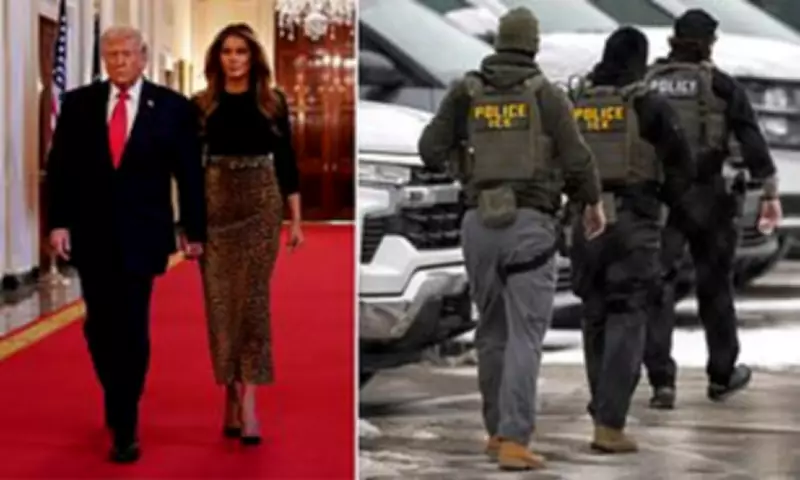
The White House has pushed back on reports of a policy change, with Trump spokeswoman Abigail Jackson asserting in a statement to the Daily Mail, 'Nobody is changing the Administration's immigration enforcement agenda.' She added, 'President Trump's highest priority has always been the deportation of illegal alien criminals who endanger American communities.' However, there appears to be a public realignment, with Immigration and Customs Enforcement (ICE) reportedly not moving forward with large-scale, high-profile immigrant round-up operations in blue cities such as Chicago, Washington DC, Memphis, and Minneapolis.

Polling Data and Voter Sentiment
Polling data supports the advice from Trump's advisers to moderate the immigration agenda. A Daily Mail survey from January found that 53 percent of registered voters want ICE and Customs and Border Protection raids to end, including nearly one-fifth of Republicans. Overall, 47 percent believe ICE should be disbanded, an increase from 43 percent in earlier polling. Trump has reportedly complained to advisers about the negative headlines generated during Noem's tenure, specifically questioning her contract approval process, which has come under intense scrutiny.
For now, officials familiar with the situation indicate that ICE is avoiding large-scale operations, focusing instead on targeted enforcement as the administration navigates the political landscape ahead of the 2026 elections.