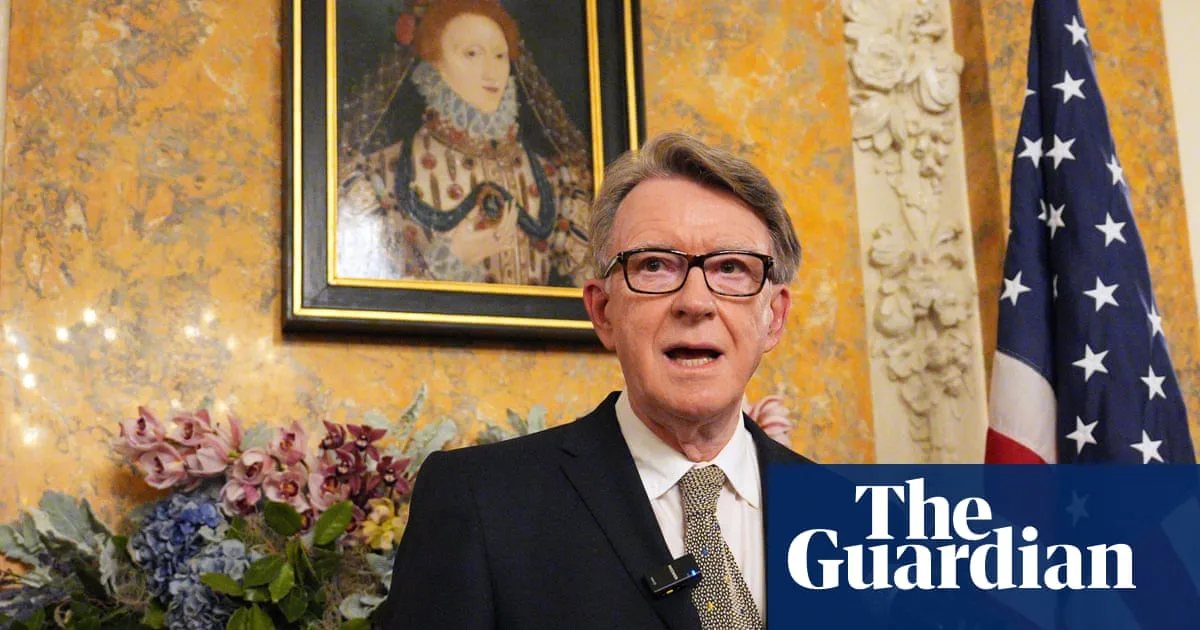
Explosive Mandelson Files Published After Government Pressure
The first wave of long-awaited documents concerning Lord Peter Mandelson's controversial appointment as Britain's ambassador to Washington has been released to the public. This disclosure follows sustained pressure from Members of Parliament, with the government agreeing last month to publish thousands of files relating to the 2024 appointment. The release comes amid persistent questions about the vetting process for the peer and what was known regarding his associations with convicted paedophile Jeffrey Epstein.
Severance Payment and Exorbitant Demand Revealed
The initial tranche of documents, published shortly after Prime Minister's Questions on Wednesday, contains several startling revelations. Most notably, it confirms that Lord Mandelson received a severance payment of approximately £75,000 following his dismissal from the ambassadorial role in September last year. The Foreign Office breakdown shows £40,330 was paid in lieu of a three-month notice period, with an additional £34,670 termination payment.
More astonishingly, the files reveal that Mandelson initially requested a payout exceeding half a million pounds. He sought the full salary he would have earned over the intended four-year tenure of his fixed-term appointment, amounting to a staggering £547,201. The documents explicitly state: "Negotiations began with a request by the individual to pay out the remainder of the 4-year salary costs of the fixed term appointment. This would have amounted to £547,201."
Epstein Links Caused "Serious Discomfort" in Labour Ranks
Prime Minister Keir Starmer acknowledged the "serious discomfort" among Labour MPs regarding Mandelson's connections to Jeffrey Epstein during a crucial meeting that ultimately led to the peer's dismissal. This meeting was attended by Deputy Prime Minister David Lammy, Foreign Secretary Yvette Cooper, Chief Whip Jonathan Reynolds, and senior officials from both the Foreign Office and Number 10.
An email released within the documents contains notes from the September 11 meeting where Mandelson's position was decided. It records the Prime Minister's concerns: "He referenced his concern at the judgements and views expressed in the cache of emails released by Bloomberg, that the answers Mandelson provided to FCDO PUS Olly Robbins regarding the emails did not give him confidence that there were not further revelations to come and the serious discomfort in the PLP."
The note further explains: "The emails revealed a depth and extent of a relationship with Epstein which he had not been aware of previously when he made the decision to appoint Mandelson. On this basis, he proposed to ask Mandelson to resign from his post as HMA Washington."
Unconventional Advice on Trump Relations and Appointment Concerns
Another significant revelation from the vetting process concerns Mandelson's unconventional suggestions for improving UK relations with the Trump administration. The documents highlight his recommendation to utilise Nigel Farage as a conduit. Mandelson is quoted as saying: "You can't ignore him, he's an elected member of parliament. He's a public figure. He's a bridgehead both to President Trump and Elon Musk and others...National Interest is served in all sorts of weird and wonderful ways." This stance was noted as being contrary to established UK government policy.
The files also reveal internal government concerns about the appointment process itself. A record of a call with the UK's national security adviser, Jonathan Powell, shows he found the appointment "weirdly rushed." The note states: "Jonathan Powell found the appointment process of Lord Mandelson weirdly rushed..." It adds that Powell "raised concerns about the individual and reputation" to the Prime Minister's former chief-of-staff. Matthew Doyle, the former director of communications in Downing Street, also recalled that Powell was "particularly cautious about the appointment."
Government Warned of "Reputational Risks" from Epstein Association
A comprehensive due diligence review conducted by the propriety and ethics team extensively detailed the "reputational risks" associated with appointing Mandelson, given his documented links to Jeffrey Epstein. The review cites a 2019 JPMorgan report which found Epstein appeared to "maintain a particularly close relationship with Prince Andrew the Duke of York and Lord Peter Mandelson, a senior member of the British government."
The report referenced Epstein's personal records showing contact beginning in 2002 and continuing throughout the 2000s. Crucially, it notes that their relationship persisted even after Epstein's 2008 conviction for procuring an underage girl, continuing from 2009 to 2011. This period coincided with Mandelson's tenure as Business Minister and extended beyond the end of the Labour government. The documents confirm Mandelson reportedly stayed at Epstein's house while the financier was in jail in June 2009.
Furthermore, the review notes that in 2014, Mandelson agreed to be a "founding citizen" of an ocean conservation group founded by Ghislaine Maxwell and funded by Epstein. It also references a Telegraph article from January 2024 exploring the "particularly close friendship" between the pair. The Cabinet Office holds additional official records, likely for release by the National Archives next year, relating to a Tony Blair meeting with Epstein that was facilitated by Mandelson.
The publication of these documents marks a significant transparency moment, revealing the complex considerations and controversies surrounding a high-profile diplomatic appointment. The files paint a picture of a rushed process, significant financial negotiations, serious ethical concerns, and unconventional political advice that collectively led to a dramatic diplomatic dismissal.