Lords to Debate Critical Amendment on Paedophile Parental Rights
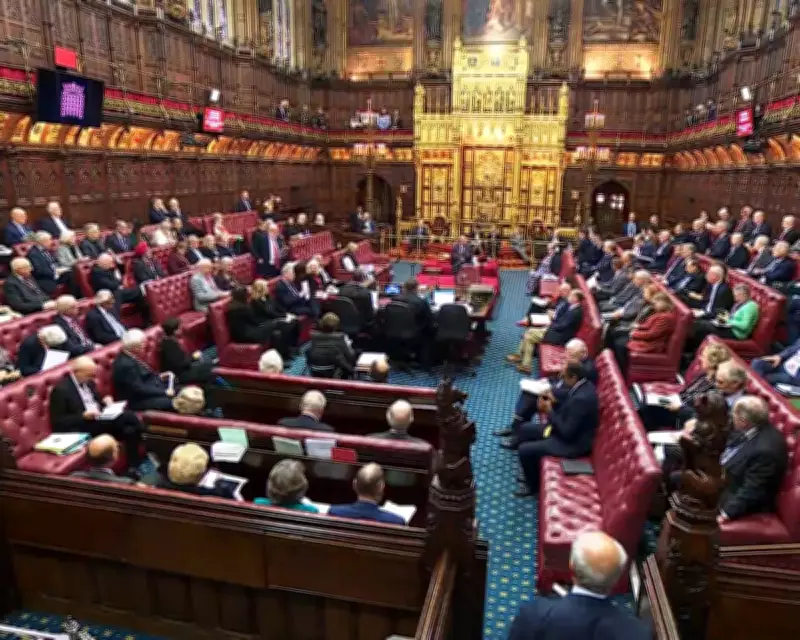
A proposed law designed to restrict the parental rights of convicted paedophiles in England and Wales is set for scrutiny in the House of Lords this week, amid concerns it contains a significant loophole. The victims and courts bill, as currently drafted, would strip parental responsibility from parents convicted of serious sexual offences against children and sentenced to four or more years in prison. However, it does not extend this protection to children born after the conviction, leaving them vulnerable to potential abuse.
Amendment Aims to End Legal Anomaly
Crossbench peer and former family court judge James Meston has tabled an amendment to address this anomaly, which will be debated in the House of Lords on Tuesday. The amendment seeks to ensure that individuals convicted of such offences cannot automatically acquire parental responsibility for any child born after their conviction, thereby closing a gap that could otherwise allow paedophiles to exert control over new families upon release from prison.
The push for this change was sparked by the case of a mother, referred to as Bethan, who spent £30,000 in legal fees to prevent her paedophile ex-husband from having contact with their daughter. Bethan highlighted the injustice of a system that could protect older children while leaving younger siblings at risk. "This amendment will prevent the formation of a deeply unfair two-tier system," she said. "If a paedophile retains parental rights over even one child in a family, then they have control over that entire family unit, and can use that control to terrorise their ex-partner and children."

Balancing Human Rights and Child Safety
Lord Meston acknowledged that a blanket ban on parental responsibility might interfere with Article 8 of the European Convention on Human Rights, which safeguards the right to respect for family life. To overcome this, his amendment allows for theoretical applications to the family court in exceptional circumstances, maintaining a narrow pathway for review while prioritising child safety. "It allowed the door to remain – at least theoretically – open to an application later on," he explained.
The amendment specifies that a person is ineligible to automatically acquire parental responsibility under the Children Act 1989 if, at the time of a child's birth, they have been convicted of a serious sexual offence against a child and received a life sentence or imprisonment of four years or more, or if convicted of rape where the child was conceived as a result.
Government Stance and Public Concerns
In previous parliamentary discussions, the minister for victims, Alex Davies-Jones, stated that the government "cannot bind future children or children yet to be born" but noted that existing family court routes could still be used to strip parental responsibility if risks emerged. The government has declined to comment on the amendment ahead of the debate.
Bethan's father, who inspired the amendment, pointed to distressing accounts on forums like Mumsnet, where some women have considered terminating pregnancies to escape coercive control. "Without this amendment, the very same ordeal will continue for any child born even a single day after conviction," he warned.
This debate underscores ongoing efforts to strengthen child protection laws in England and Wales, ensuring that legal frameworks adequately safeguard all children from potential harm by convicted offenders.