Major Police Operation Deployed for London Al-Quds Day Static Protest
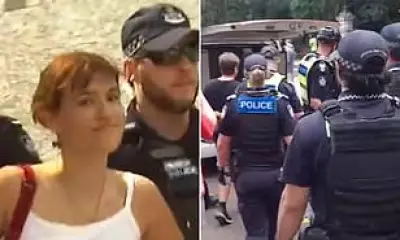
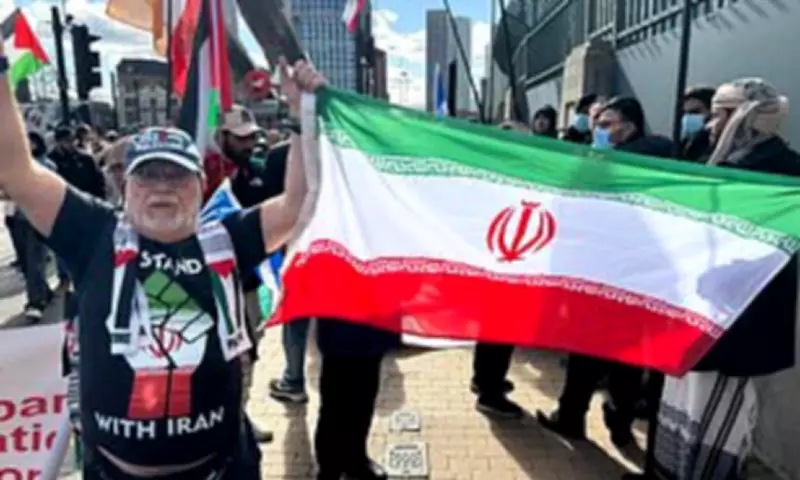
Pro-Iran demonstrators gathered for a static Al-Quds Day protest in London, prompting a significant security response with 1,000 riot police placed on high alert. The event, organised by the Islamic Human Rights Commission (IHRC), was originally planned as a march through the streets of London but was banned by Home Secretary Shabana Mahmood due to fears of serious public disorder.
Thames River Acts as Buffer Between Protest Groups
The Metropolitan Police implemented a strategic plan to separate pro-Iran demonstrators from counter-protesters by using the River Thames as a physical buffer. Pro-Iran supporters were directed to gather on the South Bank, while counter-protesters assembled on the north side of the river. Both groups were instructed to leave the area by 3pm to prevent potential clashes.
Police issued clear warnings that anyone chanting intifada slogans, showing support for Palestine Action, or displaying placards inciting hatred would face immediate arrest. This strict enforcement approach reflects concerns over the volatile nature of the gathering, with the Met estimating more than 12,000 pro-Iranian protesters would participate alongside thousands of counter-protesters.
Historical Context and Recent Controversies
Al-Quds Day originated in Iran in 1979 following the Ayatollah's revolution and has been observed in London for four decades. The IHRC strongly condemned the decision to ban their march, proceeding instead with a two-hour static protest. The organisation has received £458,500 in taxpayer-funded donations since 2020 through Gift Aid recognition by HMRC, despite being under Charity Commission investigation and described in a 2023 Prevent report as an "Islamist group ideologically aligned with Iran."
Previous Al-Quds Day rallies have been marred by arrests and flag-burning incidents. Just last week, a pro-Iranian protester was stabbed during a rally in West Finchley, North London, highlighting the ongoing tensions surrounding these events.
Organiser's Controversial Statements and Police Justification
Raza Kazim, a trustee of the IHRC trust and organiser of previous Al-Quds Day marches, was filmed at a recent protest shouting "death to the IDF" and "Khamenei makes us proud." These chants have been described as hate speech by political leaders including Sir Keir Starmer. Kazim defended the IDF chant as a "creative and forceful expression" against what he called a "genocidal military institution."
Met Assistant Commissioner Ade Adelekan explained the unprecedented decision to ban the march: "We did not take this decision lightly. This is a unique set of circumstances and it was our assessment that the risk of public disorder was so severe, we did not have any other choice." This marks the first time in 14 years that Scotland Yard has banned a protest march.
Security Measures and Political Response
Beyond the 1,000 riot police on standby at a central protest command post, uniformed officers were deployed to protect mosques and synagogues across the capital. Additional security was provided at the Israeli and Iranian embassies to prevent any escalation of tensions.
Home Secretary Shabana Mahmood justified the ban by citing "the scale of the protest and multiple counter-protests, in the context of the ongoing conflict in the Middle East." She added: "Should a stationary demonstration proceed, the police will be able to apply strict conditions. I expect to see the full force of the law applied to anyone spreading hatred and division instead of exercising their right to peaceful protest."
The IHRC responded to the ban by accusing police of having "brazenly abandoned their sworn principle of policing without fear or favour and have capitulated to the pressure of the Zionist lobby." This rhetoric reflects the deep divisions surrounding the event, which continues to draw scrutiny over its organisers' connections and funding sources.