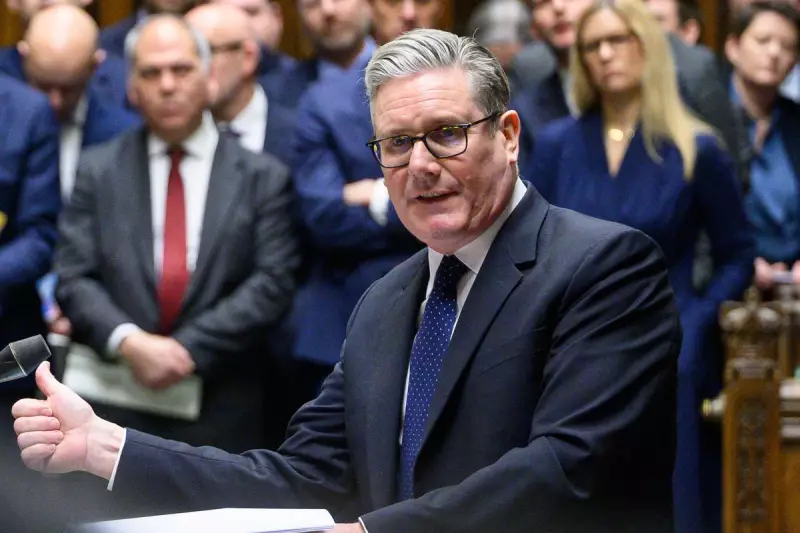
Sir Keir Starmer's Labour government has executed its thirteenth significant policy reversal since taking power, abandoning a flagship compulsory digital identity scheme for employment checks. The decision, framed by spin doctors as 'scraping the barnacles off the boat', underscores a deepening crisis of authority and planning at the heart of the administration.
A Ship Adrift: The 'Barnacle' Strategy Backfires
The rationale offered for the digital ID U-turn has drawn sharp criticism. The policy, which Prime Minister Starmer had championed mere weeks earlier as a symbol of 'national renewal', is now being discarded like an unwanted crustacean clinging to the hull of 'HMS Labour'. The 'barnacles' analogy, borrowed from Conservative strategist Sir Lynton Crosby, is meant to describe shedding unpopular policies to smooth a path to electoral success. However, its application here highlights a more damning reality: a core initiative has been deemed unworkable and unsellable almost immediately after its launch.
This reversal, confirmed on Wednesday 14 January 2026, is not an isolated incident. It is the 13th major U-turn in the 18 months since Labour returned to office with a landslide majority in July 2024. The government has lurched from one volte-face to another, covering areas from trans rights and child benefits to fiscal rules. A botched attempt to reform social security last summer had to be withdrawn entirely, catastrophically weakening Starmer's authority and emboldening Labour backbenchers.

Chaos Amidst a Landslide Mandate
The central question plaguing Westminster is why a government with a five-year mandate, a massive majority, and control of the world's sixth-largest economy consistently fails to get policies right the first time. With the entire machinery of the British state and a budget of approximately £1.3 trillion at its disposal—not to mention around 42 special advisers in Downing Street alone—the frequency of 'unforced errors' is staggering.
This pattern has created a powerful impression of 'chaos and confusion', the very malaise Labour promised to end. Key policies like the so-called 'farms tax' and changes to pub regulations suffered from a lack of consultation. The digital ID scheme and proposed restrictions on jury trials appear poorly researched, failing to address the core issues of irregular migration and court backlogs, despite their far-reaching implications.
Welcome Reversals and a Leadership Deficit
Not every U-turn has been misguided. Reversals on compensating Waspi women and mostly restoring the winter fuel allowance for pensioners were widely seen as morally right and politically necessary. Similarly, Starmer's personal intervention on inheritance tax changes for family farms showed a willingness to listen.
Nevertheless, the fundamental issue remains one of leadership and competence. Sir Keir has proven effective in foreign and defence policy, where party constraints are fewer. Yet domestically, his administration is seen as accident-prone. With rumours swirling that a 14th U-turn on jury trial reforms is imminent, and difficult local elections looming in May 2026, the Prime Minister is under intense pressure to steady his ship. The barnacles, it seems, are multiplying faster than they can be scraped.