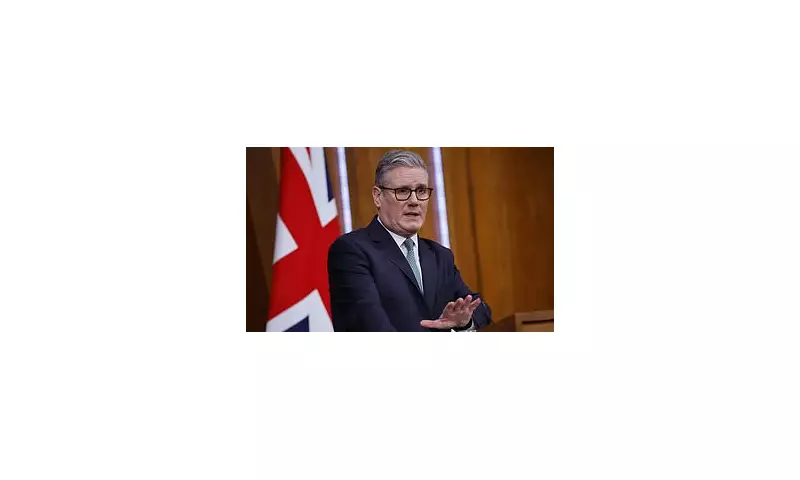
Sir Keir Starmer's government has been pushed into a significant policy reversal, announcing plans to consult on an Australia-style ban on social media for children under the age of 16. This marks the Prime Minister's 14th major U-turn since entering Downing Street.
A Swift Reversal to Quell Rebellion
The decision comes just weeks after Sir Keir stated he was not personally in favour of a blanket ban, arguing for better content control instead. The government's hand was forced by an imminent vote in the House of Lords on an amendment to the Children's Wellbeing and Schools Bill, which proposed the ban. Should the Lords pass it, the Prime Minister faced a substantial backbench revolt, with over 60 Labour MPs having publicly demanded the UK follow Australia's lead.
This pivot contradicts recent statements from senior figures. Business Secretary Peter Kyle, a close ally of Sir Keir, said just over a week ago that he did not support an outright ban. Meanwhile, Conservative leader Kemi Badenoch seized on the announcement, criticising it as "impotent" and merely a consultation rather than decisive action. She had previously vowed to implement a ban if the Tories win the next election.

Public Pressure and Political Calculations
The government's move is a direct response to mounting pressure. A recent YouGov poll found 74% of Britons support a social media ban for under-16s. Furthermore, Esther Ghey, the mother of murdered teenager Brianna Ghey, joined a group of bereaved parents in writing to the Prime Minister, urging him to take this "vital step" to protect children online.
The announced consultation will explore not only a potential age ban but also other measures, including:
- Night-time curfews on app use.
- Limits on daily screen time.
- Restrictions on addictive design features like infinite scrolling.
Ministers hope the consultation, with a response due in the summer, will defuse the immediate threat of a parliamentary rebellion. Alongside this, the government has tasked Ofsted with enforcing mobile phone bans in schools and promised new screen time guidance for parents.
Opposition and Unintended Consequences
Despite the concession, significant concerns persist. 42 child protection charities and online safety groups, including the NSPCC, warned that a blanket ban treats the symptoms, not the problem. They advocate for strengthening the Online Safety Act to force platforms to enforce age limits robustly.
Officials also fear unintended consequences, such as driving children towards the darker corners of the internet. Reform UK leader Nigel Farage has suggested the UK should wait to review Australia's experience before acting. Shadow Education Secretary Laura Trott argued the government "must legislate," stating that guidance on school phone bans has already failed.
Technology Secretary Liz Kendall defended the approach, stating the Online Safety Act was a starting point and the government is "prepared to take further action" to ensure technology enriches, rather than harms, children's lives.