Jack Straw: Keir Starmer Was Right to Reject Trump's Iran War
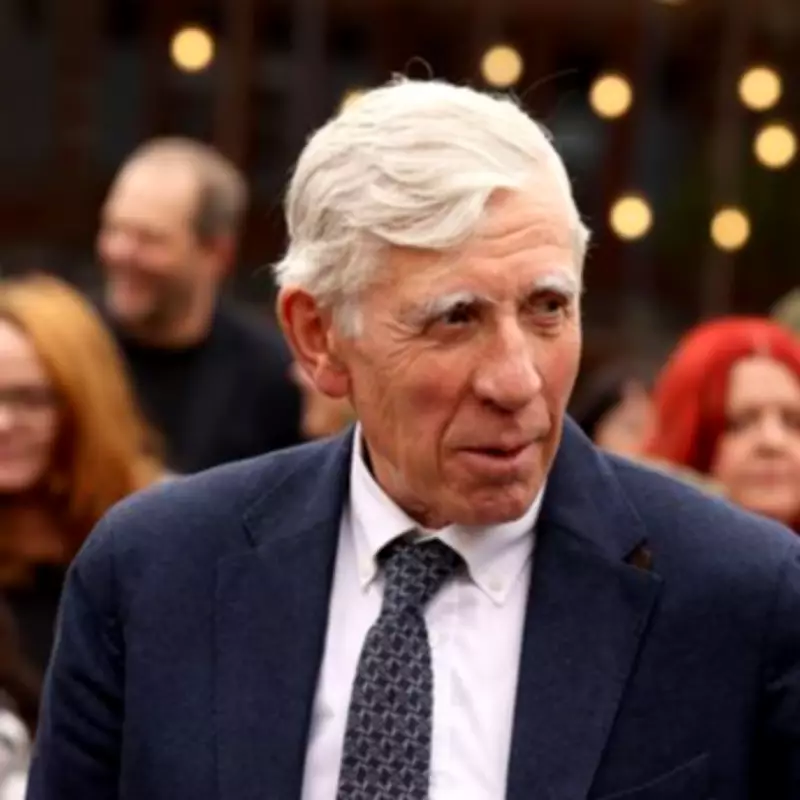
Former Labour Foreign Secretary Jack Straw has strongly defended Prime Minister Keir Starmer's decision not to join Donald Trump's military action against Iran, drawing pointed comparisons with the 2003 Iraq War. In a detailed analysis, Straw highlights critical differences between the two conflicts and offers a stark assessment of the current US President's leadership style.
Lessons from Iraq: A Different Era of Leadership
Jack Straw, who was directly involved in the decisions leading to the 2003 Iraq invasion, acknowledges his grave responsibilities for that conflict. He emphasizes that while the UK was inevitably the junior partner to the United States due to the special relationship, the circumstances surrounding the Iraq War were fundamentally different from today's situation with Iran.
The first major difference was that Iraq decisions were made in the shadow of the 9/11 attacks, which had traumatized the American nation just eighteen months earlier. Those unprovoked attacks resulted in the largest loss of life on the US mainland since the Civil War of the 1860s, creating a unique geopolitical context that doesn't apply to the current conflict with Iran.

The second crucial distinction lies in presidential leadership. Straw recalls that while George W. Bush may not have been universally popular, he was "a bright, thoughtful man, with surprisingly little ego" who surrounded himself with capable advisors like Colin Powell and Condoleezza Rice. The UK maintained continuous dialogue with the Bush administration, allowing for private disagreements and substantive policy discussions.
Trump's Leadership: Impulsive and Ego-Driven
In stark contrast, Straw characterizes Donald Trump's approach as fundamentally different. "You can't exactly call Trump 'thoughtful'," he writes. "His impulses are dominated by his overweening ego. He doesn't think things through, but rather lurches."
Drawing on his extensive experience with Iran—having visited the country eight times, including a disrupted 2015 holiday that required police protection—Straw acknowledges the Iranian regime's brutality and loss of popular support. However, he emphasizes that military action requires careful planning: "Wars produce chaos. Easy to start, but you also need to work out how they might finish."
Straw notes that while the US could destroy Iran's major naval assets, the predictable consequence has been Iran's use of small boats and unmanned vessels to create mayhem in the Gulf of Hormuz. Against this backdrop, he unequivocally supports Starmer's position: "Our Prime Minister Keir Starmer was therefore entirely correct to say to Donald Trump, 'thanks but no thanks, this is your war, not ours'."
Mandelson Appointment and Other Observations
The former Foreign Secretary also comments on Peter Mandelson's recent appointment as UK ambassador to Washington, comparing him to the mythological Icarus who flew too close to the sun. Straw praises Mandelson as "one of the best Ministers I ever saw"—knowledgeable, efficient, courteous, and decisive—qualities that led to his appointments under Tony Blair, Gordon Brown, and now Keir Starmer.
Additionally, Straw welcomes Education Secretary Bridget Philipson's proposed laws to regulate home schooling, noting that approximately 126,000 children in England are home-schooled—a 60% increase over ten years—with virtually no checks currently in place.
In a lighter personal note, the former Blackburn MP confesses his lifelong addiction to Blackburn Rovers football club, recalling their 1995 Premiership victory while lamenting their current precarious position just one point above relegation to Division One.