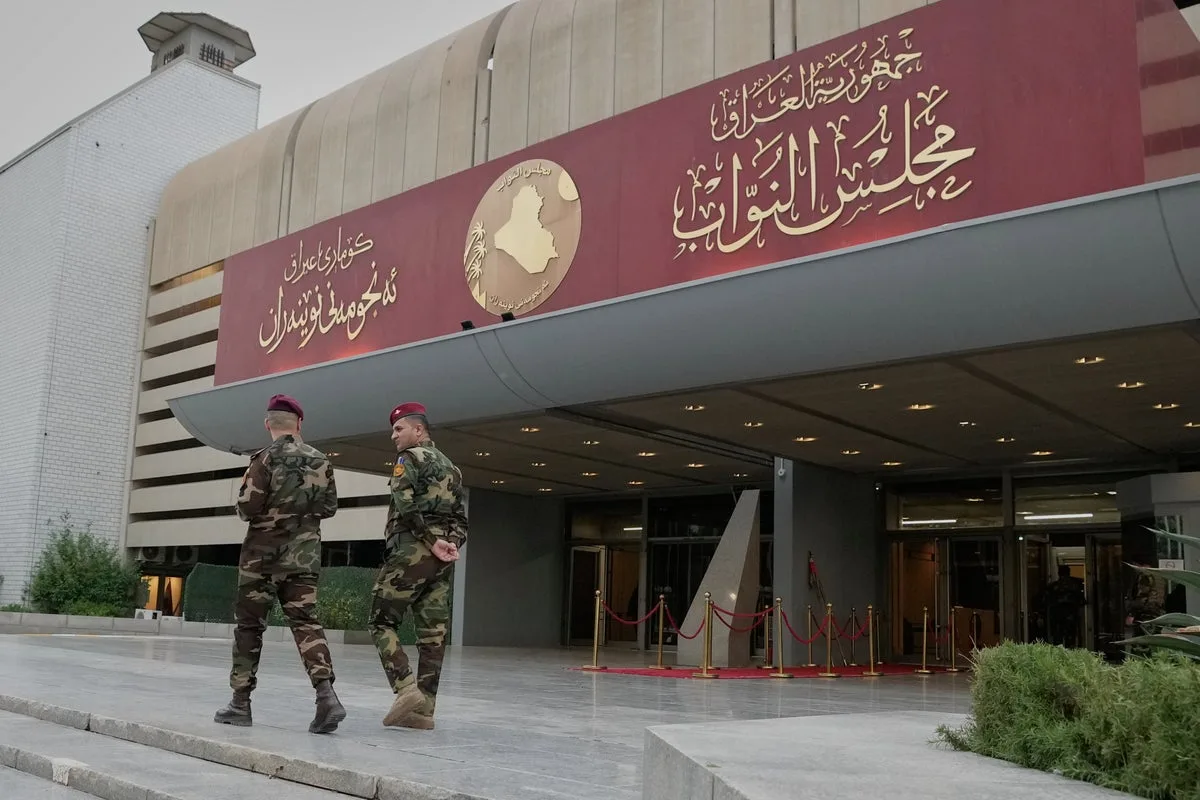
Iraq’s parliament voted on Saturday to elect Nizar Amidi, a senior figure in the Patriotic Union of Kurdistan (PUK), as president. The vote came five months after a parliamentary election that failed to produce a clear majority bloc.
Amidi’s election occurs as Iraq grapples with the repercussions of the US-Israeli war on Iran. The country has been caught in the crossfire, with Iran-backed militias attacking US bases and diplomatic facilities, as well as critical energy infrastructure. In response, the US and Israel have carried out airstrikes targeting the militias, some of which have killed members of the Iraqi military. The conflict and Iran’s closure of the Strait of Hormuz have also largely halted Iraq’s oil exports, on which its economy heavily depends.
Amidi, an engineer from Dohuk province, previously served as an aide to former presidents Jalal Talabani and Fouad Massoum. He defeated a field of 15 candidates, including current Foreign Minister Fuad Hussein, who was backed by the rival Kurdistan Democratic Party. In the first round, Amidi secured 208 votes, far ahead of the second-placed candidate, Muthanna Amin Nader, who received 17 votes. In the second round, Amidi won with 227 votes against Nader’s 15.

By convention, Iraq’s presidency is held by a Kurd, while the more powerful prime minister is a Shiite and the parliamentary speaker a Sunni. The vote took place more than two months after the constitutional deadline, which requires a president to be elected within 30 days of the first session of a new parliament.
According to the constitution, the president has 15 days to task the nominee of the largest parliamentary bloc with forming a government. The dominant Shiite Coordination Framework, an alliance of Iran-aligned parties, announced in January that it would nominate former Prime Minister Nouri al-Maliki, despite US opposition. The bloc must now decide whether to proceed with al-Maliki or choose another candidate. Current caretaker Prime Minister Mohammed Shia al-Sudani had been al-Maliki’s main rival before stepping aside.