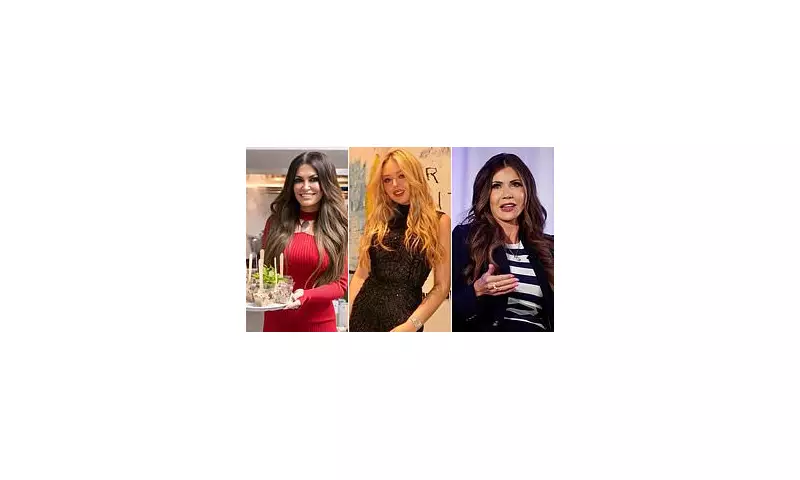
A distinct new beauty trend is emerging in the corridors of power in Washington, D.C., signalling a shift from the cosmetic preferences that defined the early days of Donald Trump's second term. Dubbed 'MAGA hair', the look centres on long, thick, flowing locks worn in loose waves and has become a signature style for several prominent women associated with the former president's political movement.
The Evolution from Face to Hair
This trend arrives just one year after the 2025 inauguration, which saw the rise of the 'Mar-a-Lago face'—characterised by a pronounced Miami tan, puffy lips, and smooth skin from Botox. That look was popular among staff and cabinet members like Kristi Noem and Karoline Leavitt. However, the focus has now decisively shifted upwards from facial aesthetics to hairstyle as a primary political fashion statement.
The 'MAGA hair' phenomenon means short bobs are decidedly out of favour, with waist-length, voluminous hair now in vogue. Since entering the spotlight, numerous women in Trump's circle have adopted this style, wearing their hair down in soft, beach-like waves and conspicuously avoiding ponytails.

Who is Sporting the Look?
The list of adherents is growing and includes influential figures. South Dakota Governor Kristi Noem has been spotted with the hairstyle in recent months. They are joined by the US Ambassador to Greece, Kimberly Guilfoyle, television commentator Tomi Lahren, and even the former president's daughter, Tiffany Trump. Expert hairdressers suggest this is not a passing fad and that long, thick styles will remain a staple in 'Trump World' for the foreseeable future, complementing a carefully curated overall image.
Expert Analysis: The 'Why' Behind the Hair
Professional stylists have weighed in on the trend's significance and execution. Pro hair stylist Jeremy Pugh noted the style harks back to the 2000s, describing it as a mix of 'the Victoria's Secret blowout' and 'viral Utah curls', heavily reliant on extensions. He observed the aim appears youthful but can result in a stiff, overly teased appearance with 'dry ends and zero movement'.
Rachael Sprigg, founder of Hair by Rach, provided a more political reading. She told the Daily Mail that the hairstyle is designed to look 'aspirational and camera-ready', projecting 'confidence, wealth, and traditional femininity'. In Washington, D.C., where perception is paramount, such a style aligns with the personal branding these women wish to communicate. Sprigg emphasised that the look is 'rarely effortless' and is instead 'styled to be noticed, symmetrical and polished'.
The High Cost of Maintenance
Achieving this look requires significant investment in time, money, and expertise. Rachael Sprigg detailed the considerable upkeep, stating that the extreme length and uniform fullness are 'extremely difficult' to achieve with natural hair alone, making extensions a likely necessity.
The maintenance regimen is intensive:
- Regular salon appointments for refitting and blending extensions.
- Use of specialist haircare products and disciplined aftercare.
- Frequent trims and deep conditioning treatments.
- Professional heat styling to maintain the look's shape, especially for camera appearances.
This 'high-maintenance look' relies on considerable resources to sustain its polished, powerful message.
Internal Criticism and the Bigger Picture
The rise of 'MAGA hair' follows recent internal criticism of the overarching aesthetic within Trump's political sphere. Republican Congresswoman Marjorie Taylor Greene recently slammed what she called the 'MAGA Mar-a-Lago sexualization', expressing discomfort with how women in leadership present themselves through procedures like lip fillers and breast enlargements.

Greene, who has denied having plastic surgery herself, stated that such presentation sends a message to younger women, including her own daughters. Her comments highlight an ongoing tension and conversation about femininity, power, and image in modern American conservatism, with hair now becoming the latest focal point in this visual political language.