Harry Barnes: A Life of Political Integrity and Service
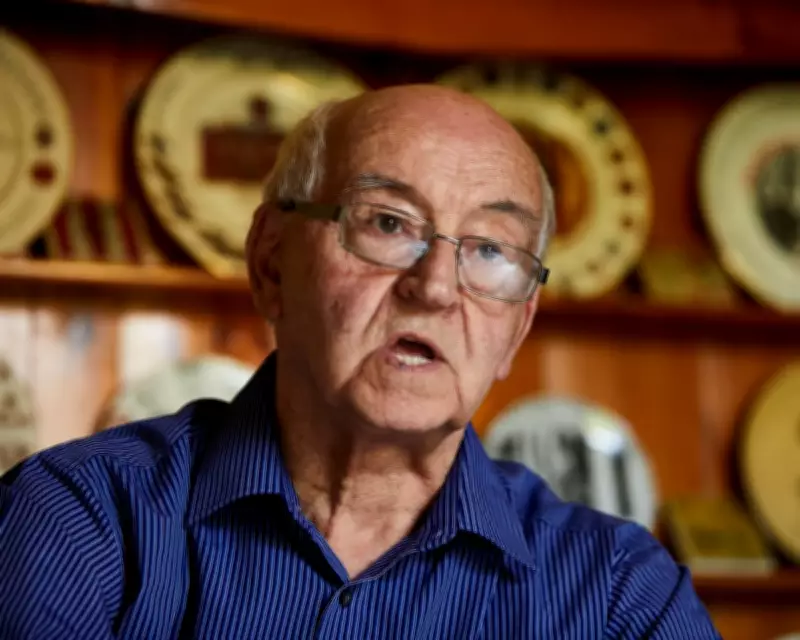
Harry Barnes, the former Labour Member of Parliament for North East Derbyshire, has passed away at the age of 89 after a battle with cancer. He represented his constituency for 18 years, from 1987 until 2005, earning a reputation as a serious and principled politician who balanced conviction with practical flexibility.
Early Life and Political Awakening
Born on 22 July 1936 in Easington, County Durham, Barnes was the only child of Joseph Barnes, a miner, and Betsy Barnes, a household cleaner. His early years were marked by the devastating 1951 Easington colliery explosion, which killed 83 people and deeply affected his community. After attending Ryhope grammar school, he left at 16 to work as a railway clerk.
Barnes's political journey began in 1957 when he joined the Labour Party in Easington, inspired by a local essay competition run by MP Manny Shinwell. He served as Shinwell's election agent for three years, laying the groundwork for his future career. His national service from 1954 to 1956 on the Iraq state railway exposed him to poverty in the Middle East, further shaping his political views.

Academic and Teaching Career
In 1960, Barnes won a place at Ruskin College, Oxford, studying economics and social sciences, followed by a BA in philosophy and political studies at the University of Hull from 1962 to 1965. He became a lecturer, first at North Nottinghamshire College and then at Sheffield University from 1966 until his election as an MP. As director of mature students' courses, he mentored future Labour MPs, including Kevin Barron and Terry Patchett.
Political Activism and ILP Involvement
Barnes was a lifelong socialist, joining the Independent Labour Publications (ILP) in 1975 and working for its newsletter, Labour Leader, until 1985. He was active in various left-wing organisations, such as the Campaign for Nuclear Disarmament and Amnesty, and during the 1984-85 miners' strike, he established the Dronfield miners' support group. Though critical of Arthur Scargill's tactics, he remained committed to the mining community.
Parliamentary Career and Rebellious Streak
Elected as MP for North East Derbyshire in 1987, Barnes broke an 80-year tradition by being the first Labour representative for the seat not from the coal industry. He quickly gained a reputation as a rebellious backbencher, named Labour's most rebellious MP in 1993. His independence was noted by colleagues, with former researcher Gary Kent stating he used his judgment "without fear or favour."
In Parliament, Barnes introduced private members' bills on miners' safety and electoral register modernisation, the latter leading to a rolling register adopted by the Blair government. He opposed the Maastricht Treaty, advocating for a democratic social and federal Europe with power in the European Parliament.
Commitment to Peace and International Issues
Barnes was deeply involved in peace efforts, co-founding New Consensus (later New Dialogue) with Conservative MP Peter Bottomley in 1990 to address Irish issues, which led to his role on the Northern Ireland affairs committee in 1997. He consistently opposed the Gulf war but broke with anti-war groups over troop withdrawal, supporting Iraqi civil society and trade unions as an honorary member and president of Labour Friends of Iraq. He was also an active supporter of the Kurds in Iraq.
Personal Life and Legacy
Barnes married Ann Stephenson in 1963, who later served as his constituency secretary. They had two children, Stephen and Joanne. A stroke in 1998 at age 61 did not deter him from returning to work, and he remained active until Alzheimer's disease affected him in later years. He was known for his love of classic movies, often comparing himself to actor Sam Kydd for his steady, behind-the-scenes presence.
Harry Barnes passed away on 16 February 2026, leaving behind a legacy of integrity, pragmatism, and dedication to public service. His life exemplified a balance of principles and flexibility, making him a respected figure in British politics.