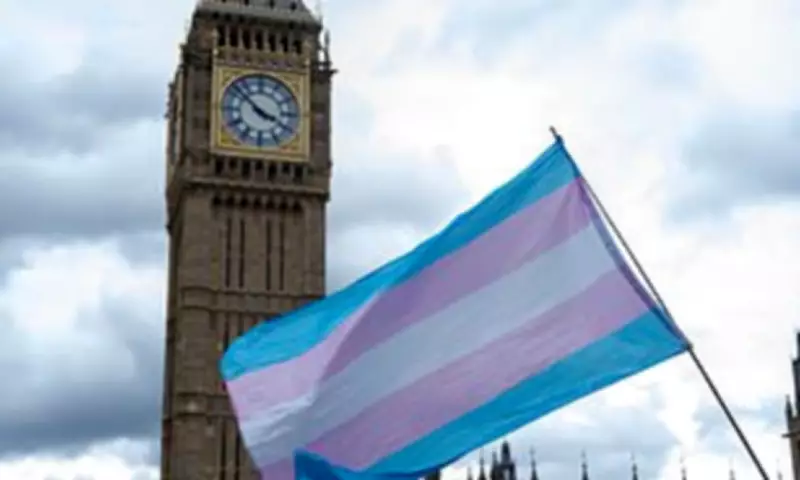
Green Party activists have ignited a fierce debate by branding the prohibition on men who identify as women participating in female sports as colonialist and rooted in 'misogynoir'. Socially liberal members within the party are actively campaigning to overturn bans that prevent trans women from competing in women's sporting events. They contend that such restrictions exacerbate 'misogynoir'—a specific form of sexism targeting black women—and originate from 'historical colonial and Eurocentric attitudes'.
Motion to Challenge Sporting Norms
In a move that has provoked outrage among women's rights organisations, a Green Party member has submitted a motion urging all sporting bodies to permit trans women to compete in women's sports. This proposal aims to ensure that trans athletes are 'not excluded from any part of public life'. The motion is scheduled for discussion at the party's Spring conference in March, and if approved by members, it will become official party policy.
Backlash from Women's Rights Campaigners
Women's rights advocates have condemned the activist plans as 'unfathomable' and 'extraordinary'. Fiona McAnena, director of campaigns at the sex-based rights charity Sex Matters, criticised the motion, stating, 'No one is banned from sport, but this lofty motion from the Greens is for men to be allowed into women's sport. These people are a million miles from grasping the painful reality for women who have to compete with men who identify as female.'

She added, 'It's unfathomable that some people argue that defending hard-fought women's rights is a form of 'misogyny' against men who want to be women. Opposing single-sex sport is pure, shameless sexism against women.'
Legal and Sporting Context
This development follows decisions by several sporting bodies, including the Football Association and World Athletics, to bar trans women from women's sports. These actions align with a Supreme Court ruling that legally defines women by their biological sex. The Green Party motion argues that 'gender-based segregation of sport has resulted in a culture within sports of misogynoir', disproportionately affecting women from the Global Majority.
Examples Cited in the Motion
The motion highlights instances where ethnic minority women face undue scrutiny, such as those with hyperandrogenism, intersex women with naturally elevated testosterone levels, and women whose 'body types do not match restrictive Eurocentric expectations of femininity'. It asserts that 'historical colonial and Eurocentric attitudes' and misogyny 'rooted in transmisogyny and misogynoir' continue to influence elite-level sporting norms and must be confronted.
Internal Party Divisions
Within the Green Party, there is significant internal conflict over this issue. Jude English, a Bristol Green Party member affiliated with Green Women's Declaration—a group advocating for women's sex-based rights—commented on the Supreme Court judgement, saying, 'The law and material reality was made clear to the whole country and to our leaders Zack [Polanski], Mothin [Ali] and Rachel [Millward].'
English further argued, 'Unworkable motions like these distract from the real work of preventing ecological and economic collapse across whole communities at home and abroad.'
Political Criticism and Broader Demands
Stuart Andrew, Shadow Health Secretary, lambasted the Green Party, accusing it of being 'far too concerned with woke grandstanding to provide any serious answers to challenges we face'. He emphasised, 'At a time when families are under real financial pressure, our focus must be on easing the cost of living and strengthening essential services, not virtue signaling.'
Concurrently, Green activists are advocating for taxpayer-funded free menstrual products for 'people who menstruate'. A motion introduced by a male Green Party member describes the menstrual cycle as 'a natural process that people have monthly' and notes that rising living costs further disadvantage 'people who have periods'.

Electoral Implications
These controversies emerge as voters prepare to cast ballots in Gorton and Denton, where the Greens aspire to secure a fifth MP in Parliament. The Green Party has not issued a response to requests for comment on these matters, leaving the debate unresolved amid growing tensions between progressive activists and traditional women's rights defenders.