Republican Lawmaker's Anonymous Warning on Trump's Iran War Sparks Outrage
A Republican member of Congress has ignited fierce debate after choosing to remain anonymous in a media report to express fears that President Donald Trump's military campaign against Iran could unleash a catastrophic "doomsday scenario" if Tehran retaliates. The lawmaker's decision to withhold their identity while criticizing the president has prompted sharp responses about the current state of American political discourse and the erosion of checks and balances within the system.
Anonymous Warning of Impending Catastrophe
In an interview with the Financial Times, the unnamed GOP lawmaker voiced deep concerns about the potential consequences of Trump's strikes on Iran, which have already resulted in significant casualties including the death of Supreme Leader Ayatollah Ali Khamenei and hundreds of Iranian civilians. "If we bomb, disrupt and exit, there is no telling what could happen over the course of the summer," the lawmaker warned, adding that they were "worried" about a possible "doomsday scenario" unfolding.
The anonymous Republican further criticized the administration's planning, stating bluntly: "I don't know that the administration could have possibly thought it through." This comment appeared in an article headlined "Donald Trump has no 'phase two' plan for Iran war," highlighting concerns about strategic direction and long-term consequences.

Criticism of Anonymity Reflects Deeper Political Concerns
Andrew Day, a senior editor at The American Conservative, responded strongly to the lawmaker's decision to remain anonymous, suggesting it reveals fundamental problems within America's political system. "Something has gone terribly wrong in our system of checks and balances when a lawmaker, frightened of the president, demands anonymity to say s/he's worried POTUS may have triggered 'doomsday' by launching a poorly planned war," Day wrote in a social media post.
This incident follows a pattern of Republican lawmakers speaking out against Trump's Iran policy under the cloak of anonymity. One such lawmaker drew parallels to the U.S. invasion of Vietnam, telling Politico: "Sounds a little bit like President Lyndon Johnson going into Vietnam, doesn't it?" The comparison references Johnson's dramatic escalation of the Vietnam conflict following President Kennedy's assassination, which resulted in tens of thousands of American casualties.
Escalating Conflict and Regional Fallout
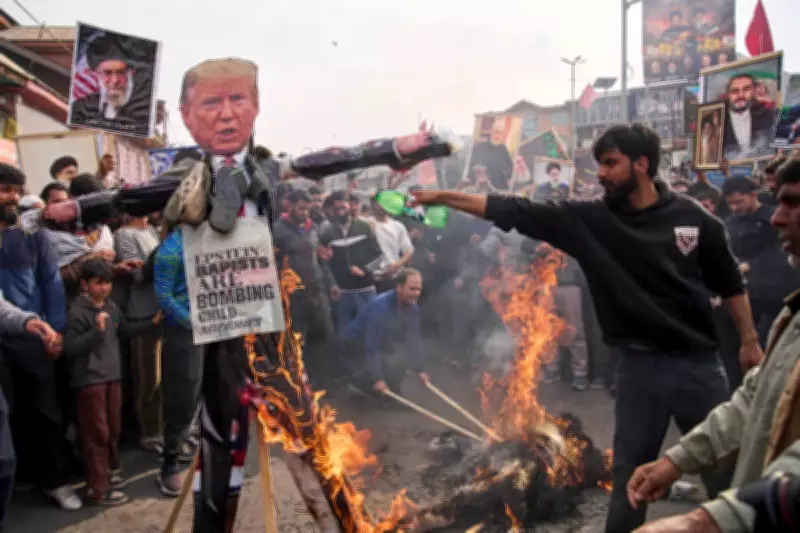
The military strikes against Iran have already produced significant consequences, with hundreds of Iranians killed including 150 children at an elementary school near the Strait of Hormuz. U.S. investigators reportedly believe American forces were likely responsible for this tragic incident. In retaliation, Iran has bombed U.S. assets and allies across the region, targeting locations in Qatar and the United Arab Emirates, resulting in the deaths of six U.S. service members.
Trump has indicated that the Iran attacks could continue for weeks or longer, creating uncertainty about the conflict's duration and ultimate objectives. This lack of clear timeline has heightened concerns among some Republican lawmakers about strategic planning and potential mission creep.
Public Criticism from Within Republican Ranks
While many Republican lawmakers have publicly expressed support for Trump's military actions against Iran, a handful have broken ranks to voice concerns openly. Republican Representative Warren Davidson of Ohio emphasized constitutional principles this week, stating: "The constitutional sequence is, you engage the public before you go to war unless an attack is imminent. And imminent means like, imminent — not like something that's been over a 47-year period of time."
Representative Eli Crane, an Arizona Republican, described the current situation as "very dicey" in a recent interview, warning: "Military operations like this can go sideways so fast, you know, it will make your head spin." These public criticisms, combined with the anonymous warnings, reveal growing unease within Republican circles about the direction and potential consequences of the Iran conflict.

The anonymous lawmaker's decision to voice fears about a "doomsday scenario" without revealing their identity has thus become a focal point for broader concerns about political courage, presidential power, and the risks of escalating military conflict in the Middle East.