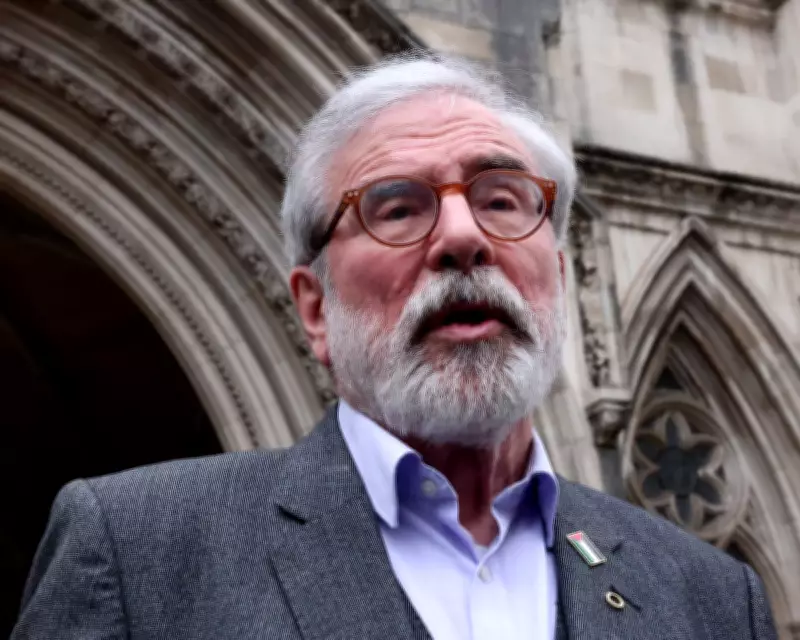
Gerry Adams Denies IRA Membership Amid Bomber's Testimony in High Court
The former Sinn Féin leader, Gerry Adams, has consistently denied any involvement with the Irish Republican Army (IRA), but a recent high court case has brought these claims under intense scrutiny. Adams, aged 77, is being sued for symbolic damages of £1 each by three men—John Clark, Jonathan Ganesh, and Barry Laycock—who were injured in IRA bombings in 1973 and 1996. They allege that Adams was not only a member of the IRA but also served on its army council, accusations he firmly rejects.
Convicted Bomber's Testimony Challenges Adams' Claims
On Tuesday, Shane O'Doherty, a former IRA member who received 30 life sentences in 1976 for a letter bombing campaign, provided testimony that directly contradicts Adams' denials. O'Doherty, who joined the IRA at age 15 and has since renounced its activities, told the court that Adams was a senior figure in the organisation. When questioned by Anne Studd KC, counsel for the claimants, about a photograph showing Adams carrying the coffin of IRA volunteer Michael Kane, O'Doherty described Adams as "the supreme leader" and noted that such an honour guard funeral would typically involve his closest comrades.
O'Doherty emphasised the significance of Adams wearing a beret in the photograph, stating, "Not a chance, in those years, because it would bring the full weight of the authorities [down on you]. You don't want to be stopped with a beret or caught with a beret." He also highlighted that Adams giving the funeral oration was a telling detail, reinforcing his view of Adams' senior role.

Historical Context and Legal Proceedings
The trial has delved into historical records, including a 1970 newspaper article that named Adams as an IRA commander in Belfast. When asked by Mr Justice Swift if this article was accurate, O'Doherty affirmed it was. However, under cross-examination by Edward Craven KC, representing Adams, O'Doherty admitted he had no first-hand knowledge of Adams' involvement in the specific bombings cited in the lawsuit—the 1973 Old Bailey bombing and the 1996 London Docklands and Manchester bombings. He did claim to have second-hand knowledge from his closeness to Martin McGuinness, another IRA commander who later worked with Adams in Sinn Féin and the peace process.
O'Doherty's background adds complexity to his testimony; after his imprisonment, he wrote letters apologising to victims, publicly renounced the IRA, and called for a ceasefire. Released in 1989, he has since been a vocal critic of both Sinn Féin and the IRA, which may influence perceptions of his credibility in this case.
Implications and Ongoing Trial
This lawsuit represents a significant legal challenge for Adams, who has long maintained his distance from IRA activities despite his leadership role in Sinn Féin. The plaintiffs seek vindicatory damages, aiming to hold him accountable for alleged past affiliations. The trial continues, with further evidence expected to shed light on these contentious historical claims. As proceedings unfold, they highlight the enduring tensions and unresolved issues from Northern Ireland's troubled past, impacting political and legal landscapes today.