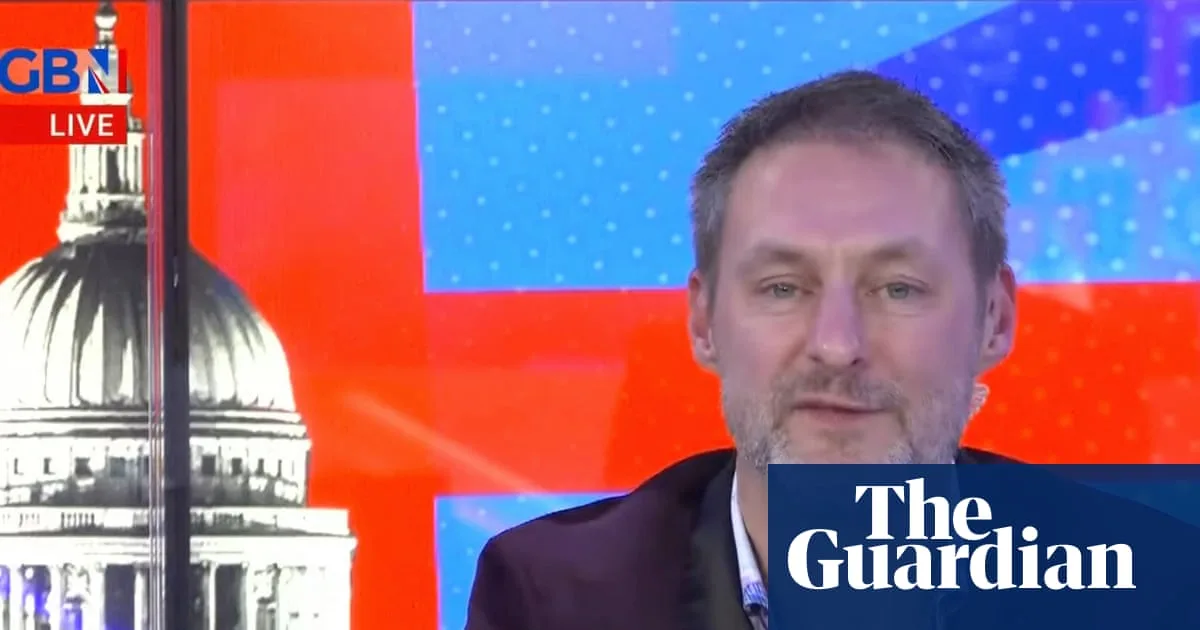
GB News Accused of Becoming Reform TV as Regulators Face Scrutiny
GB News Accused of Becoming Reform TV Amid Regulatory Failures

GB News Under Fire as Allegations of Reform TV Transformation Emerge

GB News has been accused of morphing into a partisan broadcaster akin to Fox News, with critics highlighting its alignment with Reform UK's political agenda. This raises serious questions about the role of regulatory bodies like Ofcom in safeguarding impartiality in British media.

Regulatory Oversight in Question

Andrew Neil, a key figure in GB News's establishment, has voiced concerns that the channel has strayed from its original promise of balanced reporting. He suggests that investors intended to create a British version of Fox News, driven by pro-Brexit fervor and admiration for Nigel Farage. This shift has prompted scrutiny of Ofcom's ability to enforce broadcasting standards effectively.

Ofcom has penalized GB News for breaches of impartiality, including a £100,000 fine in 2024 for a programme hosted by Rishi Sunak. However, GB News successfully challenged Ofcom in the High Court in 2025 over shows featuring Jacob Rees-Mogg, leading to dropped investigations and withdrawn rulings. These actions have done little to curb the channel's perceived biases.

Wide Pickt banner — collaborative shopping lists app for Telegram, phone mockup with grocery list

Research Highlights Systemic Issues

A study commissioned by New World magazine involved 20 journalists analyzing 15 hours of GB News primetime content. Their findings revealed numerous violations of impartiality rules, a disregard for accuracy, and a framing of news that overlaps with Reform UK's political goals. The channel frequently features Reform politicians, candidates, and supporters, with an overwhelmingly right-wing slant in guest selection and topic coverage.

Andrew Neil argues that Britain's regulatory framework has been inadequate since the Thatcher era, affecting not just Ofcom but also bodies like Ofgem and Ofwat. He points to systemic failures in overseeing critical areas such as clean water and information, where regulators have often turned a blind eye to misconduct.

Electoral Commission Under Pressure

The Electoral Commission, tasked with ensuring fair democratic processes, has also faced criticism for being toothless, particularly regarding political finance, digital campaigning, and foreign influence. Chair John Pullinger acknowledged to MPs that the legal framework is outdated and inconsistent, hampering effective oversight.

If GB News has indeed become "Reform TV," it grants Reform UK unprecedented media advantage, amplifying its agenda year-round. GB News's editorial director, Michael Booker, boasts of the channel's dominance, claiming it has reshaped the media landscape. This raises concerns about the intersection of media and political power, reminiscent of propaganda systems in countries like Hungary.

Financial Backing and Political Ties

GB News is primarily funded by the Dubai-based Legatum Group and British hedge-fund manager Sir Paul Marshall, who have reportedly lost over £100 million subsidizing the channel. Their support has benefited Reform UK, with Nigel Farage earning £585,000 from GB News in his first 18 months as an MP. Other Reform figures, such as Lee Anderson and Richard Tice, also feature prominently.

Conversely, former Reform members like Ben Habib and Rupert Lowe report that their GB News appearances ceased after leaving the party, suggesting a link between political affiliation and media exposure. While Ofcom's regulatory efforts have been lackluster, the Electoral Commission's weak rules, which only tighten before elections, offer limited recourse.

Broader Implications for Democracy

The parallels between regulatory failures in broadcasting and other sectors, such as water management, underscore a broader crisis in oversight. Clean water, clean information, and clean elections are fundamental to a functioning society, yet institutions like Ofcom and the Electoral Commission struggle to uphold these standards.

As the Starmer government moves to close loopholes allowing foreign money in politics, the need for robust regulation remains urgent. The transformation of GB News into a partisan outlet highlights the challenges of maintaining impartiality in an era of polarized media and raises doubts about whether regulators can effectively protect democratic integrity.

Pickt after-article banner — collaborative shopping lists app with family illustration




