Tulsi Gabbard Stuns Senate by Refusing to Assess Iran Nuclear Threat
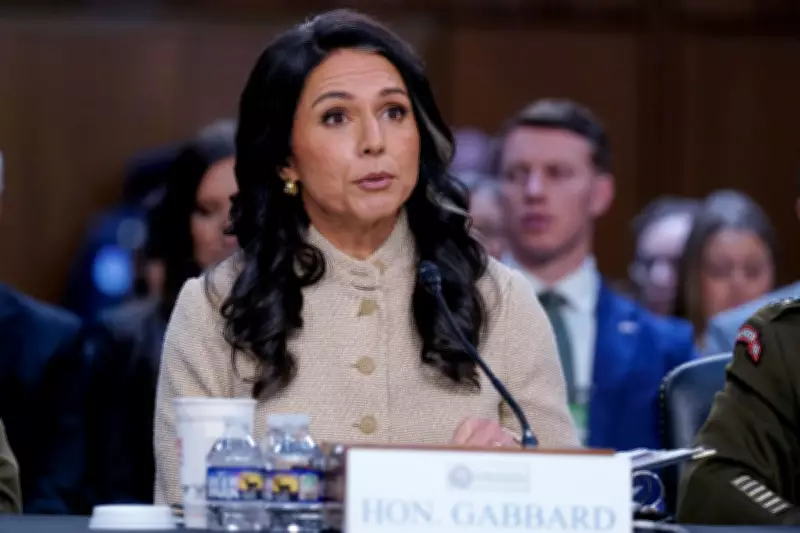
In a tense Senate intelligence hearing on Wednesday, Director of National Intelligence Tulsi Gabbard pointedly declined to state whether Iran presented an "imminent" nuclear threat to the United States prior to the onset of military conflict, provoking sharp criticism from Democratic lawmakers. The exchange highlighted deepening divisions over the intelligence community's role in justifying the Trump administration's war with Iran.
"It Is Not the Intelligence Community's Responsibility"
Under persistent questioning from Senator Jon Ossoff of Georgia, Gabbard firmly maintained that determining imminent threats falls exclusively within presidential purview. "The only person who can determine what is and is not an imminent threat is the president," Gabbard asserted during the hearing. She elaborated that the intelligence community's duty is to provide information, not to make such judgments, stating, "It is not the intelligence community's responsibility to determine what is and is not an imminent threat. That is up to the president, based on the volume of information that he receives."
This stance directly contradicted a written statement from Gabbard's office, which indicated that Iran's nuclear capabilities had been "obliterated" with "no efforts since" to rebuild following U.S. strikes last year. Senators pressed her on this discrepancy, questioning what the intelligence community actually concluded about Iran's nuclear program before hostilities commenced.

Senators Accuse Gabbard of Evasion
Senator Ossoff delivered a blistering retort, accusing Gabbard of shirking her responsibilities. "It is precisely your responsibility to determine what consists of a threat to the United States," he declared, cutting her off. He further alleged that she was "evading a question because to provide a candid response to the committee would contradict a statement from the White House."
The White House had previously justified the Iran campaign by asserting it was necessary to "eliminate the imminent nuclear threat posed by the Iranian regime." However, administration officials have since offered inconsistent explanations, including Secretary of State Marco Rubio's claim that the U.S. acted because Israel was planning an attack on Iran, which would likely provoke Iranian retaliation against American interests.
Resignation and Internal Disputes Highlight Scrutiny
The congressional confrontation occurs amid intensifying scrutiny of the Iran war. Joe Kent, director of the National Counterterrorism Center, announced his resignation this week, citing an inability to "in good conscience support the ongoing war in Iran" because Iran posed "no imminent threat to our nation." His departure underscores internal dissent within intelligence circles.
During the hearing, CIA Director John Ratcliffe disputed Kent's assessment, arguing that "the intelligence reflects the contrary." Ratcliffe insisted that "any fair-minded assessment" would demonstrate Iran posed a threat to the U.S. and praised the pre-war intelligence as "flawless."
Broader Implications and International Reactions
Lawmakers also questioned Gabbard about whether President Trump had been briefed on the potential for the war to trigger a shutdown of the Strait of Hormuz, a critical global oil chokepoint that has since been closed. Gabbard acknowledged that the intelligence community had long assessed Iran would likely use the strait as leverage but declined to detail specific conversations with Trump. She noted that the Iranian regime now appears "intact but largely degraded."
Outside the Capitol, the administration faced additional pressure. Vice President JD Vance addressed concerns over war-driven gas price spikes during an event in Michigan, calling them a "temporary blip." He contrasted this with the Biden administration, claiming, "Gas prices are higher right now, and frankly, they're not even as high as they were in certain parts of the Biden administration."

Internationally, key NATO allies have rebuffed U.S. requests for assistance in reopening the Strait of Hormuz. A spokesperson for German Chancellor Friedrich Merz stated, "It is not Nato's war. Nato is an alliance to defend the alliance area. The United States did not consult us before this war, and so we believe this is not a matter for Nato or the German government." This refusal highlights growing diplomatic isolation for the Trump administration's Iran policy.