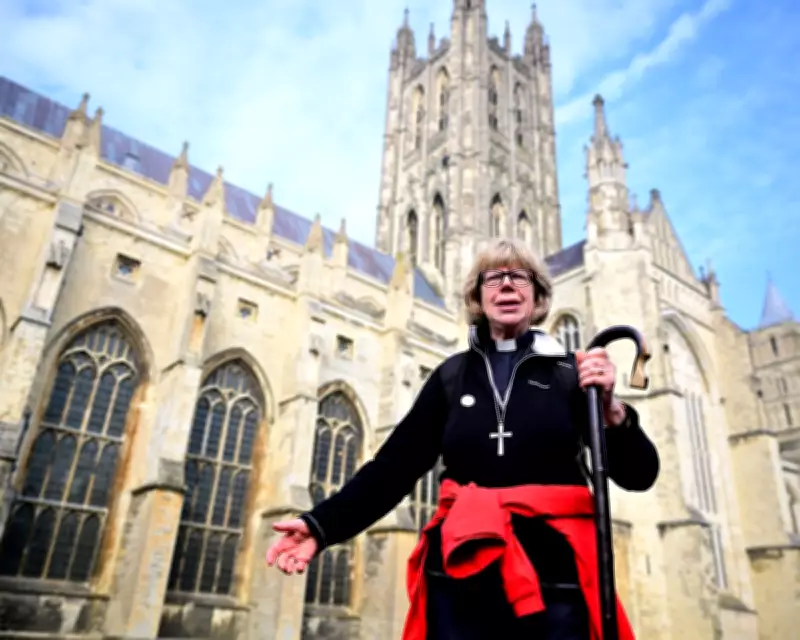
Sarah Mullally Installed as First Female Archbishop of Canterbury
In a historic ceremony today, Sarah Mullally was officially installed as the 106th Archbishop of Canterbury, marking a significant milestone as the first woman to hold this prestigious position in its nearly 1,500-year history. Her appointment comes at a particularly challenging juncture for the Church of England, which is grappling with deep-seated issues including safeguarding failures, internal divisions, and ongoing debates about its role in contemporary British society.
A Complex Role at a Difficult Time
Mullally steps into the role of de facto head of the global Anglican communion during a period described as both difficult and painful for the institution. She inherits a church shadowed by the legacy of her predecessor, Justin Welby, whose tenure was marred by criticism over his handling of abuse allegations involving the prolific abuser John Smyth. Welby was forced to express profound shame for his final speech in the House of Lords, referencing a 14th-century beheading and making light of the situation.
The safeguarding issue remains a critical concern, with about 130 boys believed to have been victims of Smyth, who died in 2018. Mullally herself has faced scrutiny regarding her handling of an abuse case during her time as Bishop of London, though a complaint was dismissed by Archbishop of York Stephen Cottrell, who found no misconduct. Despite this, there is confidence that Mullally, with her background as a former NHS chief nursing officer, will prioritize safeguarding, describing it as a "fundamental, non-negotiable responsibility" with victims at the heart of efforts.

Navigating Division and Controversy
The Church of England is deeply divided on issues of gender and sexuality, presenting another layer of complexity for Mullally. As Harriet Sherwood, a veteran Guardian journalist, notes, "There are still churches that don't recognise women priests at all, and they therefore won't recognise her leadership." This division was highlighted in February when the General Synod halted work on LGBTQ+ reforms after failing to reach consensus, leaving existing restrictions on clergy in same-sex civil partnerships in place.
Additionally, Mullally must address the controversial £100 million Project Spire, aimed at addressing the church's historical connections to slavery, while hundreds of churches face potential closure due to unsustainable maintenance costs for heritage buildings. This has sparked criticism from online culture warriors accusing the church of being "woke" without engaging in its actual activities.
Constitutional Questions and Political Landscape
Mullally's tenure coincides with broader constitutional changes, including the removal of hereditary peers from the House of Lords, which raises questions about the place of Church of England bishops in parliament. Sherwood points out that "there are only two countries in the world that reserve seats for clergy in parliament: England and Iran," highlighting an anachronism in the established church's role. However, political appetite for reform remains limited, with slow progress even on removing hereditary peers.
With a compulsory retirement age of 70, Mullally has at most six years in the role. Her success, according to Sherwood, would be defined by "calm and stability," steering the church through crises and smoothing over divisions. She is expected to avoid overt political confrontations, though there is a need to address the appropriation of Christian imagery by far-right populists, such as Tommy Robinson's "put the Christ back into Christmas" event.
A National and International Moment
The installation ceremony underscores the significance of this transition, with Prince William attending on behalf of the King, alongside Prime Minister Keir Starmer and Opposition Leader Kemi Badenoch. The event features international and interdenominational elements, including a prayer in Zambia's Bemba language and a Gospel reading in Spanish, reflecting the global reach of the Anglican communion.

As Mullally takes on this complex role, the hope is that she can restore the church's reputation and guide it through turbulent times. Her background as a state-educated former NHS worker offers a stark contrast to her Old Etonian predecessor, potentially bringing a fresh perspective to leadership. Time will tell whether her tenure can rise to meet the moment and steer the Church of England back into safer waters.