Nigel Farage's Trump Obsession Backfires as Political Influence Wanes
Nigel Farage, the leader of Reform UK, has long been characterized as a formidable populist force in British politics. However, a curious paradox has emerged in his approach to public opinion. While many decry him as a dangerous demagogue, Farage simultaneously displays a troubling indifference to the very sentiments he claims to champion. This contradiction is most glaringly evident in his unwavering infatuation with former US President Donald Trump.
A Pattern of Rejection from Mar-a-Lago
The spectacle of Farage jetting to America, seemingly on a quixotic mission to implore Trump to rescue Britain from perceived socialist threats, has become a recurring and cringe-inducing narrative. His most recent pilgrimage to Trump's Mar-a-Lago resort complex ended in familiar fashion: the former president had more pressing engagements, such as perfecting his golf swing, than meeting with the MP for Clacton.
This snub is not an isolated incident. When Trump survived an assassination attempt in 2024, Farage rushed to his side, only to be similarly brushed aside. The dynamic has shifted markedly from years past when Trump would occasionally offer Farage a shout-out at rallies or even invite him on stage. Today, securing a simple photo opportunity appears beyond reach for the Reform UK leader.

Political Humiliation and Domestic Troubles
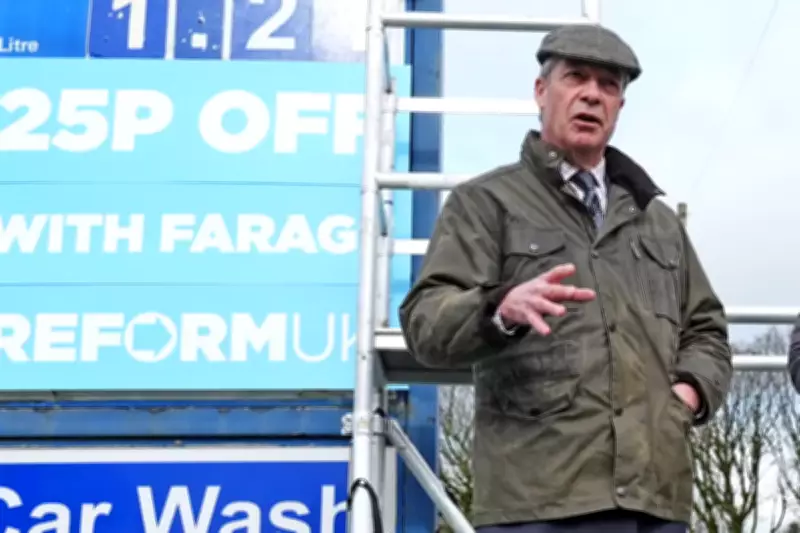
Farage now finds himself back in Britain, complaining about Chancellor Rachel Reeves's modest increase in fuel duty—a tax frozen since 2011. Ironically, his ally Donald Trump's continued military actions in Iran have arguably done more to inflate global petrol prices than any domestic policy. This disconnect highlights a deeper issue: Farage's political touch seems to be faltering.
Electorally, Reform UK's momentum is stalling. A disappointing by-election result in Gorton and Denton underscores this trend. Farage's decision to hand-pick a candidate who alienated prospective constituents certainly didn't help. Furthermore, his insistence on welcoming Tory defectors like Nadine Dorries, Nadhim Zahawi, Suella Braverman, and Robert Jenrick reinforces the perception that Reform UK is merely a convenient vehicle for politicians whose Conservative careers have ended.
The Cooling of a Political Bromance
The once-warm rapport between Farage and Trump, built on shared populist values, has unmistakably cooled. Even as Labour leader Keir Starmer's standing has diminished, he at least merits public attacks from Trump, a backhanded acknowledgment of significance. Farage, by contrast, fails to register, a far more humiliating position.
Internally, cracks are showing. Robert Jenrick, a recent Tory defector, has publicly challenged Farage's stance, arguing that prolonged conflict in the Middle East harms British interests and advocating for a more pragmatic, Palmerstonian approach. This appears to be strategic positioning, with Jenrick potentially eyeing leadership of a future united right-wing coalition.
Financial Entanglements and Policy Grifts
Farage's political judgment is further called into question by his financial dealings. His personal investment of £215,000 in a cryptocurrency firm run by former Chancellor Kwasi Kwarteng raises eyebrows. This comes atop the £12 million in donations Reform UK has received from Christopher Harborne, a wealthy crypto investor based offshore in Thailand.
Farage is transparent about his policy ambitions in this arena: he seeks to persuade the Bank of England to relax cryptocurrency regulations and the Treasury to reduce capital gains tax on crypto sales, even proposing that taxes be payable in Bitcoin. Critics may rightly label this agenda as a potential grift, presenting clear conflicts of interest for a prospective prime minister.
Peaking Too Early and Public Skepticism
There is a growing sense that Nigel Farage may have peaked prematurely. The increased scrutiny accompanying his proximity to power is likely to foster public skepticism toward his often simplistic promises. Having played a central role in the Brexit campaign—a project he now wishes to renegotiate—the question arises: can the British public truly take this figure seriously again?

The most damning indictment may come from his erstwhile idol. Even Donald Trump, it seems, no longer deems Nigel Farage worthy of his attention. For a politician whose brand is built on influence and disruption, being ignored by his own role model represents a profound and telling failure.