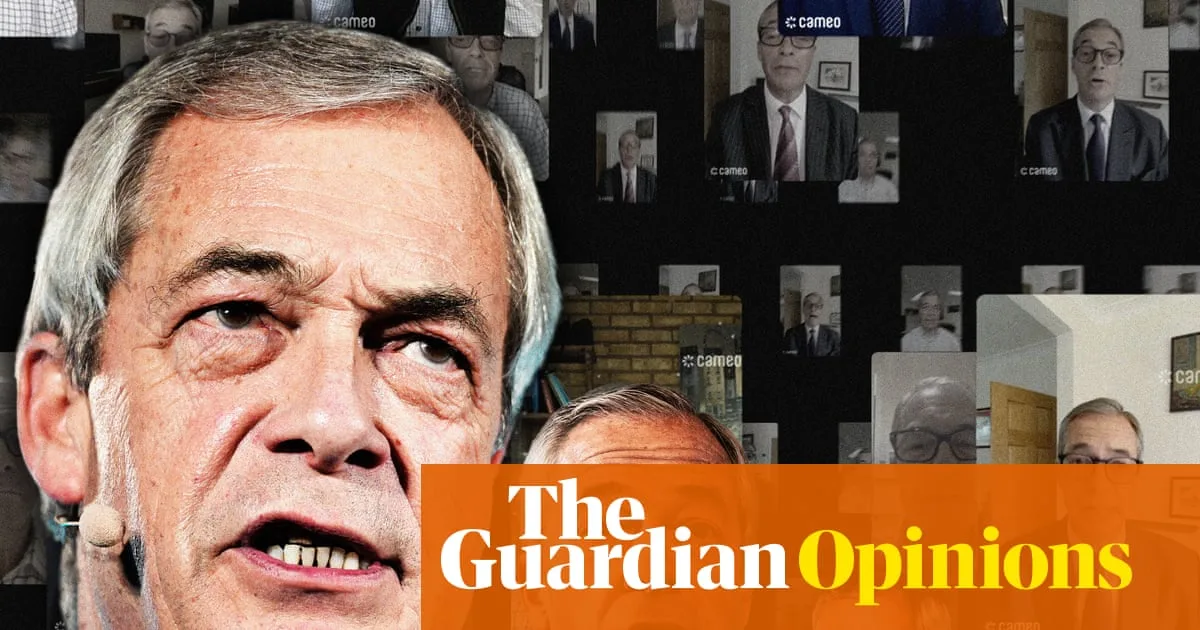
Nigel Farage's Cameo Scandal Exposes a Politician Performing for Profit
Farage's Cameo Scandal Reveals a Politician Performing for Profit

Nigel Farage's Cameo Scandal Exposes a Politician Performing for Profit

Nigel Farage will say virtually anything for money. Write him a script, insert a coin, and he becomes your personal mouthpiece for under £100. This is the stark reality revealed by the Reform UK leader's activities on the Cameo platform, where he produced custom video messages for a disturbing array of clients until exposed by the Guardian.

Among those commissioning Farage were Canadian white supremacists, an individual imprisoned for bottle-throwing during the 2024 summer riots, and someone requesting commentary on Alexandria Ocasio-Cortez's "big naturals"—a pornified reference to the breasts of a potential future US presidential candidate. Either Farage desired the cash and exposure enough to avoid asking questions, or he genuinely meant what he said. Given his denials of racism and misogyny, the public must draw its own conclusions.

The Consequences of Political Commercialisation

Farage withdrew from Cameo on Thursday, citing "security concerns," indicating he felt rattled. The platform, where B-list celebrities and reality TV stars record personalised messages, showcases not only what performers will say for money but what fans want to hear. For Farage, commissions included discussing secret societies controlling the world, where he rattled off antisemitic conspiracy theories before hastily adding he doesn't believe them, blaming Marxism instead.

Wide Pickt banner — collaborative shopping lists app for Telegram, phone mockup with grocery list

This incident underscores a broader trend of political figures monetising their influence. Farage reportedly earned over £1m in a year by leveraging the attention economy through GB News shows, paid speaking gigs in Washington, promoting gold bullion as a "tax-efficient" retirement option, and earning revenue from his X account. Yet, taking reputational risks for £79 per Cameo remains puzzling, potentially leaving him open to manipulation by rivals using pseudonyms.

Parallels to Trump's Self-Enrichment Model

Farage's actions mirror Donald Trump's approach, where the presidency became a brand for profit. Forbes estimated Trump increased his personal fortune by over $3bn in his first year by leveraging the Oval Office, selling merchandise, and promoting memecoins—an area Farage also dabbled in via Cameo videos hyping cryptocurrencies that later collapsed. Trump's treatment of foreign policy as an extension of family business, including dreams of "taking Cuba," highlights a monetised cult of personality.

In comparison, Brand Farage is just beginning. His industrial-rate Cameo production, even on election day, suggests a drive for wealth possibly fueled by envy of the opulence seen at Mar-a-Lago or the millionaires bankrolling his political ventures. Farage defended his £1.5m earnings from ITV's I'm a Celebrity by noting his former commodities trading friends are now wealthy, while he sacrificed for Brexit.

The Erosion of Political Authenticity

The most damaging aspect of these videos is the revelation of how political performance is manufactured. Farage's genius has been his ability to sound authentically opinionated, but Cameo exposes him as a performer who dances to the payer's tune. This aligns with the disillusionment many Reform voters feel about politics, though they were previously mistaken about its workings.

Reform's recent polling decline suggests newer supporters are getting cold feet. The careless trampling of political norms, once effective for Farage, now poses real harm as the Trumpification of British politics becomes visible. From Trump's disrespectful baseball cap at soldiers' coffins to Farage's paid performances, the line between public service and self-enrichment blurs dangerously.

Ultimately, this scandal questions whether Farage is a man of the people or a profit-driven influencer. His claim of doing politics for love contrasts sharply with his monetised activities, revealing a politician prostituting himself with disturbing ease. As British politics edges closer to American-style commercialisation, the authenticity voters crave may be the first casualty.

Pickt after-article banner — collaborative shopping lists app with family illustration




