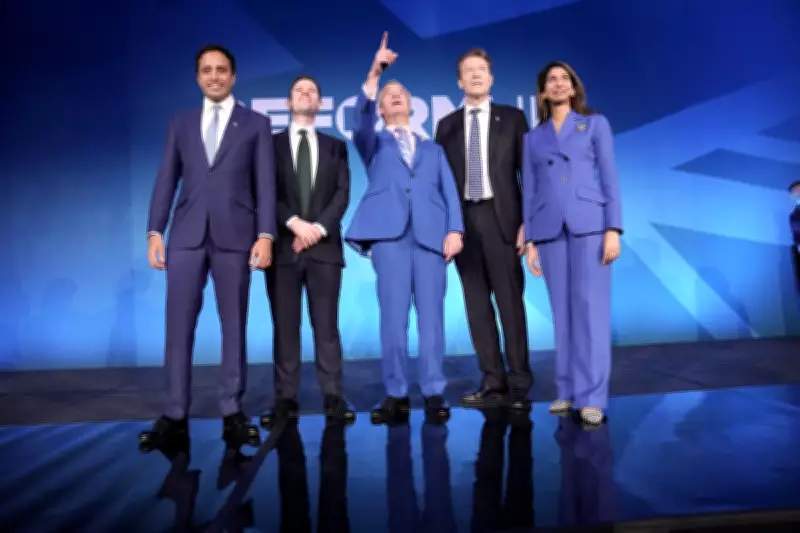
Nigel Farage Positions Reform UK as 'Voice of Opposition' with New Front Bench
Nigel Farage has declared Reform UK to be "the voice of opposition" to the Labour government as he unveiled his party's inaugural frontbench appointments. The announcement featured prominent roles for two Conservative defectors, Robert Jenrick and Suella Braverman, alongside senior Reform figures Richard Tice and Zia Yusuf.
Key Appointments and Economic Focus
Robert Jenrick, who served as communities secretary under Boris Johnson, was named Reform's economic spokesman just one month after defecting from the Conservative Party. Jenrick pledged to vigorously oppose what he termed "the wrecking ball that is Rachel Reeves and this Labour Government." He committed to developing "the most comprehensive plan of any political party" to address Britain's economic challenges, with a specific focus on reducing the welfare bill and implementing structural reforms.
Richard Tice, Reform's deputy leader, was appointed as spokesman for business, trade and energy. Tice proposed creating a new "super department" aimed at boosting economic growth to 4% of GDP. His strategy includes leveraging oil and gas resources to stimulate the economy while abandoning current net-zero targets, alongside establishing what he described as a "serious" British wealth fund to drive long-term investment.

Immigration and Education Policies Outlined
Zia Yusuf, the party's policy chief, was designated as home affairs spokesman. Yusuf promised significant reductions in both legal and illegal migration, including withdrawing from international treaties that might impede mass deportations. This hardline approach signals Reform's commitment to stricter border controls and immigration management.
Suella Braverman, who was twice dismissed as home secretary in Conservative governments, was appointed Reform's spokeswoman for education and equalities. Braverman announced ambitious targets to direct 50% of young people into vocational trades rather than university pathways. She also proposed scrapping the equalities department and repealing the Equality Act, arguing this would foster a meritocratic society rather than one based on tokenism.
Political Reactions and Criticism
The appointments drew immediate criticism from across the political spectrum. Labour Party chairwoman Anna Turley dismissed Reform's new team as a "top team of failed Tories" who had collectively spent "over 3,000 days inflicting untold damage" on the United Kingdom. Turley asserted that the appointments revealed Reform's lack of priority for national security and addressing NHS waiting lists.
Conservative Party chairman Kevin Hollinrake described Reform's front bench as "a line-up that looks more like a tribute act to the old Conservative Party than a credible alternative." He suggested that some appointees were already planning their next career moves while others had been overlooked for promotion, characterizing the announcement as "underwhelming" and evidence that Reform remains "a one-man band."
Liberal Democrat deputy leader Daisy Cooper offered a colorful critique, labeling the appointments a "Reform-Tory 'Fifty Shades of Blue' love-in." Cooper pointed to Jenrick's support for Liz Truss's controversial mini-budget as evidence that former Conservatives would repeat past economic mistakes. She emphasized that simply changing name badges would not alter public perception of their fitness to govern.
Internal Discipline and Party Unity
During the announcement, Nigel Farage issued a stern warning about internal discipline, stating he would not "tolerate dissent" among his senior team. Farage made it clear that any disloyalty or misconduct would result in swift removal from positions, emphasizing that "if people mess about, behave badly and are disloyal, they won't be here very long." This statement underscores his intention to maintain tight control over party messaging and unity as Reform positions itself for future electoral challenges.

The Trade Unions Congress (TUC) strongly criticized Braverman's proposal to repeal the Equality Act, with general secretary Paul Nowak warning it would be "a sledgehammer to hard-won rights working people fought for over generations." Nowak argued that such a move would effectively grant "a blank cheque for bad employers to mistreat their staff" by legalizing discrimination in the workplace.