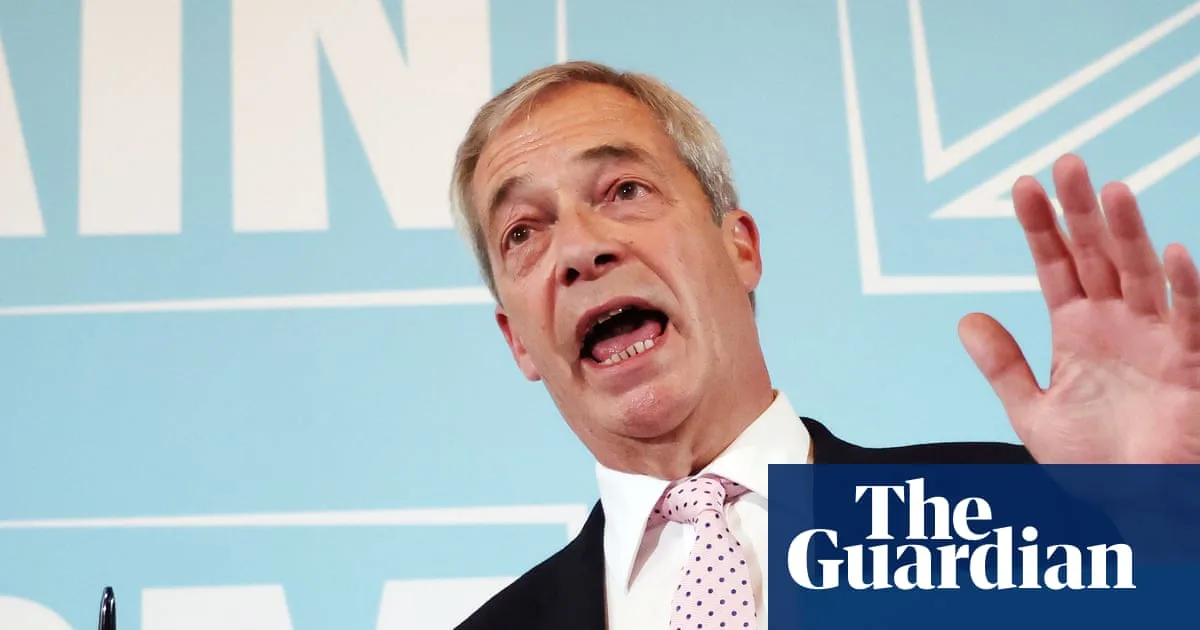
Nigel Farage, the leader of Reform UK, is facing accusations of deploying a political strategy directly imported from his ally, former US President Donald Trump. The claim follows his combative response to a Guardian investigation into alleged racist and antisemitic comments made during his school days.
The Four-Point Trump Playbook
Political analysts and opponents argue that Farage's reaction to the allegations follows a familiar pattern established by Trump. Steven Barnett, professor of communications at the University of Westminster, stated the behaviour felt recognisable, suggesting it was becoming Farage's "new modus operandi" to turn defence into attack.
Daisy Cooper, the deputy leader of the Liberal Democrats, was explicit in her criticism. "Nigel Farage is following the Donald Trump playbook letter for letter: deny reality, threaten to sue, smear the individuals involved and attack the media," she said. "These calculated tactics are a desperate attempt to evade scrutiny by importing the very worst kind of American populist tricks."
Threats to Sue and Initial Denials
The first tactic observed was the immediate threat of legal action. When initially approached by the Guardian, Farage's barrister, Adam Richardson, responded with a stern warning. The letter threatened proceedings for an injunction, a public retraction, and "the maximum award of damages permissible" should the paper publish the claims.
This was coupled with a flat denial. The legal correspondence stated that the allegation Farage "ever engaged in, condoned, or led racist or antisemitic behaviour is categorically denied". This mirrors Trump's habitual use of legal threats and branding unfavourable stories as "fake news".
Shifting Narratives and Attacking Accusers
As scrutiny intensified, Farage's denials became more nuanced. In interviews, he claimed he would never make such comments "in a hurtful or insulting way" and referred to possible "banter in a playground". Observers noted this echoed Trump's 2016 dismissal of his "Access Hollywood" comments as "locker-room banter".
Subsequently, Farage and Reform deputy leader Richard Tice sought to undermine his accusers. They suggested a "strong political element" motivated the claims, despite most of the 28 former schoolmates who corroborated the story having no party affiliations. Peter Ettedgui, the Emmy-winning director who first made the allegations, said his motivation was "deeply personal".
Full-Scale Assault on the Media
The most public demonstration of the strategy came during a recent press conference, where Farage launched a broadside against the BBC. He threatened a boycott and insulted presenter Emma Barnett as "lower grade" after she questioned Tice. He attempted to deflect by referencing outdated BBC comedy and the controversial comedian Bernard Manning.
Matthew McGregor, CEO of 38 Degrees and a former digital strategist for Labour and Barack Obama, said the media attack was a deliberate tactic. "Picking a fight with the media doesn’t just change the subject, it also reinforces the thing that he wants to say about himself: that he’s the plucky underdog. It’s just the same approach that Trump had."
A Test of British Political Guardrails
Some commentators note a slight divergence from the Trump model. Sunder Katwala of British Future pointed out that Farage is giving "slightly evasive denials" rather than Trump's more brazen approach. McGregor suggested Farage might be "testing the guardrails of politics" in a similar journey to Trump's earlier years.
Reform UK was contacted for comment on the claim it is employing Trumpian tactics but did not respond. As the general election campaign continues, observers will watch to see if this populist playbook becomes a permanent feature of Farage's political repertoire in the UK.




