Ex-Putin Interpreter's Key Role in Hungary Election Monitoring Stirs Controversy
Hungarian human rights organisations have voiced significant concerns regarding the appointment of Vladimir Putin's former interpreter to a pivotal position within an international election monitoring mission. This development occurs amidst growing fears of potential Russian interference ahead of Hungary's critical parliamentary vote next month.
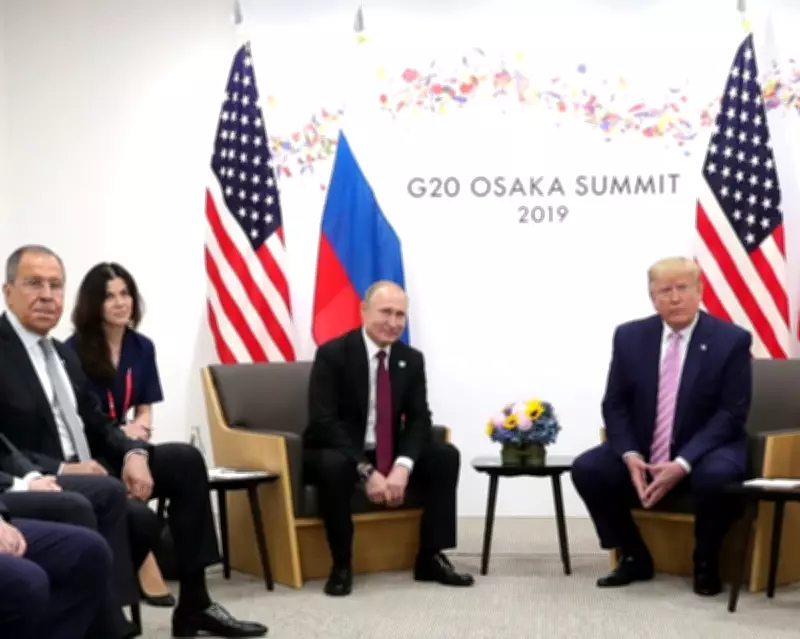
Daria Boyarskaya, who served for many years with Russia's foreign ministry and interpreted in numerous high-level meetings, including one between Putin and Donald Trump, now holds a senior advisory role at the parliamentary assembly of the Organization for Security and Co-operation in Europe (OSCE-PA). Based in Vienna, she is actively involved in coordinating the body's mission to oversee Hungary's upcoming election.
Election Stakes and Allegations of Foreign Influence
The forthcoming vote could potentially end nationalist leader Viktor Orbán's 16-year tenure in power. Orbán, recognised as the European Union's most pro-Russian leader, has centred his campaign on criticising Ukraine and its president, Volodymyr Zelenskyy, while also blocking EU loans to Ukraine. Numerous allegations suggest that Russia may be deploying assets to enhance Orbán's electoral prospects.

Over his lengthy rule, Orbán has frequently targeted civil society groups and independent media, recently referring to them as "bugs" that require cleansing or suppression. Given this oppressive climate and Orbán's close ties to Moscow, concerns have been raised about sharing sensitive information with Boyarskaya, who has clear historical links to the Kremlin.
Closed-Door Meetings and Sensitive Information
Boyarskaya has invited representatives from civil society organisations to a confidential meeting in Budapest next week to discuss concerns about the Hungarian political landscape. The delegation, led by British Labour MP Rupa Huq and Armenian MP Sargis Khandanyan, aims to prepare for a larger monitoring mission comprising MPs from OSCE member nations during the election period.
Márta Pardavi, co-chair of the Hungarian Helsinki Committee, highlighted in a letter to OSCE officials that such meetings often involve the exchange of highly sensitive information, including details on political pressure, electoral manipulation risks, and threats to human rights defenders and journalists. Pardavi emphasised that even the perception of confidential information being accessible to malign external actors could deter activists from speaking freely.
OSCE Response and Security Assessments
In response, Roberto Montella, the Italian secretary general of the OSCE-PA, defended Boyarskaya, stating he personally selected her for the Hungary mission and expressed his "full trust and confidence" in her. He referenced an external auditor's 2023 review, which concluded that allegations against her were unfounded.
Boyarskaya, who has worked intermittently with the OSCE for over a decade and was hired full-time in 2021, asserted in an email that she adheres to OSCE rules prohibiting staff from accepting instructions from national authorities. Unlike many OSCE employees seconded by governments, she is directly hired by the body, with spokesperson Nat Parry confirming that the Russian government does not pay her salary.
Intelligence Risks and Historical Context
Security sources indicate that international bodies like the OSCE-PA are prime targets for Russian and other intelligence services. Andrei Soldatov, an expert on Russian intelligence, noted that such organisations offer access to sensitive information and are located in Europe, a key focus for Moscow. He added that as an interpreter for Putin, Boyarskaya would likely have undergone high-level security clearances, potentially involving cooperation with Russian security services.
Fiona Hill, former national security adviser to Donald Trump, recalled a 2019 meeting where Putin allegedly swapped in Boyarskaya at the last minute to distract Trump, though she praised Boyarskaya's translation skills. In late 2022, Poland declared Boyarskaya persona non grata, citing state security threats, and travel records show she has continued to visit Russia regularly since the 2022 invasion of Ukraine.

This situation underscores the delicate balance between international election monitoring and security concerns, as Hungary approaches a pivotal electoral moment with potential implications for European politics.