Ed Miliband's Rising Influence as Labour's Intellectual Heavyweight
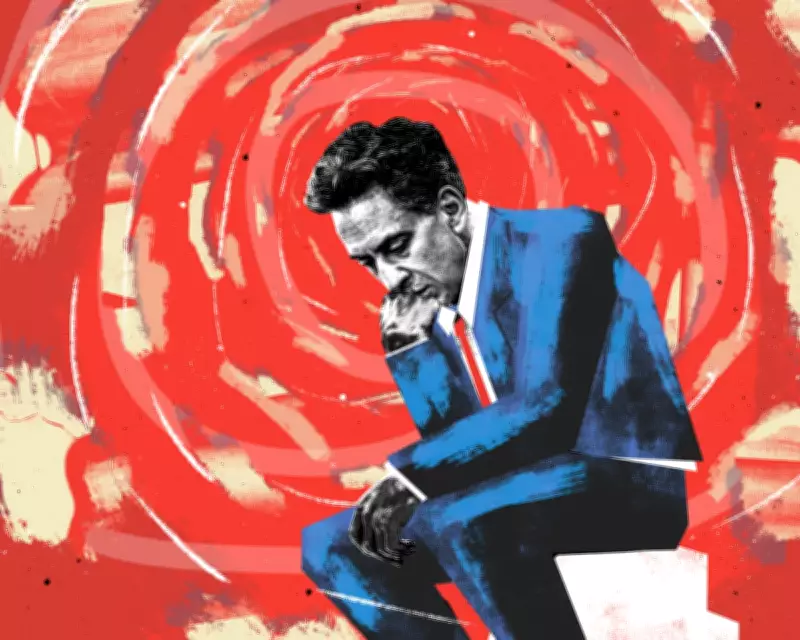
Nature famously abhors a vacuum. So when Morgan McSweeney departed government, leaving a gap where much of Keir Starmer's strategic thinking once resided, it was inevitable that someone would step in to fill that void. Increasingly, that figure appears to be Ed Miliband, whose influence within the Labour Party has visibly expanded in recent weeks.
This surge in prominence is not solely due to the spiralling energy crisis in the Gulf, though that has certainly heightened his profile as Energy Secretary. The notion that Miliband is now the de facto prime minister, allegedly dictating policy on issues ranging from Britain's potential involvement in a war with Iran to the pursuit of environmental measures, is partly an opposition tactic to undermine Starmer. However, while the reality is more nuanced, there is no denying that Miliband's stature has grown significantly.
A Shift in Labour's Centre of Gravity
Quietly surpassing Angela Rayner last month as the membership's favourite cabinet minister, Miliband could likely win a leadership contest if such a vote were held tomorrow. Labour MPs, however, are currently putting leadership ambitions on hold, recognising that interrupting a global crisis for internal party hustings would appear irrational. For now, the focus remains on maximising the current leadership's effectiveness.

Why has Miliband, rather than a figure from Labour's formerly dominant right wing, emerged as this influential thinker? The answer lies partly in the Greens' victory in Gorton and Denton, combined with the downfall of McSweeney and his mentor Peter Mandelson, which is pulling Labour's centre of gravity inexorably to the left. More importantly, as Michael Gove—once a crisis-time indispensable himself—should understand, Miliband serves as the cabinet's resident deep thinker at a moment when big ideas are suddenly back in vogue.
The Return of Big Ideas in Politics
Ed Miliband represents an intellectual heavyweight at a time when such figures are desperately needed, countering the vacuousness that has characterised recent years. Critical questions loom large: What is the new theory of growth if an oil shock dismantles the existing one? How does Britain navigate an era of aggressively competing world powers, likely involving sudden conflicts that disrupt global supply chains? Can populism be halted, especially if another recession fuels its fire?
Labour's answers to these monumental questions, from the current leadership to figures like Rayner, Wes Streeting, and Andy Burnham, now seem oddly small-scale—relics from a period when better storytelling was deemed sufficient. This administration's apparent aversion to big ideas is often mistakenly traced back to the Blair years, but that misreads history. The court of Gordon Brown, where Miliband honed his skills, was intellectually voracious, widely read, and rigorously trained to argue from first principles.
Tony Blair's inner circle, though more pragmatic, was never as hollow as critics claimed; it included third-way gurus and intellectual outriders connected to a broader ecosystem of ideas and international leftwing networks. The recent publication of former Labour cabinet minister Liam Byrne's book, Why Populists Are Winning and How to Beat Them, co-organised with thoughtful former Tory minister John Glen, serves as a reminder that ambitious politicians once churned out idea-driven books to gain notice, rather than waiting until leaving office.
Challenges and Opportunities for Miliband
For over a decade, big ideas in Labour have been associated with either embarrassing nerdiness—akin to being bullied in a school playground, as Miliband experienced during his leadership—or the short-lived excitement and electoral disaster of Corbynism. Populists preaching easy answers have dominated, branding nuanced arguments as snobbery. By summer 2024, Labour's campaign relied on the premise that voters rejected grand visions, favouring small, practical improvements under new management.

This retail politics might have succeeded in an alternate universe with ample funding, but America's 'golden age of stupid' has led to a self-defeating war on Iran and a third economic shock in six years, threatening recession. In fairness to Starmer, the last election arguably came too early, catching Labour mid-renewal: while it had cleaned up post-Corbyn, it lacked time for intellectual revitalisation. Without a hinterland of ideas, the government struggled to adapt to crises on the fly.
Now, a new creed is essential. Although Rachel Reeves' substantial Mais lecture last week highlighted her clear political philosophy, Miliband entered office with the clearest vision, having learned from past experiences. He is not infallible; colleagues describe a tendency to over-complicate and a knack for being years ahead of his time, such as identifying the 'squeezed middle' in 2010, yet missing credit when others catch up. Not all his ideas are good, and he can be a challenging colleague, but this cabinet may benefit from more friction to sharpen its mental acuity for upcoming challenges.
If thinking big is back, it is perhaps because the shattered remains of what was once the US's sphere of influence starkly illustrate where a lack of ideas leads. As Labour grapples with complex global issues, Miliband's role as a thinker could prove pivotal in shaping the party's future direction and policy responses.