
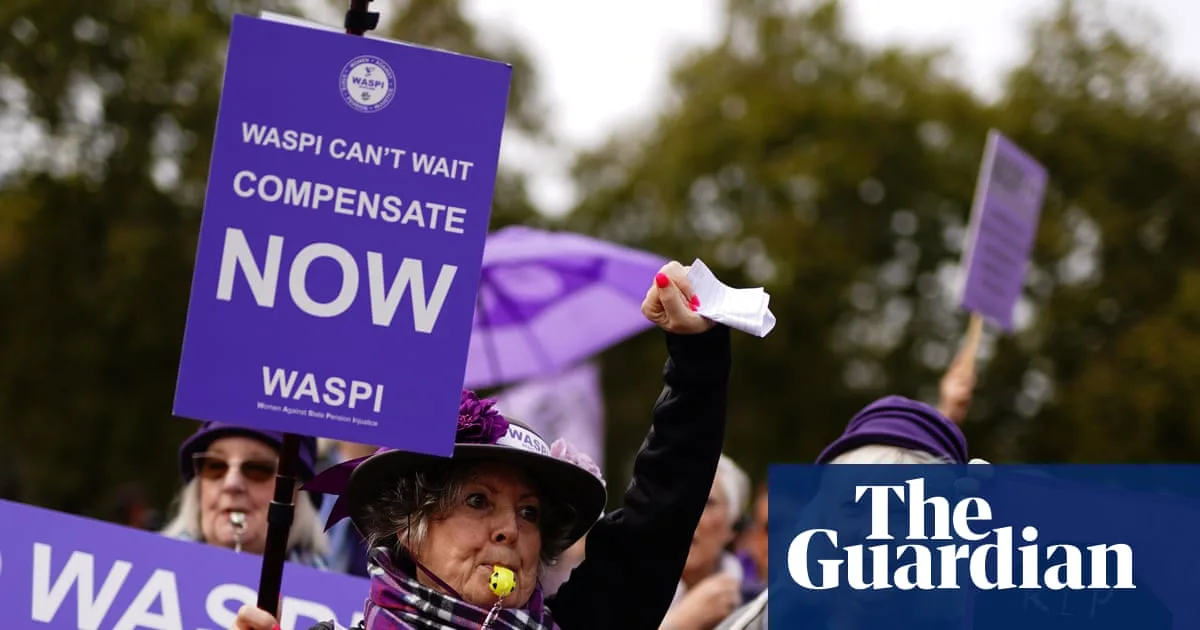
The UK government has announced it will revisit its decision to deny compensation to millions of women born in the 1950s who lost out due to changes in the state pension age. The move comes weeks before a high court legal challenge was due to begin.
As many as 3.6 million women, known as 'Waspi women', were affected by the increase in the state pension age from 60 to 65 and then to 66, phased in between 2010 and 2020. Campaigners argue that the Department for Work and Pensions failed to adequately communicate the changes, leaving many women financially disadvantaged.
Last December, the government sparked outrage by refusing compensation, with Chancellor Rachel Reeves prioritising public services over potential payouts of up to £10.5 billion. However, new evidence has emerged that was not shown to the then work and pensions secretary, Liz Kendall, when she made the decision.
Work and Pensions Secretary Pat McFadden told the Commons on Tuesday that the government would 'retake' the decision, reviewing the new evidence alongside previously considered information. He cautioned that this should not be taken as an indication that financial redress would be awarded.
The Parliamentary and Health Service Ombudsman had recommended compensation of between £1,000 and £2,950 per person, but the government initially rejected this. The Waspi campaign group has welcomed the announcement and is seeking legal advice on its judicial review, which was scheduled for 9 December.




