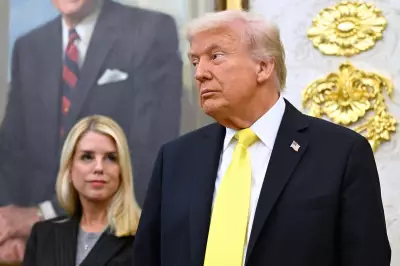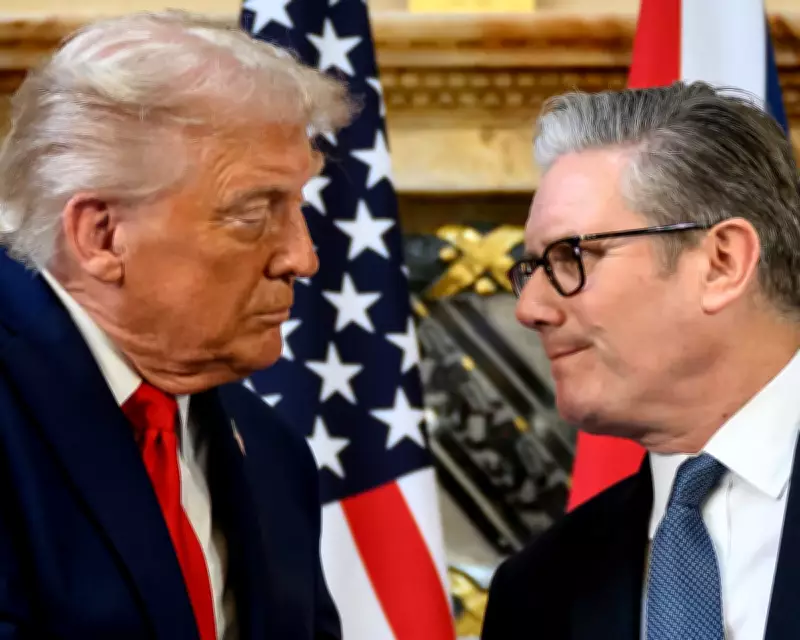
In a scene reminiscent of a political drama, Donald Trump and Keir Starmer were photographed shaking hands during a press conference at Chequers on 18 September 2025. Yet, behind the diplomatic facade, the reality of Washington's current relationship with Britain is far from cordial; it is steeped in contempt, as analysed by historian Timothy Garton Ash. The British government's efforts to flatter Trump have been met with disdain, particularly over Middle East policy, revealing a stark departure from the romanticised "special relationship" of the past.
The Illusion of the Special Relationship
For decades, the notion of a "special relationship" between the UK and the US has been a cornerstone of British foreign policy. However, as Garton Ash notes, this concept has often been one-sided, with American critics like former West German chancellor Helmut Schmidt quipping that it is so special only one side acknowledges its existence. The current dynamic under Trump exacerbates this imbalance, with British attempts at subtle distinctions in foreign policy, such as supporting defensive strikes but not offensive ones in the Gulf, dismissed as "diplomatic bullshit" by Maga ideologue Steve Bannon.
Britain's Desperate Clinging to Uncle Sam
Official Britain, especially its security establishment, continues to cling to the United States with a sense of desperation, akin to an abusive personal relationship. This behaviour is not unique to the UK; many European leaders have sacrificed dignity to appease Trump, condoning his rejection of liberal European values since 1945. For instance, Nato secretary general Mark Rutte has been satirised for sycophancy. The reasons are clear: Europe's dependence on the US for security in Nato, support for Ukraine, and economic prosperity. Yet, Britain's approach is particularly pathetic, driven by historical ties and a lack of alternatives.

Historical Context and Decline
The US-UK relationship has evolved from a "peculiar" one in the 18th and 19th centuries, where the US defined itself against Britain, to a real power partnership between 1941 and 1956. During this period, Winston Churchill's efforts brought the US into World War II, and the two nations jointly shaped Europe. However, the humiliation of the Suez crisis in 1956 marked a turning point. France, under Charles de Gaulle, pursued European strategic autonomy, while Britain doubled down on prioritising ties with the US, becoming "Athens to America's Rome." This led to technological dependence on the US for nuclear deterrence and a focus on Nato over European integration.
Over time, Britain's political influence in Washington has steadily diminished, yet it clings more tightly. Former prime minister Tony Blair argued that staying close to America was essential to maintain influence, but as Garton Ash points out, this influence has waned significantly. Today, Jonathan Powell, Blair's former chief of staff, advises Starmer in similar efforts, but conversations with Washington are increasingly difficult for London due to its lack of clout.
Exacerbating Factors: Military Decline and Brexit
Two key developments have worsened Britain's position. First, the decline of its armed forces has reduced its military credibility. American soldiers now express pity, noting that Britain "barely has an army anymore." In recent conflicts, such as the attack on a British base in Cyprus by Iran, France responded more swiftly, highlighting this weakness. Popular culture reflects this, with Netflix's The Diplomat satirising Britain as "the little island that couldn't."
Second, Brexit has fundamentally undermined Britain's importance to the US. By leaving the EU, Britain cut off its European leg, making it less relevant as part of a larger bloc. In Blair's era, Britain had two strong legs: transatlantic and European. Now, with Trump potentially cutting the American leg, Britain finds itself without another leg to stand on, unlike France or Germany.

A Path Back to Respect
For those who love Britain, its reduction to an object of contempt or pity is painful. However, Garton Ash outlines a viable path to regain self-respect and global respect. While maintaining the best possible relations with the US, Britain should strategically integrate into a stronger Europe. This involves bolstering European defence through the Europeanisation of Nato and, as suggested by London mayor Sadiq Khan, rejoining the EU. The feasibility of this over five to ten years, and the political challenges on both sides of the Channel, remain topics for future discussion, but it offers a hopeful direction for Britain's future on the world stage.