Conservative Media Stars Engage in Bitter Public Feud Over US Iran Policy
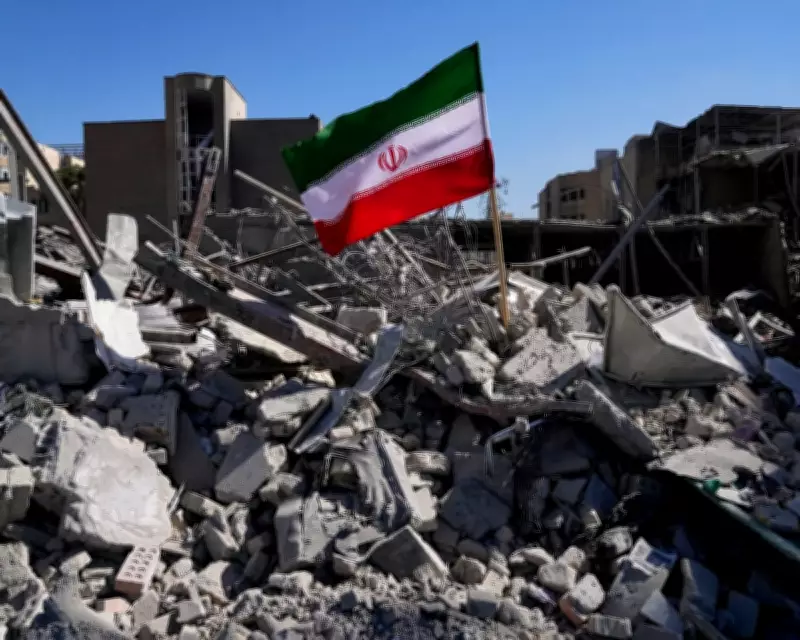
An Iranian flag stands among the ruins of a police station struck in Tehran, Iran, on 3 March, symbolising the backdrop to a fierce ideological battle unfolding in American conservative media circles. Photograph: Vahid Salemi/AP
The leading voices of the conservative media movement are currently engaged in a remarkably personal and public dispute regarding former President Donald Trump's decision to involve the United States in a conflict with Iran. This internal warfare has escalated to the point where prominent figures are trading insults and accusations, revealing profound rifts within the right-wing media landscape.
Divisions Over US-Israel Relations and Iran Intervention
While delineating the exact factions can be challenging, much of the conflict revolves around fundamental disagreements concerning whether the United States demonstrates excessive deference to Israeli interests. Former Fox News hosts Tucker Carlson and Megyn Kelly have emerged as the most vocal proponents of this critical stance. In stark contrast, conservative media personalities such as current Fox News host Mark Levin and commentator Ben Shapiro have vigorously defended both American intervention in Iran and close collaboration with Israel.

Curt Mills, the executive director of the American Conservative magazine, categorised the warring groups, stating, "There are the classic neocons, there is the populist right, and there are the anti-anti neocons." This taxonomy underscores the complex ideological terrain where this media battle is being fought.
Personal Attacks and Escalating Rhetoric
The dispute has descended into intensely personal territory. On Tuesday, Ben Shapiro launched a fierce defence of Mark Levin, while simultaneously labelling Megyn Kelly an "unbelievable coward" and accusing her of avoiding direct criticism of President Trump. "You don't like President Trump? You don't like what he's saying? Just say his name, you coward," Shapiro declared. "You unbelievable coward. Tucker and Megyn both – unbelievable cowardice."
Earlier in the week, Mark Levin retaliated by calling Kelly a "Crazy Grandma Groyper," a term historically associated with followers of white supremacist Nick Fuentes. This reference was particularly pointed given Fuentes' controversial and friendly interview with Tucker Carlson in October, which drew significant criticism from other conservatives. The animosity was further inflamed when right-wing extremist and political influencer Laura Loomer launched an even more vicious attack, referring to Kelly as a "stupid bitch."
According to a report by ABC News's Jonathan Karl, Tucker Carlson privately characterised Trump's attack on Iranian leadership as "absolutely disgusting and evil," highlighting what Karl described as evidence of a significant "Maga divide."
Historical Tensions and Broader Implications
The roots of the tension between Carlson and Levin stretch back to at least June 2025, when Carlson accused Levin of "lobbying for war with Iran" during a private White House lunch with Trump. Levin responded by calling Carlson a "maggot," and Carlson reciprocated by labelling Levin a "warmonger," a term he also applied to his former Fox News colleague Sean Hannity. Kelly, for her part, criticised Hannity this week, calling him "a supplicant to Donald Trump" who would never say anything other than to "puff Donald Trump up."
During an interview on Katie Miller's podcast, Hannity stated that he "completely disagrees" with Carlson, whom he said is "not the person that [he] knew" at Fox News. However, Hannity also emphasised his deliberate choice to remain above the fray of the conservative media infighting. "If they all want to kill each other, have at it," Hannity remarked. "I'm way past the point in my career, Katie, that I care at all about what other people are doing or saying... my interest in involving myself in it is zero. I don't believe my success is predicated on tearing somebody else down, or their failure."

A Sign of Wider Fractures and Media Dynamics
For many observers, this very public split over Iran policy signals a much broader issue within conservative media. Jonah Goldberg, the editor in chief of the Dispatch, told the Guardian that the latest controversy is part of a larger "unravelling of the Trump/Maga coalition." He noted this dynamic is also visible in conservative criticism regarding the Trump administration's handling of Jeffrey Epstein-related documents.
Goldberg also pointed out that these highly publicised clashes, while rooted in genuine animosity and serious policy disagreements, also serve a commercial purpose. They generate significant media attention, which is particularly beneficial for independent media personalities seeking to build their brands and attract subscribers. "I think there is real animosity and serious disagreement among the parties," Goldberg said. "But the food fight has a reality TV dynamic to it as well. Conflict is good for eyeballs and clicks. I think Shapiro is trying to be a grown-up, but the rest of them see the vitriol as a feature, not a bug. There's a lot of kayfabe in Trump world and the Maga right."
This internal conservative media warfare, set against the backdrop of international conflict with Iran, exposes deep ideological fractures concerning foreign policy, allegiance to Israel, and the enduring legacy of Donald Trump's presidency. The very public nature of the feud, complete with personal insults and accusations of cowardice, underscores how policy debates within this sphere are increasingly fought through the lens of personality and media spectacle.