The Telegraph's New German Ownership: A Test for Editorial Independence
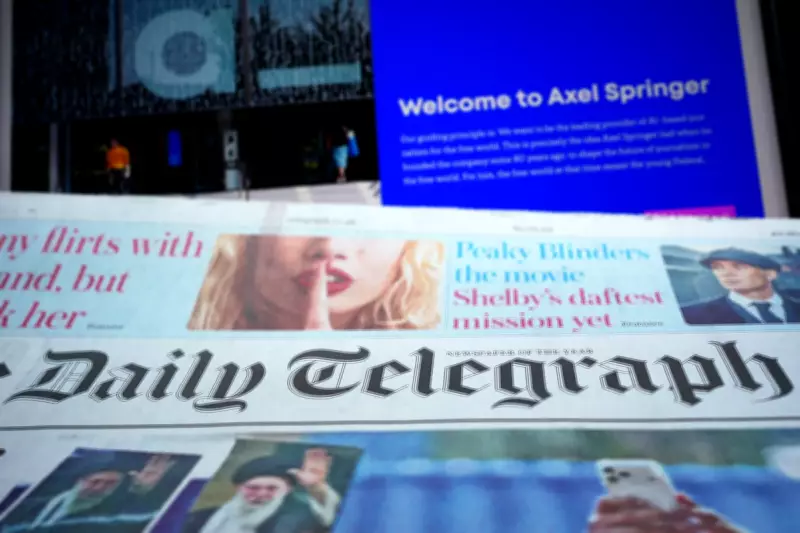
The Daily Telegraph has been acquired by German publishing powerhouse Axel Springer for a reported £575 million, concluding a prolonged period of uncertainty during which the newspaper vigorously resisted a bid involving funding from the United Arab Emirates. This significant transaction places the influential British broadsheet under the stewardship of Axel Springer's formidable and charismatic chief executive, Mathias Döpfner, prompting widespread scrutiny regarding the future editorial direction of the publication.
Controversial Leadership and Political Interference
Mathias Döpfner has cultivated a reputation for holding strong, often contentious, viewpoints and has a documented history of leveraging his media outlets to advance his personal political agenda. In December 2024, a Telegraph article highlighted Döpfner's alleged encouragement of Elon Musk to publicly endorse Germany's Alternative für Deutschland (AfD) party, which is classified as a right-wing extremist group by the nation's domestic intelligence agency. This maneuver was reportedly part of a strategy to have Musk publish a supportive article in Axel Springer's newspaper, Die Welt.
The publication of Musk's article, in which he lauded the AfD as "the last flicker of hope for the country," incited substantial internal discord. Eva Marie Kogel, the head of the opinion section at Die Welt, resigned in protest, while over forty editors condemned the piece as "campaign advertising disguised as a guest article." The German Journalists' Association vehemently criticized the action, asserting that Die Welt's reputation was being recklessly compromised and warning against media being exploited as a mouthpiece for autocrats.

Historical Parallels and Editorial Safeguards
Commentary within the Telegraph has drawn unsettling parallels between Döpfner's tactics and those of Alfred Hugenberg, the press magnate who played a pivotal role in enabling Hitler's rise to power. Historian Katja Hoyer cautioned that providing a platform for the AfD in a mainstream newspaper could confer a dangerous level of respectability, reminiscent of Hugenberg's support for the Nazi Party.
In response to concerns over editorial interference, journalists at Die Welt established a Redaktionsausschuss, or editorial committee, aimed at protecting editorial independence. This initiative was precipitated by a leak of Döpfner's private messages, chats, and emails to Die Zeit, revealing disparaging remarks about East Germans and directives for his tabloid, Bild, to bolster the pro-business Free Democratic Party. Döpfner has dismissed many of these messages as being taken out of context, though he has openly expressed admiration for figures such as JD Vance.
The Telegraph's Checkered Past and Regulatory Challenges
The Telegraph itself has a mixed legacy regarding transparency and editorial integrity. In 2015, veteran political commentator Peter Oborne resigned, alleging that articles were routinely suppressed or commissioned for commercial reasons during the Barclay Brothers' ownership. Oborne condemned the publication of false stories and a relentless pursuit of web traffic, describing the paper's coverage as a "form of fraud" on its readers.
More recently, the Telegraph faced reprimand from the press regulator IPSO for a May 2025 article concerning a fictional family struggling with private school fees, which utilized stock photographs and lacked verifiable evidence. The newspaper's response was evasive, refusing to provide IPSO with details about the article's origins, citing internal confidentiality. This stance starkly contrasted with the paper's earlier vigorous criticism of BBC editorial standards.
Future Prospects and Ethical Imperatives
Mathias Döpfner, an art enthusiast with a notable collection of female nudes, may prove to be an innovative publisher capable of revitalizing the struggling newspaper industry. However, there is palpable apprehension that he may be unable to resist meddling in the Telegraph's editorial content, thereby influencing British political discourse. The critical question remains: how will Telegraph journalists respond?

Will there be principled individuals like Eva Marie Kogel or Peter Oborne who would resign and expose any undue interference? Will the staff, who were vocal in opposing previous bids, demand the establishment of an editorial board to safeguard independence? Or will they, as many did during the Barclay era, remain silent and compliant?
In a related note, Michael Gove, now editor of The Spectator, could perform a small act of reparation by correcting a long-standing inaccuracy. A 2008 Spectator article altered a quote from former Telegraph editor Bill Deedes, who had criticized the Barclay Brothers as "a stinking mob," to instead imply he was insulting his colleagues. This distortion remains uncorrected after seventeen years. Honouring Deedes' legacy necessitates setting the record straight and upholding the values of truth and openness that he championed.
As the Telegraph transitions to German ownership, its journalists must be prepared to defend editorial integrity and transparency. The legacy of Bill Deedes, a paragon of journalistic virtue, demands nothing less in this new chapter for one of Britain's most storied newspapers.