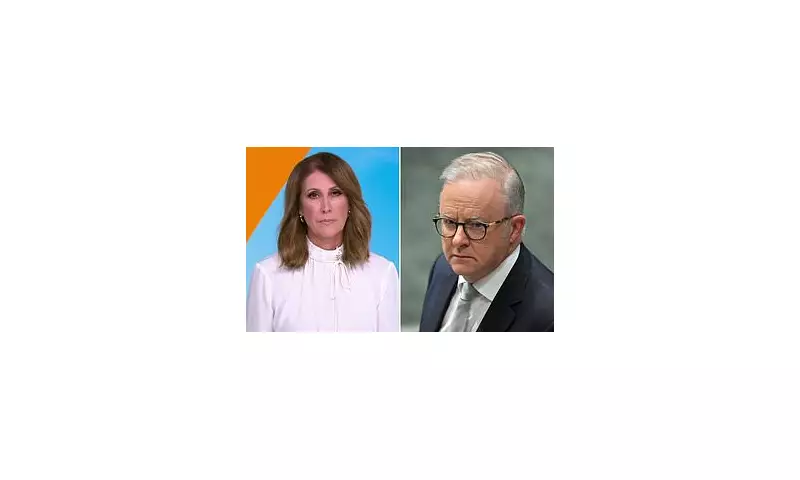
An Australian government minister has faced intense scrutiny over Prime Minister Anthony Albanese's prolonged hesitation in employing the specific terminology 'radical Islamic extremism' when addressing the devastating Bondi Beach terror incident. The parliamentary questioning occurred as landmark legislation targeting hate speech and extremist organisations successfully navigated through both houses of Parliament on Tuesday evening.
Parliamentary scrutiny over delayed terminology
During the first Question Time session following the horrific attack, Prime Minister Albanese finally articulated the phrase 'radical Islamic extremism' for the very first time, a full thirty-seven days after the tragic events unfolded. His declaration came amidst sustained criticism from the Coalition opposition, who argued that Labor's proposed hate speech laws had failed to directly confront this particular security threat.
'I would state unequivocally that radical Islamic extremism represents a significant problem within our society. We understand this to be the reality of the situation,' Albanese informed Parliament during the heated exchange.

Sunrise interview confrontation
Employment Minister Amanda Rishworth subsequently found herself under the spotlight during a televised interview on Sunrise, where presenter Nat Barr pressed her on the Prime Minister's delayed linguistic choice. 'This marks the initial occasion in the thirty-seven days following the Bondi assault that he has utilised that specific phraseology. What explains this considerable delay?' Barr inquired pointedly.
Rishworth notably avoided providing a direct response to the central question, instead emphasising the Labor government's 'incredibly consistent' approach to combating hatred across Australian communities. 'Our legislative measures against hate speech in this nation examine how we confront these challenging issues, including provisions to cancel visas or prevent individuals who seek to divide our society and propagate hatred from entering the country,' she explained.
Political division over legislative response
The Employment Minister expressed disappointment that Parliament had not achieved unity in passing the new laws, though she acknowledged gratitude for their eventual success. Barr persisted with her line of questioning, demanding: 'Was there a particular reason why the Prime Minister and the government refrained from using the term "radical Islamic extremism" until this moment?'
Rishworth responded by stating: 'I believe the Prime Minister has been abundantly clear that... Islamic radical extremism constitutes a perversion of the Islamic faith. He has articulated this position with clarity and emphasised that this constituted an antisemitic terrorist attack. This was fundamentally an attack targeting Jewish Australians. When any community within our nation faces such violence, it represents an attack against all Australian citizens.'
Opposition criticism and legislative details
Nationals Senate Leader Bridget McKenzie, who appeared alongside Rishworth during the broadcast, strongly criticised this explanation. 'We have witnessed a gutless prime minister from the outset regarding actions of radical Islamic extremism, which now permeates our suburban communities,' McKenzie declared. 'You and I have discussed this subject more frequently than the Prime Minister has addressed it since October 7th, 2023. These are the factual circumstances. To hear Amanda attempt to rewrite history in the aftermath of the worst terrorist attack our country has experienced genuinely galls me.'
McKenzie further criticised the Prime Minister for failing to provide financial assistance to Jewish communities compelled to employ 'armed guards... stationed outside kindergartens, primary schools, and secondary colleges' for protection.
The newly enacted legislation grants the Home Affairs Minister enhanced authority to cancel or reject visas of individuals who express extremist ideologies. The laws specifically enable the government to proscribe hardline extremist organisations, including groups such as the National Socialist Network and the radical Islamist collective Hizb ut-Tahrir, marking a significant shift in Australia's counter-extremism framework.